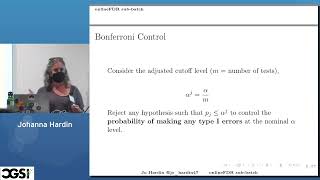
OnlineFDR Control with Applications to RNA-Seq Data
Explore onlineFDR control techniques for RNA-Seq data analysis, focusing on adaptive algorithms and their applications in multiple hypothesis testing scenarios.
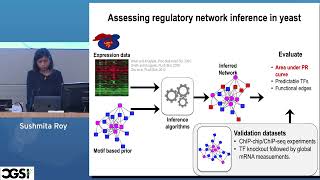
Inference of Gene Regulatory Networks from Bulk and Single Cell Omic Datasets
Explore gene regulatory network inference techniques using bulk and single-cell omic datasets. Learn about integrative approaches, predictive models, and applications in cellular reprogramming and single-cell genomics.
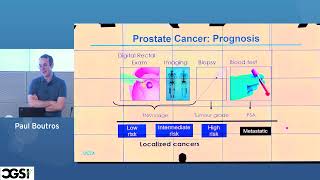
Computational Methods to Quantify Lethal Cancer Evolution
Explore computational methods for quantifying lethal cancer evolution. Gain insights into driver mutations, evolutionary history, and genomic correlates of prostate cancer's epigenetic landscape.
Large Language Models for Computational Biology - A Primer
Explore large language models in computational biology, covering transformers, pretraining, and applications in genomics and single-cell analysis.
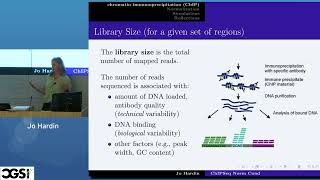
Selecting Between-sample ChIP-Seq Normalization Methods - Assumptions and Implications
Explore ChIP-seq normalization methods, their assumptions, and impact on differential binding analysis. Learn to select appropriate techniques for accurate genomic data interpretation.
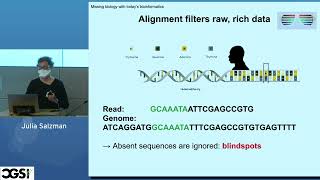
Statistical Reference-Free Genomics Solves Myriad Problems in Bioinformatics - 2023
Explore statistical reference-free genomics to solve bioinformatics challenges. Learn about Splash algorithm, RNA splicing, and novel approaches for analyzing sequencing data in cancer and human disease research.
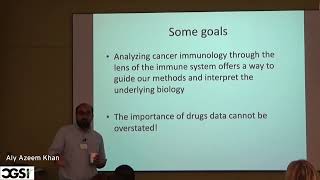
Computational Insights into Cancer Immunology
Explore computational approaches in cancer immunology, focusing on RNA sequencing, tumor microenvironment analysis, and immunotherapy response prediction in non-small cell lung cancer.
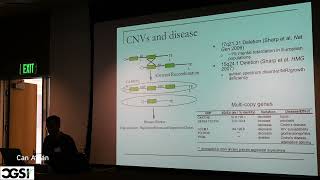
Characterization of Genomic Structural Variation Using Various Sequencing Technologies
Explore genomic structural variation analysis using diverse sequencing technologies. Learn about copy number variation genotyping and deep learning applications in exome sequencing.
From Population to Person - How to Help a Single, Actual Person with Data Science
Discover how data science can be applied to help individual patients, bridging the gap between population-level insights and personalized healthcare interventions.
Inferring Parsimonious Migration Histories for Metastatic Cancers
Explore computational methods for inferring cancer metastasis patterns, focusing on parsimonious migration histories and multi-strain infections in tumor evolution.
Tumor Evolution: Methods for Comparing, Summarizing and Visualizing Clonal Trees
Explore methods for comparing, summarizing, and visualizing clonal trees in tumor evolution, focusing on weighted distance-based approaches and relaxing infinite sites assumptions.
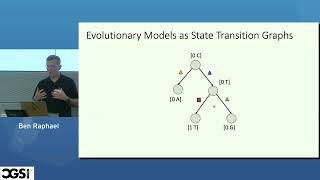
Evolutionary Models for Cancer and Lineage Tracing - CGSI 2023
Explore evolutionary models for cancer and lineage tracing, focusing on tumor phylogeny inference and CRISPR-Cas9 lineage tracing approaches.
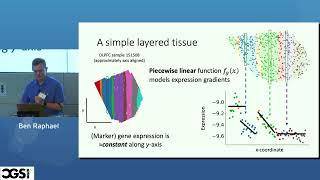
Models and Methods for Spatial Transcriptomics - CGSI 2023
Explore models and methods for spatial transcriptomics, focusing on alignment, integration, and modeling of gene expression variation in spatially resolved data.
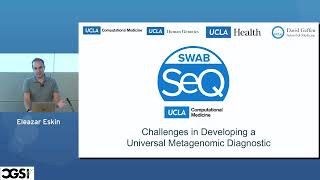
Challenges in Developing a Universal Metagenomic Diagnostic Test - 2024
Explore challenges in creating a universal metagenomic diagnostic test for disease detection, focusing on scalability, sensitivity, and application in community surveillance.
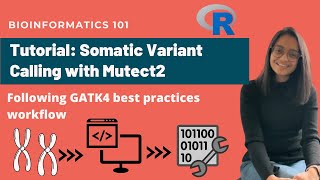
Somatic Variant Calling with Mutect2 - GATK Best Practices Tutorial
Explore somatic variant calling with Mutect2, covering key concepts, challenges, and hands-on demonstration of variant identification, filtering, and annotation using GATK best practices.
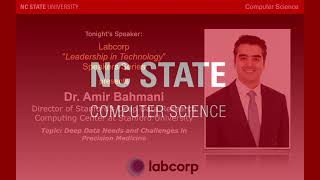
Deep Data Needs and Challenges in Precision Medicine
Explore deep data challenges in precision medicine, focusing on innovative solutions for healthcare data management and analysis.
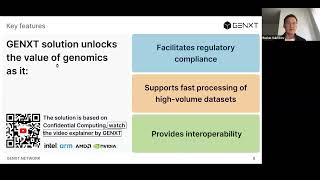
Confidential Computing in Genomics - GENXT Cross Database DNA Matching
Explore secure genomic data analysis using Confidential Computing for cross-database DNA matching, enabling privacy-compliant collaborative research in precision medicine.
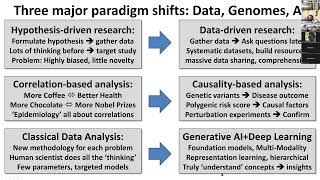
Keynote: On the Verge of Synthetic Biology Breakthroughs - September 7, 2024
Explore cutting-edge genomics and synthetic biology insights in Manolis Kellis' keynote address at iGEM OnTheVerge, delving into future possibilities and current advancements.
Sequence Data - Part 4
Explore advanced techniques for analyzing and interpreting sequence data, enhancing your bioinformatics skills and research capabilities.
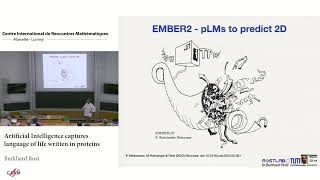
Artificial Intelligence Captures Language of Life Written in Proteins
Explore AI's role in decoding protein language, unveiling insights into life's fundamental processes and potential applications in genomics and biology.
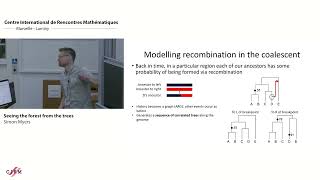
Seeing the Forest from the Trees
Explore stochastic processes in evolutionary biology through Simon Myers' insightful conference talk on seeing the forest from the trees.