Comprehensive Methylation Profiling from Low-Input Samples Using the xGen Methyl-Sequencing Workflow
Explore efficient and accurate methylation profiling tools for low-input samples with IDT's xGen™ Methyl-Sequencing Workflow.

Artificial Intelligence for More Effective Cancer Diagnosis - Part 2
Explore AI's role in enhancing cancer diagnosis through digital pathology, improving research, diagnostics, and genomics for more effective patient care.
AI in Healthcare
Explore AI applications in healthcare, from cancer screening to genomics, addressing challenges like bias and model limitations for improved patient care and equitable outcomes.
Deciphering the Mysteries of Human Genomes
Explore the intersection of biology, technology, and medicine in rare genetic disease research. Discover how Python aids in unraveling genomic mysteries and advancing healthcare.
Applied Functional Programming in Computational Genomics
Explore functional programming solutions for computational genomics algorithms, focusing on the "read alignment problem" in next-gen DNA sequencing.
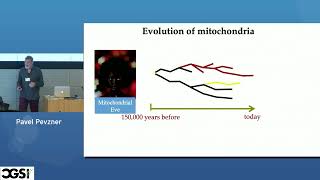
Uni-alignment: A Parameter-free Framework for Fast and Accurate Sequence Alignment
Discover a parameter-free framework for fast sequence alignment through UniAligner, exploring innovative approaches to computational genomics and bioinformatics analysis.
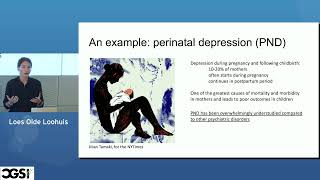
Using Biobanks to Study People That Are Not in It - CGSI 2024
Discover innovative approaches to extend biobank research benefits beyond direct participants, exploring methodologies for broader population health insights and applications.
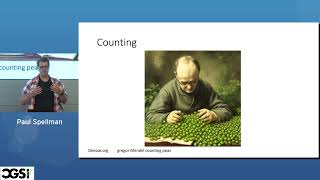
Constraints on Tumor Development
Explore genetic intra-tumor heterogeneity and evolutionary patterns across thousands of cancer genomes, examining key constraints in tumor development and progression.
Spatial Modeling of Single-Cell Data Using Deep Learning
Explore deep learning approaches for spatial modeling of single-cell data, focusing on Hi-C reads imputation and transcriptomic data prediction through graph-based methodologies.
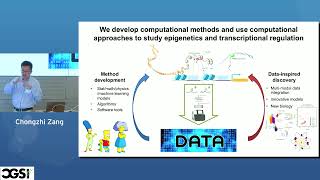
Epigenomics Data Analysis - A Tutorial
Master essential techniques for analyzing epigenomics data, including ChIP-Seq analysis, histone modification clustering, and transcriptome integration methods for genomic research.
Variational Inference for Fun and Profit
Discover the fundamentals of variational inference in statistical analysis, exploring Bayesian techniques, SuSiE PCA methodology, and practical applications in computational genomics and regression modeling.
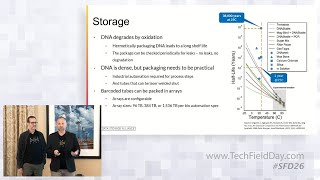
DNA Data Storage: Introduction and Future Storage Solutions
Discover how DNA data storage revolutionizes traditional systems with unparalleled density and efficiency, exploring its processes, standards development, and future potential for petabyte-scale storage solutions.
AI Design of Molecular Machines - Understanding Proteomics and Protein Structure Prediction
Explore how AI systems like AlphaFold2 revolutionize protein folding prediction and molecular machine design, advancing precision medicine and environmental solutions.
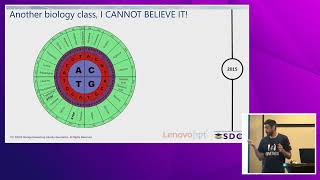
DNA Data Storage: A Decade of Coding and Decoding Progress
Explore the evolution of DNA data storage technology over the past decade, examining coding algorithms, mapping schemes, error correction methods, and key achievements in this revolutionary storage medium.
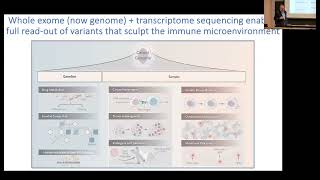
Measuring Cancer and Immune Systems Using Cell-free DNA Sequencing
Discover groundbreaking techniques in cancer detection through cell-free DNA sequencing, exploring how immunotherapy measurements can revolutionize cancer treatment and immune system monitoring.
Integrating Single-Cell Data with Substantial Batch Effects - Improving cVAE Regularization
Explore advanced techniques for integrating single-cell data with substantial batch effects, focusing on cVAE regularization constraints to improve batch correction while preserving biological information.

Integrating -omic Data Across Datasets and Layers
Explore techniques for integrating -omic data across datasets and layers, focusing on redundancy, neural networks, and genetic associations in cancer research.
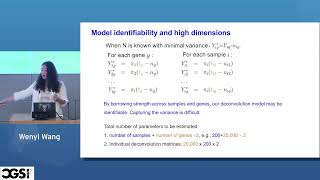
Computational Deconvolution of Cancer Genomes and Transcriptomes - CGSI 2022
Explore computational methods for deconvoluting cancer genomes and transcriptomes. Learn advanced techniques to analyze tumor heterogeneity and uncover molecular phenotypes shaping clinical outcomes in cancer research.
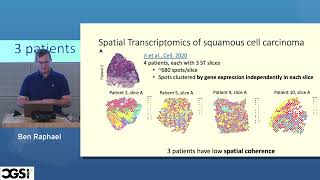
Alignment, Integration, and Modeling of Spatial Transcriptomics Data
Explore alignment, integration, and modeling techniques for spatial transcriptomics data, focusing on innovative approaches to analyze gene expression patterns in tissue samples.
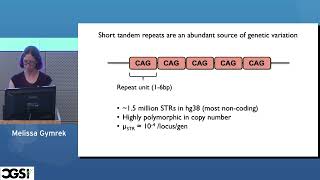
A Practical Guide to Performing Genome-Wide Analyses of Tandem Repeats
Explore genome-wide tandem repeat analysis techniques. Learn practical tools and methods for identifying, profiling, and interpreting repetitive DNA sequences across entire genomes.
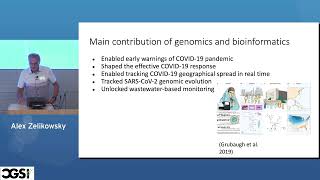
Analysis of SARS-CoV-2 Sequencing Data
Explore advanced techniques for analyzing SARS-CoV-2 sequencing data, including haplotype assembly, phylogeny reconstruction, variant identification, and network representation of genomic information.