
Reconstructing Every Haplotype with De Novo Assembly
Discover advanced techniques for haplotype-resolved de novo genome assembly, focusing on phased assembly graphs and innovative methods for diploid and polyploid genome reconstruction.
STRUCTURE Harvester: Determining Optimal Subpopulations Using Python Scripts
Master the STRUCTURE Harvester analysis method using Python scripts to determine optimal subpopulation numbers in genomic data, with practical demonstrations and result interpretation guidance.
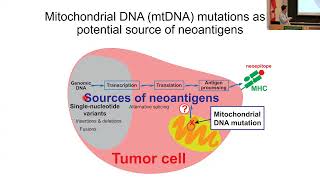
How to Generate New Hypotheses and Research Directions by Single-Cell Data Analysis
Discover advanced techniques for analyzing single-cell data to develop innovative research hypotheses and explore new directions in cancer research and mathematical oncology.
Single Cell Data Integration Using Optimal Transport - 2023
Explore single-cell data integration using optimal transport. Learn unsupervised algorithms for multi-omic studies, alignment techniques, and performance quantification in computational genomics.

Why is This So Hard? It Should Be Easy - Challenges in Computational Genomics
Explore challenges in computational genomics and learn strategies to overcome complexities in data analysis and interpretation.
Applications of K-mers in Computational Genomics - CGSI 2024
Explore applications of k-mers in computational genomics, focusing on efficient data structures and algorithms for large-scale sequence analysis and comparison.
Biological Data Insight and Modeling with ParetoGP for Multiomics Analysis
Gain insights from multiomics data using ParetoGP, exploring key variables and generating interpretable models for cancer therapeutics and bone regeneration.
Molecular Approach: Navigating the Future of Healthcare
Explore how molecular approaches and genomics are revolutionizing healthcare, particularly in personalized treatments and fertility. Gain insights into the future of medicine from a leading scientist.
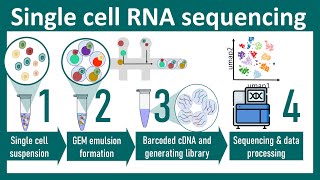
Single Cell RNA Sequencing Overview: ScRNA-seq vs Bulk Seq and Chemistry - Bio Techniques
Explore single-cell RNA sequencing: overview, comparison with bulk sequencing, chemistry, and techniques. Gain insights into this advanced genomic analysis method.

Sequence Data - Part 2
Explore advanced techniques for analyzing and interpreting sequence data, enhancing your bioinformatics skills and research capabilities.

Sequence Data - Part 1
Explore fundamental concepts and techniques for analyzing sequence data in bioinformatics, focusing on DNA and protein sequences.
Insights into 4D Genome from Leveraging Hi-C Technology with Elastic Network Models
Explore chromatin dynamics using Gaussian Network Model and Hi-C data. Gain insights into gene co-expression, transcriptional regulation, and cell differentiation through 4D genome analysis.
rhAmpSeq CRISPR Analysis Tool Tutorial
Learn to analyze CRISPR experiments using IDT's rhAmpSeq™ tool. Explore features for efficient data interpretation and result visualization in genome editing projects.
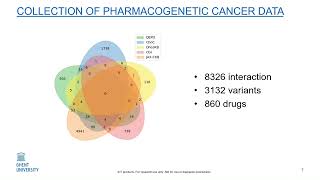
Pan-Cancer Pharmacogenetics: Targeted Sequencing Panels vs Exome Sequencing
Explore advantages of xGen Exome Panel for pan-cancer pharmacogenetics studies, comparing it to targeted panel solutions and examining variant-drug interactions.
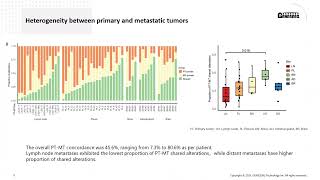
Whole Exome Sequencing Reveals Timing and Origins of Metastasis in Lung Cancer
Explore whole exome sequencing's role in revealing metastasis timing and origins in lung cancer using IDT's xGen Exome Panel.
M2GEN's ORIEN Avatar Program: Accelerating Oncology Research with Custom xGen Exome Research Panel
Accelerate oncology research using M2GEN's ORIEN Avatar program and IDT's xGen Exome Panel. Learn about sequencing metrics and use cases.
ctDNA for Minimal Disease Research by Hybridization Capture in Resected Cancer Samples
Explore ctDNA hybridization capture for minimal residual disease research in cancer, overcoming challenges and discovering new biomarkers.
Automated IDT xGen Hybridization Capture of DNA Libraries on Biomek i7 Hybrid Genomics Workstation
Automate IDT xGen™ hybridization capture for uniform coverage and robust performance. Learn to generate reproducible targeted NGS libraries using Biomek i7 automation for efficiency and consistency.
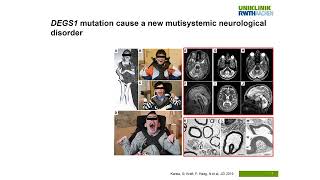
The Power of Whole Exome Sequencing to Unravel the Cause of Rare Disease
Explore whole exome sequencing's potential in rare disease research, focusing on case studies and advanced techniques for uncovering genetic causes.
The History and Future of Whole Exome Sequencing at the McDonnell Genome Institute
Explore the evolution and impact of whole exome sequencing at MGI, including applications, read depth, CNV detection, and gene fusion identification.
The Future of Personalized Genomics: Advancing Hematology Research with NGS
Explore next-generation sequencing's role in advancing hematology research and personalized genomics for improved patient outcomes.