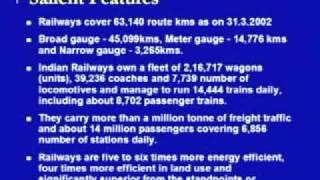
Transportation Engineering II
Comprehensive exploration of railway engineering and airport design, covering track components, geometric design, signaling systems, aircraft characteristics, runway planning, and terminal facilities.
Dynamics of Physical System
This course covers lessons on newton's method and constraints, derivation of the Lagrangian equation, bond graph approach, vector field around equilibrium points, high dimensional linear systems, and dynamics of nonlinear systems.
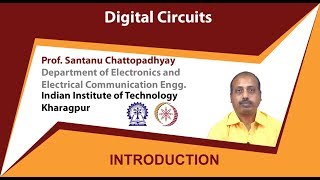
Digital Circuits
Comprehensive exploration of digital circuits, covering number systems, Boolean algebra, logic gates, arithmetic circuits, sequential circuits, finite state machines, data converters, memory, FPGA, VHDL, and microprocessors.
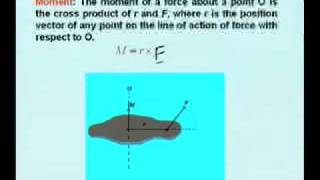
Engineering Mechanics
Comprehensive exploration of engineering mechanics, covering equilibrium, forces, friction, kinematics, kinetics, and vibrations. Develops analytical skills for solving complex mechanical systems.
Probability Foundation for Electrical Engineers
Comprehensive exploration of probability theory for electrical engineers, covering fundamental concepts, random variables, expectation, and limit theorems with rigorous mathematical foundations.
Digital Electronics Tutorial
Explore fundamental concepts of digital electronics through hands-on LED experiments, transistor applications, and circuit troubleshooting in this comprehensive tutorial series.

Power System Dynamics
This course covers lessons in power system stability, modelling of synchronous machine, excitation systems, load modelling for stability, voltage stability and methods of improving stability.
Broadband Networks
Explore QoS, packet scheduling, TCP congestion control, IP addressing, MPLS, and voice over IP in broadband networks. Learn about ATM, IntServ, DiffServ, and metro Ethernet access.
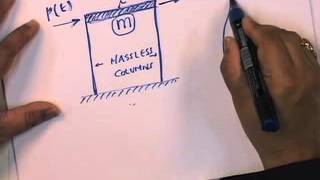
Structural Dynamics
Comprehensive exploration of structural dynamics, covering single and multi-degree freedom systems, vibration analysis, and earthquake response for various structures.
Fundamentals of Semiconductor Devices
Explore semiconductor physics, device structures, and operational principles. Covers energy bands, carrier dynamics, p-n junctions, transistors, and advanced topics like heterojunctions and compound semiconductors.
High Voltage DC Transmission
This course will provide in-depth knowledge of HVDC system, converter topology, control of HVDC system, filters, analysis of HVDC/HVAC systems, etc.
Probability and Random Variables - Processes for Wireless Communications
Explore probability and random processes in wireless communications, covering axioms, conditional probability, random variables, and applications in fading channels and array processing.
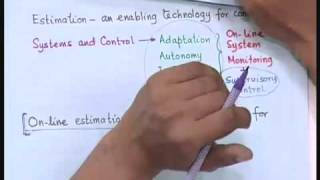
Estimation of Signals and Systems
This course covers lessons on probability theory, random variables, mean and variance, linear signal models, z-transform, Kalman filter, variants of least squares estimation, and estimation problems in instrumentation and control.
Dynamics of Ocean Structures
Explore ocean structure dynamics, from types and environmental forces to vibration analysis and stochastic dynamics. Learn about platforms, fluid-structure interaction, and response control methods.
RF Integrated Circuits
The course will cover low noise amplifiers, mixers, power amplifiers, frequency synthesizers (and phase locked loops). The course will also cover several modern radio architectures.
Coding Theory
This course provides an introduction to traditional and modern coding theory. Topics covered include linear block codes, cyclic codes (BCH and RS codes), convolutional codes, turbo codes and low-density parity-check (LDPC) codes.
Advanced Gas Dynamics
The course concentrates primarily on the understanding of the physical concepts of compressible flow and keeps a reference to various numerical methods for solving the governing equations to a minimum.
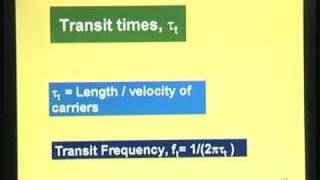
High Speed Devices and Circuit
Comprehensive exploration of high-speed semiconductor devices, focusing on compound materials, fabrication techniques, and advanced transistor designs like MESFET, HEMT, and HBT.
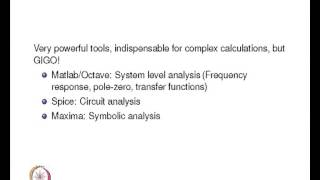
Analog IC Design
Comprehensive exploration of analog IC design, covering negative feedback amplifiers, opamps, compensation techniques, and advanced topics for practical circuit implementation.
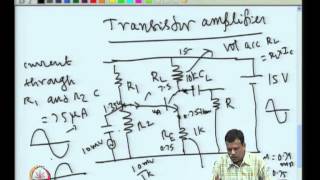
Circuits for Analog System Design
This course will concentrate on three aspects: 1) how to design and analog circuits, 2) error budgeting, and 3) various techniques involved in analog circuits.

Computational Fluid Dynamics
Comprehensive exploration of computational fluid dynamics, covering mathematical foundations, discretization methods, and numerical techniques for solving fluid flow problems.