
Electronics
Comprehensive exploration of electronic components and circuits, covering diodes, transistors, amplifiers, FETs, MOSFETs, and operational amplifiers, with in-depth analysis and practical applications.
Control Engineering
Comprehensive exploration of control engineering principles, from basic concepts to advanced techniques, covering system modeling, analysis, and design methods for various control applications.
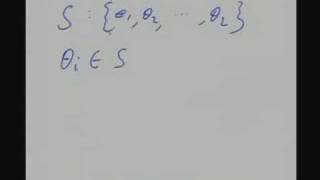
Probability & Random Variables
Comprehensive exploration of probability theory, random variables, and stochastic processes, covering fundamental concepts to advanced topics like spectral analysis and adaptive filtering.
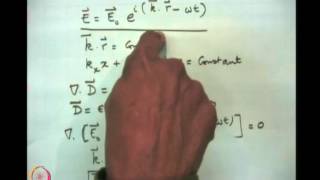
Quantum Electronics
Explore anisotropic media, nonlinear optics, and quantum mechanics in electromagnetic fields. Gain insights into advanced concepts like parametric down conversion and balanced homodyning.
Design of Steel Structures
The course provides material specifications and design considerations. It provides relevant material properties of different types of steel. It deals with two types of connections namely welded and bolted connections.
Finite Element Modeling of Welding Processes
Comprehensive exploration of finite element modeling for various welding processes, covering theory, techniques, and applications in fusion, solid-state, and advanced welding methods.

Statics and Dynamics
The objective of this course is to present the basic principles of dynamics and help develop proficiency in applying these principles to formulate and solve dynamics problems. We will also study applications of dynamics concepts to modeling engineered ma…
Prestressed Concrete Structures
This course covers topics of axially loaded members, flexure, shear, torsion, losses in prestress, material properties, and design of end zones of prestressed members.
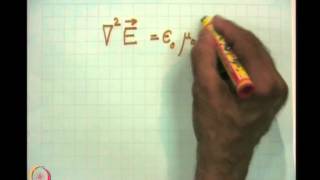
Quantum Mechanics and Applications
Explore quantum mechanics fundamentals, including wave-particle duality, Schrödinger equation, and applications in atomic physics. Develop problem-solving skills for quantum systems.
Quantum Mechanics and Applications
In this course, you will learn Basic mathematical preliminaries: Dirac Delta function and Fourier Transforms. Wave-particle duality, one- and three-dimensional Schrodinger equation. The free particle problem in one dimension. Wave Packets and Group veloc…

Robotics
Comprehensive exploration of robotics fundamentals, covering kinematics, dynamics, trajectory planning, control, sensors, vision, motion planning, and advanced topics like intelligent robots and biped walking.
Vehicle Dynamics
Comprehensive exploration of vehicle dynamics, covering longitudinal, lateral, and vertical aspects, tire mechanics, handling characteristics, and ride comfort analysis.
Digital Signal Processing
The course covers lessons in digital signal processing. Topics include Discrete-Time Signal and System, Frequency Domain Representation of Discrete Signals, z-Transform, Solution of Difference Equation, Tutorial on Discrete-Time Signals and their Transfo…
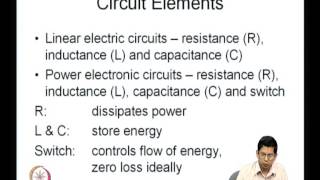
Pulse Width Modulation for Power Electronic Converters
Comprehensive exploration of pulse width modulation techniques for power electronic converters, covering DC-DC, DC-AC, and multilevel converters, with analysis of harmonics, losses, and applications.
Foundation Engineering
In this course, you will learn the basics of Foundation engineering and its concepts like shallow foundation, lateral earth pressure theories and retaining walls, machine foundations and more.
Signals and Systems
This course is a study of signals and systems, covering topics: formal definition of 'signal' and 'system', continuous and discrete signals, continuous and discrete-time systems, Linear Time-Invariant (LTI) systems, representation of continuous and discr…
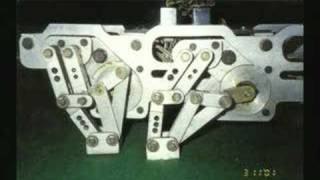
Robotics
This course deals with topics in robotics: technologies in robotics, its parallel and grippers manipulators, sensors, trajectory planning, velocity analysis, image processing, forward position control, and dynamic analysis of robotics.
Engineering Mechanics
This is a basic first-level course to learn rigid body mechanics covering both statics and dynamics. Statics covers free body diagrams, equilibrium of rigid bodies, analysis of trusses and beams, discussion on friction, virtual work and stability.
Electromagnetic Theory
Comprehensive exploration of electromagnetic theory, covering fields, potentials, Maxwell's equations, waves, and applications in waveguides and radiation. Ideal for advanced physics students.
Fundamentals of Electrical Engineering
This course will also cover Single Phase Transformers, Three Phase Induction Machines and DC Machines. By the end of the course, the students should be able to gather high-quality knowledge of basic Electrical Engineering.
Principles of Signals and Systems
This course introduces the fundamental principles of signals and system analysis. These concepts form the building blocks of modern digital signal processing, communication and control systems. Hence, a sound understanding of these principles is necessar…