Experiments in Social Computation - C4 Public Lectures
Explore social computation through experiments on graph coloring, consensus, and network formation. Gain insights into collective problem-solving and strategic interactions in distributed networks.
Engineering Crypto-Economies Through the Lens of Complex Systems
Explore cryptoeconomics through complex systems, covering agent-based modeling, game theory, and optimization. Includes live demo of DAO simulation based on Ising model in statistical mechanics.
The Collapse of Economies
Explore economic collapses, their causes, and recovery strategies through Venezuela's case study. Gain insights on autocatalysis, public debt, inflation, and rebuilding fragile economies.
David Krakauer on Emergent Political Economies and A Science of Possibility
Exploring emergent political economies through complexity science, examining historical tensions, mathematical approaches, and collective computation to understand societal dynamics and possibilities.
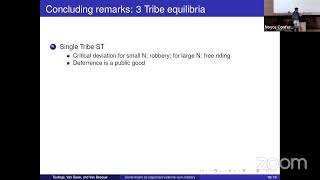
The Emergence of Government as Organized Violence-Cum-Robbery
Explore the evolution of organized government through the lens of violence and resource control, examining key societal shifts and equilibria in human history.
The Evolution of Root Systems & Biogeochemical Cycling
Exploring root system evolution and its impact on biogeochemical cycles. Insights into plant adaptation, nutrient acquisition, and ecological interactions, with implications for understanding complex systems and future technologies.
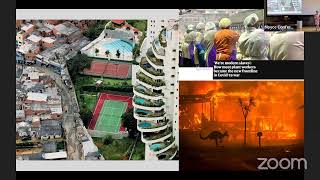
New Economics for a Successful Policy Paradigm
Explore a radical restructuring of economic theory integrating recent research and ethical commitments, addressing sustainability, equal dignity, and social injustice through dynamic, interdisciplinary approaches.

Knowledge, Prosperity and Economic Complexity - How Are They Connected?
Explore the intricate connections between knowledge, prosperity, and economic complexity, examining societal structures, inequality, and the role of distributed knowledge in shaping global economic landscapes.
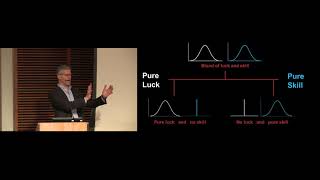
The Science of Success - What's Luck Got to Do with It?
Explore the interplay of skill and luck in shaping life outcomes. Learn to define, measure, and improve skill while managing luck, with examples from sports, entertainment, and business.
The Ecology of Society - Complex Adaptive Systems in Nature and Human Societies
Explore ecological and economic systems as complex adaptive systems, examining emergent behaviors, critical transitions, and evolutionary forces shaping resource allocation and cooperation.
The Peculiar Logic of Human Values
Explore the conceptualization of human value systems, including types, subjectivity vs. objectivity, and their impact on behavior and social interactions.
A Cooperative Species: Why Policies Designed for "Wicked Men" Fail - Part 3
Explore how ethical dispositions and cooperative motivations impact societal challenges, challenging Machiavelli's approach and examining the interplay between policy and human behavior.
A Cooperative Species - Evolutionary Origins of Human Altruism - Lecture 1
Explore the evolutionary origins of altruistic cooperation, challenging traditional notions of 'selfish genes' and Homo economicus through archaeological, genetic, and climatic evidence.
Will It Cost the Earth to Save the Planet?
Experts discuss the economic implications of addressing climate change, exploring strategies, costs, and potential returns on investment for mitigating global warming's impacts.
The Penguin and The Leviathan - The Science and Practice of Cooperation
Explore how diverse systems leverage human cooperation instead of traditional incentives to achieve goals, challenging long-held beliefs about managing complex systems.
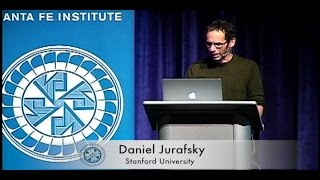
Eating Our Words: What the Language of Food Reveals About History and Culture
Explore how language in food reveals insights on history, economics, and culture. From ketchup's origins to menu linguistics, uncover surprising connections between words and cuisine.
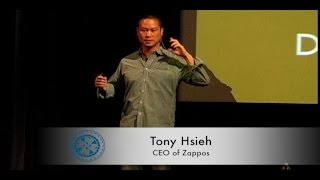
City as a Startup - Transforming Downtown Las Vegas
Tony Hsieh's ambitious $350 million Downtown Project aims to transform Las Vegas' urban core into a vibrant, connected community. Explore the project's successes, challenges, and potential lessons for urban revitalization.
The Leverage Cycle and Debt Forgiveness - Ulam Lectures 2017 Part 2
Explore debt's role in economic cycles, crises, and recovery. Geanakoplos examines leverage, forgiveness, and systemic risks, using recent financial crises as case studies.
Trust and Panic: The History and Impact of Debt - Lecture 1
Explore the historical, literary, and economic significance of debt, default, and financial crises through John Geanakoplos' analysis of the leverage cycle and its impact on major economic events.
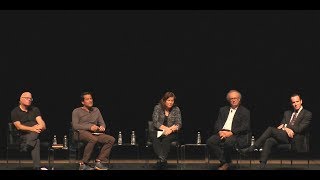
The Complexity of Economics - Exploring Markets as Complex Adaptive Systems
Explore the intersection of complexity science and economics with experts discussing agent-based modeling, behavioral economics, and machine learning to gain insights into real-world economic systems.
The Information Edge: Creation in Life, the Economy, and the Universe - Lecture 1
Explore the Information Edge principle and its role in creation across the universe, from cosmic structures to economic systems, with MIT professor Seth Lloyd.