
Economic History Lessons in One Minute
Concise economic history lessons covering major events, theories, and figures, from the Great Depression to modern financial crises, in bite-sized one-minute explanations.

Economics by CrashCourse
In which Jacob Clifford and Adriene Hill introduce you to Crash Course Economics! CC Econ is a new course from the Crash Course team.

Guest Lecture: Maurice Greenberg on AIG and the Financial Crisis
Maurice Greenberg shares insights on building AIG, navigating global markets, and his perspective on the 2008 financial crisis, drawing from his extensive experience in the insurance industry.

Misbehavior, Crises, Regulation and Self-Regulation in Financial Markets - Lecture 12
Explore financial market regulation across five levels: firm, trade groups, regional, national, and international. Learn about regulatory bodies, historical context, and efforts to prevent market manipulation.

Risk and Financial Crises - Probability Theory in Financial Markets
Explore probability theory in financial crises context, covering expected value, variance, covariance, and regression analysis. Learn about risk decomposition and the limitations of normal distribution assumptions in finance.

Investment Banking: Principles, Regulation, and Career Paths - Lecture 19
Explore investment banking principles, regulations, and career paths with insights from industry experts. Gain understanding of shadow banking, repo markets, and Wall Street's role in the financial crisis.

The Leverage Cycle and the Subprime Mortgage Crisis - Financial Theory
Explore the Leverage Cycle theory and its role in the 2007-09 financial crisis. Learn how collateral requirements impact asset prices and contrast this with traditional financial theories.
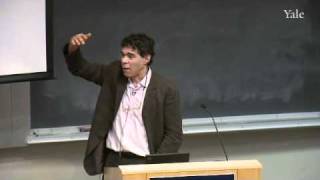
Introduction to Financial Theory - Why Study Finance?
Explore financial theory's history, efficient markets hypothesis, leverage cycle, and real-world applications through lectures and experiments. Gain insights into the field's relevance and limitations.

Institutions and Incentives in Mortgages and Mortgage-Backed Securities
Exploración histórica y análisis de crisis financieras, enfocándose en el mercado hipotecario. Se examinan datos recientes y se evalúan las causas de la crisis económica actual.
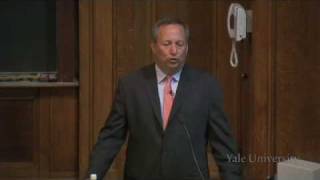
Learning from and Responding to Financial Crisis - Lecture 2
Explore financial crisis impacts, policy responses, and regulatory challenges with insights on fiscal policy, monetary policy, and financial market regulation from a leading economist.
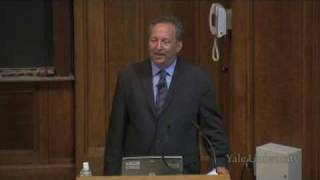
Learning from and Responding to Financial Crisis - Lecture 1
Explore financial crises, monetary policy, and economic cycles with insights from Lawrence Summers. Gain understanding of modern financial markets, behavioral finance, and government interventions in economic fluctuations.

The Leverage Cycle and Crashes - Financial Theory Lecture 26
Explore mathematical models of leverage cycles, examining how supply, demand, impatience, and volatility affect interest rates and leverage, and learn to identify key elements of financial crises.
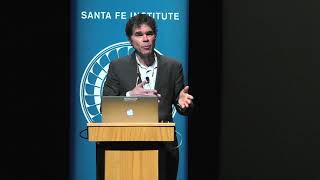
The Leverage Cycle and Debt Forgiveness - Ulam Lectures 2017 Part 2
Explore debt's role in economic cycles, crises, and recovery. Geanakoplos examines leverage, forgiveness, and systemic risks, using recent financial crises as case studies.
Trust and Panic: The History and Impact of Debt - Lecture 1
Explore the historical, literary, and economic significance of debt, default, and financial crises through John Geanakoplos' analysis of the leverage cycle and its impact on major economic events.
Brooklyn Quant Experience - A Tale of Two Tails: Size, Volatility, and Uncertainty
Explore size, volatility, and uncertainty in finance with Maggie Copeland's lecture on two-tailed mortality, applications, and trading implications.
Economics
Explore diverse economic topics from inequality to decision-making, growth theories to financial crises, with insights from leading experts in the field.
Financial Crisis Case Studies
Explore major financial crises through concise case studies, covering events from the Great Depression to modern economic challenges, with insights on causes, consequences, and lessons learned.

Shift - Overcoming Financial Crisis and Embracing Change
Inspirational talk about overcoming unexpected financial crisis and life challenges through persistence and courage, emphasizing the power of resilience in achieving success.
The Credit Market Crunch - Navigating Challenges and Opportunities
Experts discuss the credit market crunch, analyzing its impact on investments and retirement funds. Insights on fixed income, performing credit, and public employee pensions in a challenging economic landscape.
They Might Be Robots - Using Data for Investment Management and Trading
Explore data-driven investment strategies, from industry trends to machine learning techniques, for portfolio management and active trading in this insightful talk by Dan Von Kohorn.

How Spiders Destroyed the Financial System in 2008
Unraveling the 2008 financial crisis through an innovative spider analogy, offering a fresh perspective on the U.S. housing market collapse and its far-reaching economic consequences.