The Science of Cities: Defining Size, Shape, Scale and Performance Using Percolation Theory
Exploring how city size impacts shape and performance using percolation theory, challenging the notion that bigger cities are always better through innovative spatial analysis methods.
Decarbonising Australian Electricity - Policy and Technology Options for the National Energy Market
Explore policy and technology options for decarbonising Australian electricity, including renewables, nuclear, and fossil fuels, to meet 2050 targets at the lowest cost to consumers.

Economic Policy for the 21st Century
Explore economic policy challenges of the 21st century, including climate change and the Global Financial Crisis, and learn about potential policy responses for the modern era.
The Burden of Democracy - India After 65 Years
Explore India's democratic journey, challenges, and progress since independence, examining key issues like identity, education, healthcare, and the role of institutions.
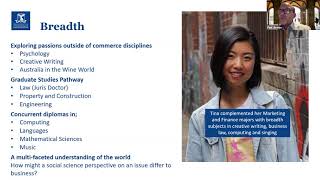
Bachelor of Commerce - Pathway to a Global Career
Explore the Bachelor of Commerce program, its diverse majors, and career opportunities. Learn about student experiences, extracurriculars, and how it prepares you for global success.
Climate Conversations - Opposing Views on Rising Tides
Explore the Biden Administration's impact on Australia's climate policy, discussing global commitments, economic sustainability, and potential policy shifts ahead of the Earth Day Summit.
Does Poverty in Childhood Beget Poverty in Adulthood in Australia?
Explore the link between childhood and adult poverty in Australia, examining intergenerational disadvantage and its implications for wealth distribution and social mobility.
Capturing Heterogeneity in Consumer Sentiment
Explore a new approach to measuring consumer sentiment, improving economic monitoring and policy-making for household consumption in light of the COVID-19 pandemic's impact.
Strategy: An Introduction to Game Theory
Comprehensive introduction to game theory, covering key concepts, strategies, and applications in economics, politics, and decision-making through diverse examples and mathematical models.

Materials Characterization
Comprehensive exploration of materials characterization techniques, covering optical and electron microscopy, X-ray diffraction, and transmission electron microscopy, with hands-on demonstrations and practical applications.
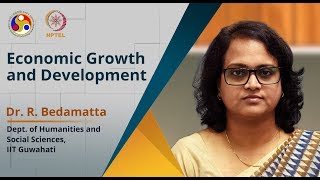
Economic Growth and Development
With the help of major concepts used in growth and development economics, a student taking this course will be able to participate in the debate and understand the nuances surrounding the issue of economic development.
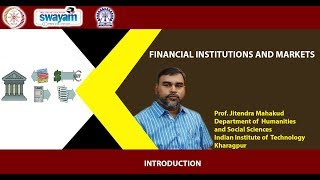
Financial Institutions and Markets
Comprehensive exploration of financial systems, markets, institutions, and instruments, covering risk analysis, regulatory frameworks, and global market dynamics.
Game Theory and Economics
The course would introduce to the fundamental tools of game theory, a few equilibrium concepts, apart from numerous exercises and applications.
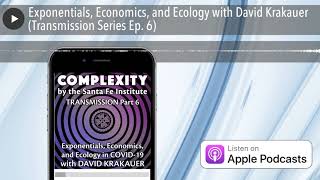
Exponentials, Economics, and Ecology with David Krakauer
Explore exponential changes, nonlinear dynamics, and interconnected systems in ecology and economics. Gain insights on aligning individual and public good in a complex world.
Andy Dobson on Disease Ecology & Conservation Strategy
Exploring disease ecology, conservation strategies, and complex systems thinking to address global challenges in biodiversity, economics, and public health through interdisciplinary research and innovative approaches.
Maria del-Rio Chanona on Modeling Labor Markets & Tech Unemployment
Exploring labor market dynamics and technological unemployment through network analysis and agent-based modeling. Insights on job security, skill transferability, and adapting to automation in the evolving workforce.
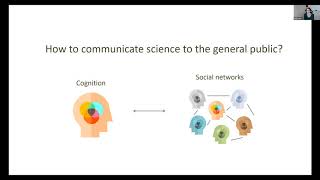
Incentives, Levers and Beliefs
Explore psychological, social, and economic mechanisms to mitigate pandemics and their societal effects. Gain insights from experts on collective decision-making and applying rigorous social science concepts to combat current and future health crises.
Rigorous Uncertainty: Science During COVID-19 with David Krakauer
Exploring COVID-19's impact through complexity science, discussing citizen-based medicine, data challenges, group size recommendations, and out-of-equilibrium thinking to reveal hidden interconnections in modern life.
COVID-19 and Complex Time in Biology and Economics with David Krakauer
Explore complex systems insights on COVID-19, including timing's role in biology and economics, network dynamics, and societal adaptation to rapid change.
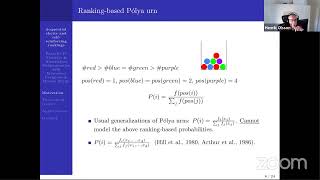
Sequential Choice and Self-Reinforcing Rankings
Explore the mathematical consequences of choice systems where option rankings influence selection probabilities, and popularity determines rankings, leading to potential convergence and unpredictability.
A New Thermodynamics of Biochemistry - Part 2
Exploring thermodynamics in living systems, from cellular metabolism to ecosystems. Insights on climate change, agriculture, and the search for extraterrestrial life through a new lens of biochemistry and physics.