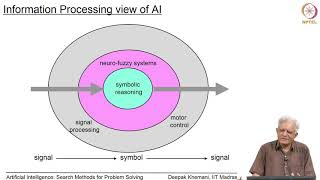
Artificial Intelligence
Explore artificial intelligence fundamentals, algorithms, and applications. Learn about search techniques, game theory, planning, expert systems, logic, and constraint satisfaction problems.

Stanford Seminar - Modeling and Interacting with Other Agents, Claire Tomlin
Explores innovative approaches to predicting agent behavior in autonomous systems, combining game theory and behavioral models for improved motion planning and interaction in multi-vehicle scenarios.

Cryptocurrency Engineering and Design - Spring 2018
Explore Bitcoin and cryptocurrency design, focusing on cryptography, game theory, and network architecture. Gain insights into blockchain technology, mining, transactions, and advanced concepts like Lightning Network.

Game Theory: Understanding Others' Perspectives and Strategic Decision-Making - Lecture 2
Explore game theory concepts like dominant strategies, rationality, and common knowledge through real-world examples. Gain insights into strategic decision-making and player interactions.

Nash Equilibrium - Bad Fashion and Bank Runs - Game Theory Lecture 5
Explore Nash equilibrium, its applications, and coordination problems in game theory. Learn how communication can solve issues in social settings and investment scenarios.

Mixed Strategies in Game Theory - Applications in Sports, Dating, and Taxation
Explore mixed strategies in game theory through real-world examples like sports, dating, and taxes. Learn three interpretations and their implications for decision-making and policy applications.

Backward Induction: Chess, Strategies, and Credible Threats in Game Theory - Lecture 15
Explore game theory concepts like Zermelo's theorem, perfect information, and Nash equilibria in sequential games. Learn about backward induction and its implications for strategic decision-making.

Repeated Games: Cheating, Punishment, and Outsourcing - Game Theory Lecture 22
Explores game theory in repeated interactions, focusing on strategies for maintaining cooperation, punishment mechanisms, and applications to business relationships and moral hazard problems.

Introduction to Game Theory - Strategies, Payoffs, and Strategic Thinking
Explore game theory fundamentals through interactive play, learning strategic thinking, decision-making, and real-world applications. Understand key concepts like dominant strategies and coordination problems.

Evolutionary Stability: Cooperation, Mutation, and Equilibrium in Game Theory - Lecture 11
Explore evolutionary stability in game theory, examining cooperation, mutation, and equilibrium concepts. Learn how biological strategies relate to economic principles like Nash equilibrium and domination.

Nash Equilibrium - Location, Segregation and Randomization in Game Theory
Explore game theory concepts like Nash equilibrium, segregation, and mixed strategies through candidate-voter models, Schelling's location game, and rock-paper-scissors, revealing how individual choices impact societal outcomes.

Sequential Games: Moral Hazard, Incentives, and Backward Induction
Explore sequential games, moral hazard, and incentive design through borrower-lender scenarios. Learn backward induction, commitment strategies, and their applications in game theory.

Best Responses in Game Theory - Soccer Penalties and Business Partnerships
Explore game theory concepts through soccer penalty kicks and business partnerships, focusing on best responses and introducing Nash Equilibrium.

Evolutionary Game Theory: Fighting and Contests - Lecture 33
Explore how game theory applies to evolution and behavior, analyzing encounters between organisms as mathematical games to infer fitness payoffs and strategy proportions in populations.

Subgame Perfect Equilibrium: Matchmaking and Strategic Investments - Lecture 19
Explore subgame perfect equilibrium through examples in trust games, matchmaking scenarios, and strategic investment decisions, enhancing understanding of game theory concepts.

Repeated Games: Cooperation vs. The End Game - Lecture 21
Explore how repeated interactions in game theory affect cooperation, examining strategies, incentives, and real-world applications like lame duck leaders and retirement dynamics.

Subgame Perfect Equilibrium - Wars of Attrition in Game Theory - Lecture 20
Explore game theory's "wars of attrition" in competitive scenarios. Analyze long, costly conflicts using rational strategies, equilibria, and probabilities. Gain insights into trench warfare, strikes, and business rivalries.

Imperfect Information: Information Sets and Sub-game Perfection in Game Theory - Lecture 18
Explore game theory concepts like information sets, imperfect information games, and subgame perfection. Learn to analyze complex strategic interactions and refine equilibrium notions in sequential games.

Backward Induction - Reputation and Duels in Game Theory - Lecture 16
Explore game theory concepts like reputation-building, chain-store paradox, and dueling. Learn to apply dominance and backward induction in strategic decision-making and pre-emption games.

Evolution, Emotion, and Reason: Emotions - Part II
Explore evolutionary explanations for emotional responses like parental love, gratitude, spite, and cultural differences in revenge, examining their role in social interactions and cooperation.
Strategy: An Introduction to Game Theory
Comprehensive introduction to game theory, covering key concepts, strategies, and applications in economics, politics, and decision-making through diverse examples and mathematical models.