What's Holding Back AI in Drug Discovery?
Explore the challenges impeding AI's progress in drug discovery with insights from DeepCure's CEO Kfir Schreiber, shedding light on potential solutions and future directions.
Regulators of Fibroblast Fate and Fibrosis in Cardiac Response to Myocardial Infarction
Uncover the role of fibroblasts in cardiac response to myocardial infarction and explore how transcriptome modifications impact heart recovery and fibrosis in acute and chronic stress.
What's Next for Data-Driven Medicine and AI-Powered Innovation - Insights from insitro CEO
Explore AI's impact on drug discovery and targeted treatments with insitro CEO Daphne Koller. Gain insights into data challenges, company culture, and the future of AI-powered innovation in medicine.
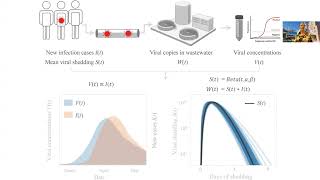
DNA Language Models and Convolution - Lecture 12
Dive into DNA language models and convolution techniques, exploring advanced computational approaches for analyzing genetic sequences and structures.
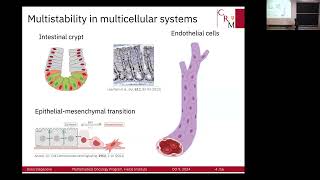
A Method to Coarse-Grain Multi-Agent Stochastic Systems with Regions of Multistability
Dive into a mathematical oncology seminar exploring coarse-graining techniques for multi-agent stochastic systems, focusing on regions of multistability in cancer modeling.
Can Gut Reactor Models Play a Role in Mathematical Oncology?
Explore the potential role of gut reactor models in mathematical oncology through Hermann Eberl's seminar on innovative approaches to cancer research.
Connecting GWAS and eQTLs Through Colocalization - MPG Primer 2024
Dive into connecting GWAS and eQTLs through colocalization. Explore basic genetics principles related to human populations and diseases, focusing on complex trait genetics and data analysis techniques.
Evaluation and Interpretation of Human Genomic Variation
Dive into human genomic variation evaluation and interpretation with Professor Douglas Fowler's presentation on cutting-edge genome sciences research and its implications.
Ancient Genetic Clues into Modern Human Disease - Part 2
Explore ancient and historical DNA's role in understanding modern human diseases. Gain insights into ethical frameworks, research gaps, and future opportunities in this evolving field of genomic research.

Foundation Models in Drug Discovery - Ray Summit 2024
Explore how foundation models are revolutionizing drug discovery across multiple biological domains. Gain insights into Recursion's large-scale approach using GPUs, robotics, and petabytes of data to transform pharmaceutical innovation.
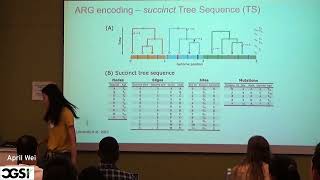
Genotype Representation Graph: Enabling Efficient Analysis of Biobank-Scale Data
Dive into efficient analysis of biobank-scale data using Genotype Representation Graphs. Explore innovative methods for estimating coalescence times and inferring whole-genome histories in large population datasets.
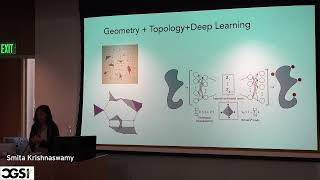
Uncovering Cellular Dynamics and Metabolism with Geometric Deep Learning and Optimal Transport
Explore geometric deep learning and optimal transport techniques for uncovering cellular dynamics and metabolism in this insightful computational genomics presentation.
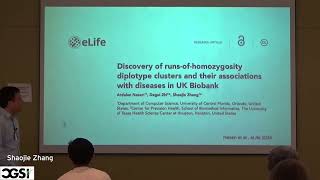
PBWT-based Algorithms for Large Cohort Genetics - CGSI 2024
Explore PBWT-based algorithms for large cohort genetics, covering efficient haplotype matching, IBD detection, and innovative approaches like d-PBWT and Syllable-PBWT for genomic data analysis.
Using Pooled CRISPR Screens to Study Biology
Explore the application of pooled CRISPR screens in biological research. Gain insights into cutting-edge techniques for studying gene function and cellular processes at a genome-wide scale.
Uni-alignment: A Parameter-free Framework for Fast and Accurate Sequence Alignment
Explore a parameter-free framework for fast and accurate sequence alignment, focusing on UniAligner's innovative approach to genomic data analysis and its implications for computational biology.
Inference of Selective Effects and Demographic Histories of Human Gut Commensals - CGSI 2024
Explore the evolutionary dynamics of human gut microbiomes through selective sweeps, rapid evolution, and strain turnover. Gain insights into bacterial adaptation within and across hosts.
Reconstructing Every Haplotype with De Novo Assembly
Dive into advanced techniques for reconstructing haplotypes using de novo assembly, exploring cutting-edge methods in computational genomics and bioinformatics.
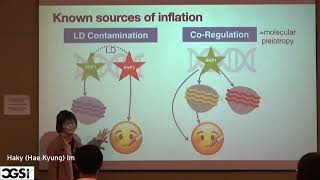
On the Problem of Inflation in TWAS and Other xWAS - CGSI 2024
Dive into the challenges of inflation in transcriptome-wide association studies and explore potential solutions in this insightful genomics lecture.

Categorization of 31 Computational Methods to Detect Spatially Variable Genes from Spatially Resolved Transcriptomics Data
Explore 31 computational methods for detecting spatially variable genes in transcriptomics data, categorized for effective analysis and application in genomics research.
CBW's Cancer Analysis Workshop June 7-11, 2021
Comprehensive cancer analysis workshop covering genomics, gene expression, pathways, and multi-omic integration. Hands-on training in bioinformatics tools and techniques for cancer research and clinical data interpretation.

CBW's Introduction to R Workshop - June 21-22, 2021
Learn R programming essentials: scripting, statistical tests, loops, functions, linear models, and R Markdown in this comprehensive workshop for beginners.