Tissue-Aware Conservation Inference Toolkit (TACIT) for Relating Enhancer Genetic Variation to Complex Phenotypes
Explore TACIT, a toolkit for relating enhancer genetic variation to complex phenotypes. Learn about tissue-aware conservation inference and its applications in medical and population genetics.
Integrating Patient Level Multi-omics Data Using Deep Learning Models
Explore deep learning models for integrating patient-level multi-omics data, focusing on supervised and unsupervised approaches for predicting outcomes and uncovering latent representations in genomics.
Deep Learning for Genomic Discovery
Explore deep learning techniques for genomic discovery, focusing on high-resolution assays, footprint shapes, and bias correction methods in neural networks.
Copy Number Alterations in Slide-seq Data - MPG Primer 2023
Explore spatial copy number alteration detection in Slide-seq-like spatial transcriptomics data. Learn basic genetics principles related to human populations and disease.
Inferring Single Cell Profiles from Histology and Generating Omics Data from Images
Explore cutting-edge machine learning techniques for inferring single-cell profiles from histology images and generating omics data from various imaging modalities, bridging the gap between imaging and genomics.

Machine Learning-Based Protein Engineering - Some Thoughts
Explore machine learning applications in protein engineering with Jennifer Listgarten. Gain insights into cutting-edge techniques and their impact on biomedical research.
Multi-omics Variational Autoencoding - Deep Dive and Primer
Explore multi-omics variational autoencoding for integrating complex biological datasets. Learn about MOVE pipeline, data preprocessing, model optimization, and approaches for determining associations between omics variables and categorical labels.
Spatial and Single Cell Diversity of Cells and Humans
Explore spatial and single-cell diversity in humans, examining how our surroundings influence cellular and individual variations through cutting-edge genomic research.
MPG Primer: Sequencing and Analysis of Long-Read Whole Genome Data - 2024
Explore long-read whole genome sequencing and analysis techniques, focusing on advanced methods for medical and population genetics research.
Deep Learning Models for Genomes and Beyond
Explore deep learning models for genomic analysis and their applications beyond, presented by Olga Troyanskaya in this Broad Institute colloquium on AI in biomedicine.
Multimodal Protein Language Models for Deciphering Protein Function
Explore multimodal protein language models integrating sequences, structures, and textual descriptions to bridge structural and functional understanding of proteins for biomedical research.
Scalable Single-Cell Models for eQTL Mapping - Primer and Main Talk
Explore scalable single-cell models for robust cell-state-dependent eQTL mapping. Learn about statistical challenges, computational solutions, and applications in identifying autoimmune disease risk loci in memory T cells.
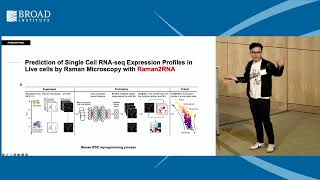
Decoding Cell Fates through Single Cell Genomics, Imaging, and Machine Learning
Explore decoding cell fates using single-cell genomics, imaging, and machine learning techniques in this cutting-edge symposium presentation by Dr. Jian Shu.
MPG Primer - Cellarium - 2024
Explore Cellarium's role in medical and population genetics, covering genetic variation, sequencing methods, and data analysis for complex trait research.
Alpha Missense: Proteome-Wide Missense Variant Effect Prediction
Explore Alpha Missense, an AI model predicting missense variant pathogenicity. Learn how it combines structural context and evolutionary conservation to achieve state-of-the-art results in genetic benchmarks.
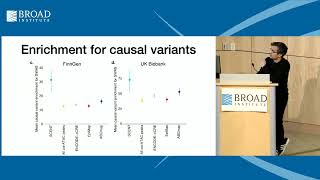
Defining Disease Variant Function with Single Cell Multimodal Sequencing and Gene Editing
Explore disease variant function through single cell multimodal sequencing and gene editing techniques in this cutting-edge symposium presentation.
Genomic Interpretation, seqr and Matchmaker Exchange - MPG Primer 2024
Explore genomic interpretation techniques, seqr software, and Matchmaker Exchange for advancing genetic research and diagnosis. Learn key tools for analyzing complex genetic data.
Foundation Application to Link Spatial Transcriptomics to Clinical Images - Research Day
Explore a foundation application linking spatial transcriptomics to clinical images in cardiovascular research, enhancing understanding of molecular mechanisms in heart disease.
Protein Dynamics and the Brain
Explore protein dynamics and their impact on brain function with insights from renowned expert Peter Wolynes of Rice University.
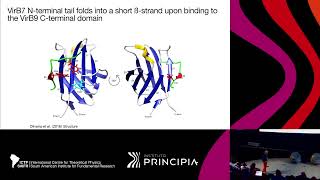
Uncovering Association Mechanisms and Functional Mechanisms of Intrinsically Disordered Proteins - Symposium Talks
Explore intrinsically flexible proteins and their association mechanisms, and unravel functional mechanisms of intrinsically disordered proteins through energy landscape visualization.
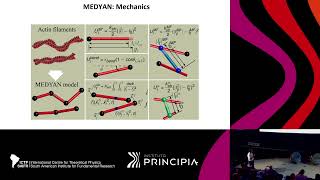
Simulating Life Processes and RNA Structural Dynamics
Explore cutting-edge molecular biophysics research on simulating life processes and RNA structural dynamics through expert presentations at the ICTP-SAIFR symposium.