OblivGNN: Oblivious Inference on Transductive and Inductive Graph Neural Networks
Discover a privacy-preserving solution for secure GNN inference in cloud services, enabling protected analysis of sensitive graph data while maintaining model confidentiality and efficiency.
Tipping Points in Cancer - Mathematical Oncology and Computational Biology
Explore the mathematical dynamics of cancer progression through computational analysis of fluid mechanics, biology, and critical transition points in tumor development.
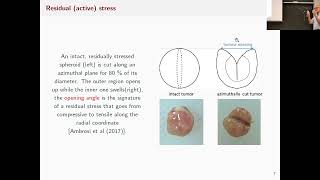
Stress and Growth in Tumor Spheroids
Explore the mathematical modeling of tumor growth dynamics, focusing on stress factors and spheroid development in oncological research and computational biology.
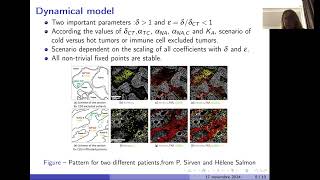
How Cancer-Associated Fibroblasts Promote T-Cell Exclusion in Human Lung Tumors: A Physical Perspective
Explore the physical mechanisms behind cancer-associated fibroblasts and their role in T-cell exclusion within lung tumors through mathematical and biological perspectives.
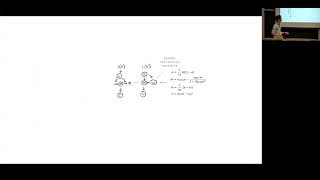
Balancing Interpretability and Predictive Accuracy in Mathematical Models of T Cell Activation
Explore mathematical modeling approaches for T cell activation, examining the trade-offs between model interpretability and accuracy in immunological systems.
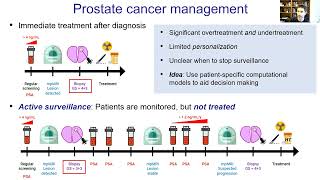
Prostate: Small Organ, Big Problems - Informing Clinical Decisions with Computational Models
Explore how computational models enhance clinical decision-making for prostate-related conditions through advanced mathematical and biological approaches.
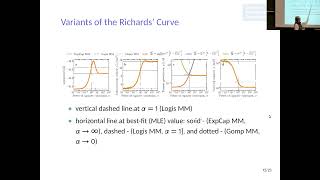
Practical Parameter Identifiability and Handling of Censored Data with Bayesian Inference in Models of Tumour Growth
Explore Bayesian inference techniques for tumor growth modeling, focusing on parameter identification and censored data analysis in mathematical oncology research.
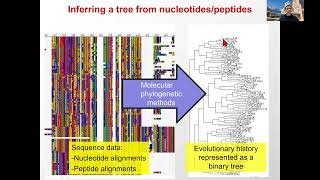
Evolution in Machine Learning and Computational Biology - Lecture 21
Dive into computational approaches for studying evolutionary biology, exploring genomic patterns, molecular evolution, and machine learning applications in evolutionary analysis.

Investigating Rapid Nuclear Mechanotransduction by Mapping Genome-wide Changes in Transcription
Explore groundbreaking research on nuclear mechanotransduction, examining how mechanical forces trigger rapid genomic changes and gene activation through advanced sequencing techniques and cellular observations.
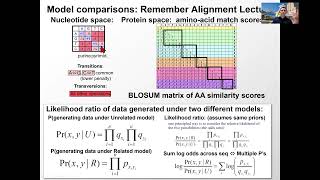
Comparative Genomics - Lecture 20
Explore comparative genomics principles and methodologies for analyzing DNA sequences across species to understand evolutionary patterns and functional elements.
Identifying Clinically Relevant Mutations in Somatic NGS Testing
Discover how to effectively identify and interpret clinically significant mutations in NGS cancer testing, focusing on practical approaches to overcome data interpretation challenges in precision medicine.
NIH Interest in the Field of Precision Nutrition - Understanding Individual Dietary Responses
Discover how NIH's Nutrition for Precision Health program uses AI, microbiome research, and diverse participant data to develop personalized dietary recommendations and predict individual responses to different foods.
Comprehensive Profiling of Cancer Neoantigens From Aberrant RNA Splicing
Discover how computational methods identify and analyze cancer neoantigens from aberrant RNA splicing, focusing on DNA mutations and de novo RNA aberrations for advancing immuno-oncology treatments.
scPRINT - Pre-training on 50 Million Cells for Robust Gene Network Predictions
Discover how scPRINT, a large cell model pre-trained on 50M+ cells, revolutionizes gene network inference while offering powerful capabilities in denoising, batch correction, and cell prediction.
Metabolic Division of Labor Creates Organismal Cohesion
Explore how metabolic division of labor in ant colonies creates complex superorganisms, examining social transfers, resource allocation, and evolutionary implications for collective systems and organisms.

Does Life Compute? Understanding Protein Folding and Biomolecular Assembly
Explore the mathematical structures behind protein folding and biomolecular assembly, examining computational approaches and theoretical models that illuminate life's fundamental processes.

Cancer Immunotherapy Data Science Challenge: Data Overview - Lecture 3B
Dive into single-cell sequencing data analysis and machine learning applications for enhancing T-cell effectiveness in cancer immunotherapy through genetic modification strategies.
Measuring Gene Expression in T Cells for Cancer Immunotherapy - Lecture 2
Discover how gene expression measurement techniques in cells contribute to understanding and enhancing T-cell based cancer immunotherapy approaches through advanced sequencing technologies.
Genomics of Host-Microbiome Interactions
Explore the complex relationship between human genomics and microbiome through cutting-edge research, focusing on host-microbe interactions, disease impacts, and evolutionary aspects of human-microbiome symbiosis.
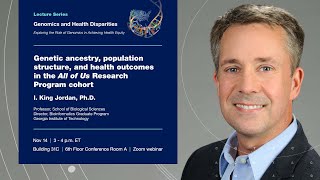
Genetic Ancestry, Population Structure, and Health Outcomes in the All of Us Research Program Cohort
Explore genetic ancestry research and population genomics in the All of Us Research Program, focusing on health equity, bioinformatics advances, and their impact on addressing health disparities.
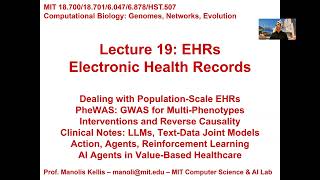
Machine Learning for Computational Biology: Electronic Health Records - Lecture 19
Dive into machine learning applications for Electronic Health Records (EHRs), exploring computational biology approaches and data analysis techniques for healthcare systems.