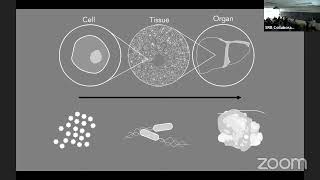
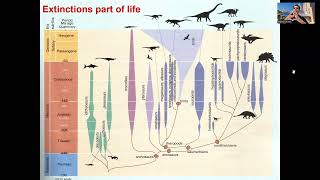
Bi-directional Lessons Between Traditional Evolutionary Biology and Cancer
Explore evolutionary biology's impact on cancer research and vice versa, uncovering insights that bridge these interconnected fields.
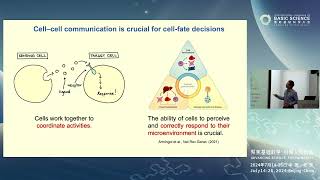
Modeling and Analyzing Cell-Cell Communication from Single-Cell Data
Explore CellChat, an integrated method for inferring and analyzing cell-cell communication from single-cell sequencing data using systems biology and machine learning approaches.
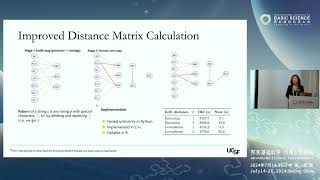
Prediction of Multi-Class Peptides by T-Cell Receptor Sequences with Deep Learning
Explore deep learning techniques for predicting multi-class peptides using T-cell receptor sequences, enhancing immune system understanding and potential disease treatments.
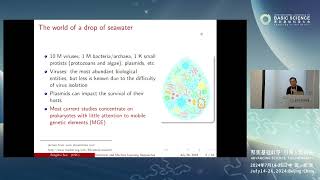
Statistical and Machine Learning Approaches for Investigating Viruses and Virus-Host Interactions
Explore statistical and machine learning methods for identifying novel viruses and virus-host interactions in metagenomic studies, enhancing understanding of microbial communities.
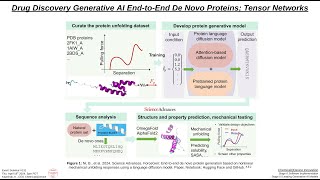
Drug Discovery Generative AI: End-to-End De Novo Proteins and Tensor Networks
Explore advanced protein design using generative AI, focusing on a novel diffusion model for creating proteins with specific mechanical properties. Learn about model architecture and potential tensor network enhancements.
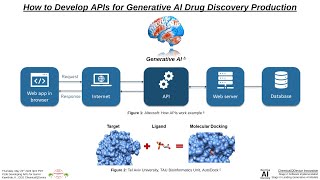
How to Develop APIs for Generative AI Drug Discovery Production
Explore platforms for creating APIs from Large Language Models to enhance drug discovery workflows. Learn to increase efficiency, reduce errors, and lower costs through synchronization and automation.
Supporting Clinical and Translational Researchers with Electronic Patient Data - Grand Rounds 10/11/22
Explore electronic patient data utilization in clinical and translational research with Dr. Thomas Campion's insights on supporting researchers effectively.
Clinical Informatics, AI, and Multi-modal Analyses in Healthcare - Grand Rounds 2/9/23
Explore AI, predictive biomarkers, and data integration in clinical informatics with Dr. Joel Saltz, discussing cutting-edge tools for investigators in biomedical research.
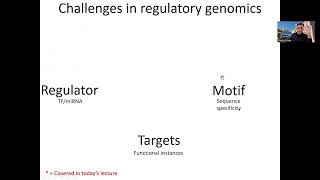
Regulatory Circuitry and Networks - Lecture 7
Explore regulatory circuitry and networks in biological systems, focusing on gene regulation mechanisms and their interconnected pathways.
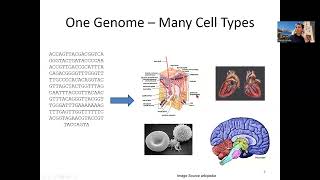
Epigenomics and Hidden Markov Models in Computational Biology - Lecture 5
Explore epigenomics, histone modifications, and DNA profiling techniques. Learn about read mapping, quality control, and Hidden Markov Models for analyzing chromatin states in computational biology.
EIC Accelerator Challenge: Novel Biomarker-Based Assays for Personalized Cancer Treatment
Explore novel biomarker-based assays for personalized cancer treatment. Learn about EIC Accelerator Challenge, its objectives, and innovative approaches in cancer diagnostics and therapy.
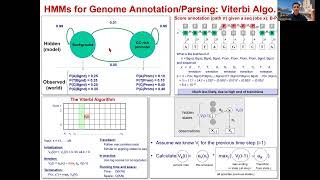
Regulatory Circuitry - Lecture 6
Explore regulatory circuitry in genomics, uncovering mechanisms of gene expression control and cellular regulation through advanced computational analysis techniques.
Empower an End-to-End Scalable and Interpretable Data Science Ecosystem Using Statistics, AI and Domain Science
Explore scalable, interpretable data science using statistics, AI, and domain expertise. Gain insights from Harvard professor Xihong Lin on analyzing complex genomic and health data.
Vertex Model for Tissue Mechanics - Part I
Explore vertex models for tissue mechanics, focusing on fundamental concepts and applications in biological systems.
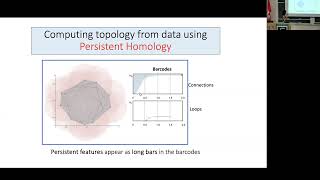
Applications of Topological Data Analysis in Cancer - Lecture 2
Explore applications of topological data analysis in cancer research, focusing on mathematical modeling of treatments, resistance, and optimization.

Machine Learning in Medical Diagnostics and Drug Discovery
Explore machine learning applications in genomics and proteomics for medical diagnostics and drug discovery. Learn how advanced analytics improve sequencing projects and translate technologies into practice.
Sequence Alignment and Dynamic Programming in Computational Biology - Lecture 4
Comprehensive exploration of sequence alignment techniques, from comparative genomics to dynamic programming, covering local alignment, hashing, and BLAST for efficient genomic analysis and evolutionary insights.
Machine Learning for Protein Engineering in Drug Discovery
Discover how machine learning intersects with molecular biology and protein engineering through insights from UC Berkeley Professor Jennifer Listgarten's keynote address on advancing drug discovery innovations.
Geometric Deep Learning for Protein Understanding and Design
Discover how geometric deep learning advances protein understanding and design, exploring cutting-edge AI applications in drug discovery and development.
Leveraging Machine Learning and Clinico-Genomic Data for Cancer Care and Drug Discovery
Discover how machine learning and genomic data from 500,000 cancer cases drive innovations in cancer treatment and pharmaceutical development through advanced computational approaches.
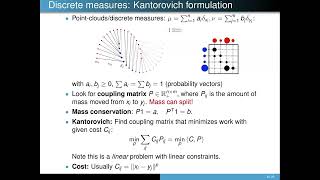
Trajectory Inference in Wasserstein Space
Explore advanced trajectory inference methods using Wasserstein geometry and B-spline approximation for analyzing dynamic processes in computational biology and point cloud data.