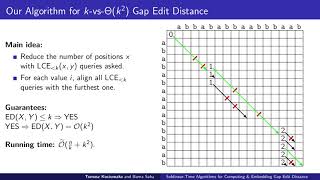
Sublinear-Time Algorithms for Computing and Embedding Gap Edit Distance
Explore efficient algorithms for computing and embedding gap edit distance, focusing on sublinear-time techniques and their applications in string comparison and analysis.
The Silent Hero of COVID-19 Variant Surveillance Effort - Docker Containers in Genomic Analysis
Explores Docker containers' role in genomic analysis for COVID-19 variant surveillance, highlighting StaPH-B's containerized applications and workflow languages that supported rapid public health responses.

AI in Healthcare - The Next Frontier
Exploring AI's potential to revolutionize healthcare, from enhancing diagnostics to automating tasks. Discusses advancements, ethical challenges, and the future of AI in biomedicine.
Integrating AI and Machine Learning in Life Sciences - Allen School Colloquia
Exploring AI integration in life sciences, covering explainable AI, COVID-19 detection, cancer precision medicine, and biological discovery through advanced machine learning techniques.
Computer Vision to Phenotype Human Diseases Across Physical and Molecular Scales
Innovative computer vision algorithms for disease phenotyping across scales, from video-based heart function assessment to spatial transcriptomics and immune cell dynamics, with focus on robust and human-compatible AI.
Machine Learning-based Design of Proteins and Small Molecules
Explore machine learning approaches for protein engineering, focusing on data-driven design to create proteins with desired properties and the challenges of extrapolation in predictive modeling.
Learning for Never-before-seen Biomedicine
Exploring machine learning methods for predicting never-before-seen biomedical scenarios, focusing on novel class and cohort situations using ontologies and multiscale knowledge graphs.
Cool Genes - Using Genomics and Big Data for Disease Research with Docker
Explore genomics and big data in medical research using Docker. Learn how TGen leverages containerization for bioinformatics workloads, managing large-scale compute clusters to accelerate disease understanding and treatment discovery.
How AI Is Unlocking the Secrets of Nature and the Universe
Demis Hassabis explores AI's potential to accelerate scientific discovery, from predicting protein shapes to unraveling mysteries of the mind and universe, showcasing its transformative impact on human knowledge.
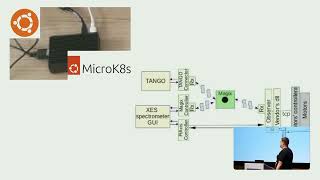
Harnessing the Power of Ubuntu and MicroK8s - Case Studies from SDSC and CFEL
Explore real-world applications of Ubuntu and MicroK8s in scientific research, including migration to Kubernetes and development of a portable X-Ray spectrometer control system.
Longest Common Subsequence Using Dynamic Programming - Design and Analysis of Algorithms
Explore dynamic programming to solve the Longest Common Subsequence problem efficiently. Learn step-by-step implementation and optimization techniques for this fundamental algorithm.
Argo for ML: Achieving Scalability and User Experience in Machine Learning Platforms
Explore how Argo Workflows enables scalable ML platforms across industries. Learn from experts about balancing high-scale operations with user-friendly interfaces for efficient ML team workflows.
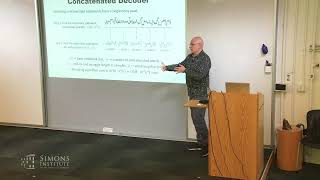
Coding for DNA Storage with Nanopore Sequencing
Explore theoretical foundations for synthetic DNA data storage using nanopore sequencing, including channel models, noise characteristics, and coding schemes for practical archival applications.
Neural Networks - Lecture 1
Comprehensive introduction to neural networks, covering fundamental concepts, architectures, and applications in machine learning and artificial intelligence.
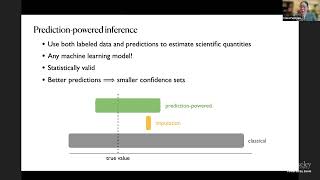
Error Embraced - Making Trustworthy Scientific Decisions with Imperfect Predictions
Explore prediction-powered inference for valid statistical analysis using machine learning predictions, with applications in proteomics, genomics, and astronomy. Learn about reliable ML-guided decisions in biological sequence design.
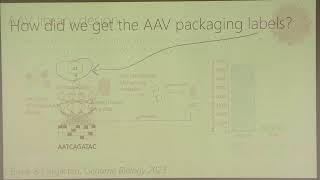
Machine Learning-Based Protein Engineering - Insights and Approaches
Explore ML-based protein engineering insights, discussing cutting-edge techniques and potential applications in biotechnology and drug discovery.
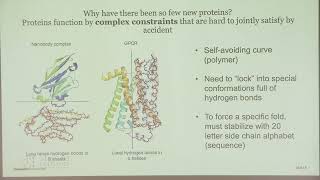
Illuminating Protein Space with Generative Models
Explore generative modeling for protein design, focusing on building learning systems that can generalize, scale, and create fit-for-purpose protein complexes on demand.
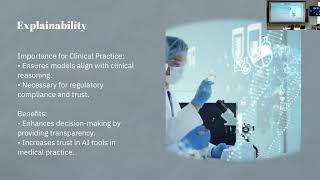
Forerunners of Cancer Hallmarks - Explainable Machine Learning in Early Cancer Diagnosis
Explore explainable machine learning techniques for early cancer detection, focusing on identifying precursor signs of cancer hallmarks to improve diagnostic accuracy and patient outcomes.
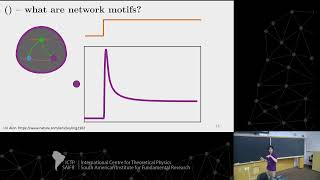
Defining Network Topologies That Can Achieve Molecular Memory
Explore network topologies for molecular memory in complex systems. Uncover innovative approaches to information storage at the molecular level.
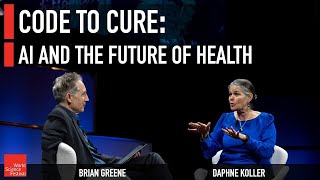
AI and Machine Learning in Drug Discovery and Development
Explore AI's revolutionary impact on drug discovery and healthcare with Daphne Koller. Gain insights into machine learning applications in biology, protein folding, and interdisciplinary collaboration for future medical breakthroughs.
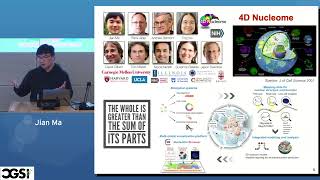
Machine Learning for Single-Cell 3D Epigenomics
Explore machine learning techniques for analyzing single-cell 3D epigenomics, focusing on genome structure and integrative Hi-C analysis methods for advanced biomedical research.