Under a Microscope - Exploring Fast and Safe Rust for Biology
Explore how Rust's safety and performance revolutionize computational biology, enabling breakthroughs in protein and virus research. Learn about the field's challenges and opportunities for Rustaceans.
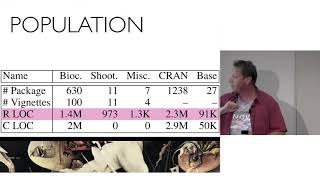
R in Java - Performance and Implementation Challenges
Explore R integration in Java, covering performance, memory allocation, and language features. Learn about specialized interpreters and data types for efficient R-Java interoperability.
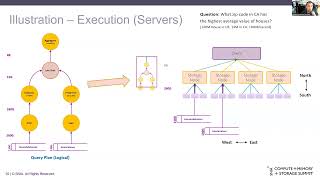
Decomposing Compute to Grow Computational Storage - Dynamic Query Partitioning in Storage Systems
Explore dynamic query partitioning in computational storage systems and learn how decomposable queries can optimize performance across storage device hierarchies for enhanced data processing capabilities.
Measuring Gene Expression in Tissues for Autoimmune Disease Detection - Lecture 2
Dive into advanced techniques for measuring gene expression in tissues, focusing on spatial transcriptomics and its application in inflammatory bowel disease diagnosis and cancer detection.
Machine Learning Techniques for Omics Data Analysis
Explore machine learning applications in Next Generation Sequencing data analysis, focusing on key techniques for processing biological data from cells, tissues, and organisms.
AI for Prostate Cancer Detection and Immunotherapy Response
Explore groundbreaking AI applications in healthcare, focusing on early prostate cancer detection and understanding immunotherapy resistance through advanced modeling and medical data integration.

Approximate DNA Storage with High Robustness and Density for Images
Explore groundbreaking DNA storage techniques for images, focusing on enhanced robustness and density through innovative encoding schemes and error prevention mechanisms.

Reinforcement Learning-Based Fine-Tuning of Diffusion Models for Drug Discovery
Dive into advanced reinforcement learning techniques for fine-tuning diffusion models, focusing on accelerated drug discovery, bioinformatics, and molecular compound predictions.
Meta Flow Matching - Integrating Vector Fields on the Wasserstein Manifold
Explore advanced flow-based modeling techniques for predicting biological system dynamics, focusing on population-level evolution and personalized medicine applications using Graph Neural Networks.

Volcano: Introduction and Deep Dive into High-Performance Workload Management on Kubernetes
Explore Volcano: a powerful batch scheduling system for high-performance workloads on Kubernetes. Learn key concepts, features, and real-world use cases for ML/DL, big data, and bioinformatics applications.
Violet Teaming AI in the Life Sciences
Explore AI's impact on life sciences, balancing opportunities in health and biosecurity risks. Learn about violet teaming to maximize benefits while minimizing downsides in biological engineering.
Clin-MSI: A Machine Learning-Based Approach to MSI Detection in Endometrial Cancers
Explore a machine learning approach for detecting microsatellite instability in endometrial cancers, enhancing diagnostic accuracy and treatment selection for patients.
Multi-objective Bayesian Optimization with Heuristic Objectives for Biomedical and Molecular Data Analysis Workflows
Discover advanced Bayesian optimization techniques for biomedical data analysis, focusing on multi-objective approaches with heuristic objectives in unsupervised bioinformatics workflows.
Self-Classifying MNIST Digits - Paper Explained
Explore how neural cellular automata can achieve global consensus through local communication, applied to digit classification. Discover innovative approaches to modeling biological systems and machine learning tasks.

Oral History - Russell Impagliazzo in Conversation with Dick Karp
Explore key developments in theoretical computer science through an engaging conversation between Russell Impagliazzo and Dick Karp, covering topics from NP-completeness to computational biology.
Deep Learning in Bioinformatics - Recent Advancement
Explore recent advancements in deep learning for bioinformatics, covering BTINET, autoencoders, and deep belief networks. Gain insights into cutting-edge applications in genomics, drug discovery, and disease prediction.
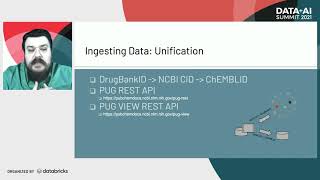
Drug Repurposing Using Deep Learning on Knowledge Graphs
Explore deep learning on knowledge graphs for drug repurposing, covering graph building, latent relationship prediction, and application to existing drugs for new treatments.

PyTorch and COVID-19 Research: Advancements in AI and Data Analysis - Keynotes
Explore PyTorch's advancements in machine learning and learn how AI is helping manage COVID-19 research data, featuring insights on industry adoption and scientific information accessibility.

Containerization - The Silent Hero of COVID-19 Variant Surveillance Effort
Explore how Docker containers revolutionized COVID-19 variant surveillance by enabling rapid deployment of genomic analysis workflows across diverse computing environments.
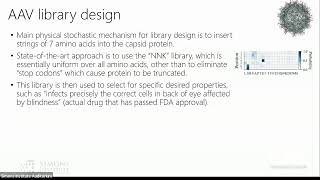
Machine Learning-Based Design of Proteins
Explore machine learning-based protein design with Jennifer Listgarten, covering directed evolution, predictive models, and optimization techniques for gene therapy applications.
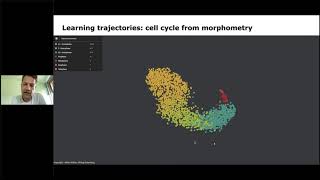
Interpretable Machine Learning to Model Drug Perturbations in Single Cell Genomics
Explore interpretable machine learning for modeling drug effects on single-cell genomics. Learn about deep autoencoders, manifold identification, and predicting novel perturbations in cellular states.