Laying Foundations for Very Large Scale Comparative Genomics
Explore foundations for large-scale comparative genomics, focusing on techniques and challenges in analyzing vast genomic datasets across species.
Inferred Epistasis Enhances Neutral Models of Sequence Evolution
Explore how inferred epistasis improves neutral models of sequence evolution, enhancing understanding of evolutionary processes.
Metabolic Fitness Landscapes Predict the Evolution of Antibiotic Resistance
Explore metabolic fitness landscapes and their role in predicting antibiotic resistance evolution, presented by Fernanda Pinheiro from the University of Cologne.
A Sparse Mapping from Structure to Function in Microbial Communities
Explore the relationship between structure and function in microbial communities through a sparse mapping approach, uncovering key insights into complex ecological systems.
Control of Molecular Evolution
Explore molecular evolution control mechanisms and their impact on genetic diversity and adaptation in populations.
Dissecting Causes of Variation in Immune Defense - In Silico, In Vitro, and In Vivo
Explore causes of immune defense variation through computational, laboratory, and live organism studies with Princeton researcher Andrea Graham.
Eco-evolutionary Feedbacks in the Human Gut Microbiome
Explore eco-evolutionary dynamics of human gut microbiomes, examining feedbacks and interactions shaping microbial communities and host health.
Tracking Lineage Diversity at High Resolution in Adapting Bacterial Populations
Explore high-resolution tracking of lineage diversity in adapting bacterial populations, uncovering evolutionary dynamics and genetic variation.
Insights into Viral Evolution from Temporal Genetic Data
Explore viral evolution through temporal genetic analysis, uncovering key insights into pathogen dynamics and adaptation mechanisms.
The Retrospective View of Molecular Evolution
Explore molecular evolution's retrospective perspective, uncovering insights into genetic changes and evolutionary processes over time.
Cancer Evolution and Metastasis Under Immune Selection
Explore cancer evolution and metastasis, focusing on immune system interactions and their impact on tumor progression and spread.
A High-Throughput Approach to Study Epistasis in Proteins
Explore high-throughput methods for investigating protein epistasis, focusing on innovative techniques and their implications for evolutionary biology.
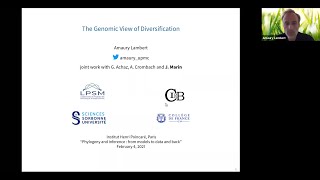
The Genomic View of Diversification
Explore genomic perspectives on species diversification, examining evolutionary processes and patterns through genetic data analysis.
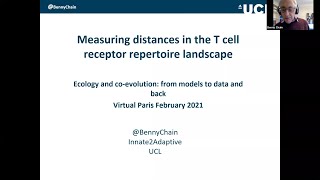
Capturing T Cell Receptor Similarities
Explore T cell receptor similarities and their implications in immunology research with insights from Benny Chain of University College London.
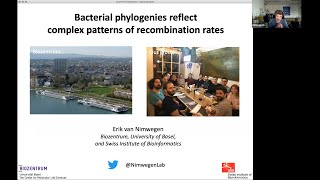
Bacterial Phylogenies Reflect Complex Patterns of Recombination Rates
Explore complex patterns of bacterial recombination rates and their impact on phylogenies in this insightful presentation by Erik Van Nimwegen.
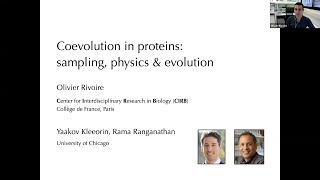
Models of Coevolution in Proteins: Sampling, Physics and Evolution
Explore protein coevolution models, examining sampling techniques, physical principles, and evolutionary dynamics in molecular biology.
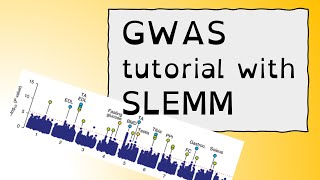
GWAS Tutorial with SLEMM: A Beginner's Guide
Comprehensive guide to GWAS using SLEMM software, covering data preparation and analysis. Learn essential functions and step-by-step instructions for conducting genome-wide association studies effectively.
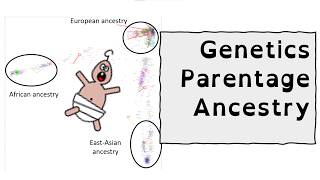
Parent-Child vs. Ancestry - Understanding Genetic Relationships
Unraveling genetic relationships: parent-child vs. ancestry. Explore how genetic coefficients differ between direct lineage and population-wide ancestry, debunking misconceptions and clarifying genomic analysis methods.
Understanding Pathogen Evolution Using Genomics
Explore genomic techniques to analyze pathogen evolution, enhancing understanding of disease dynamics and outbreak management in changing ecosystems.
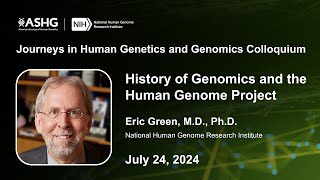
History of Genomics and the Human Genome Project
Explore the history of genomics and the Human Genome Project with NHGRI director Eric Green, highlighting key milestones and their impact on modern genetics and medicine.
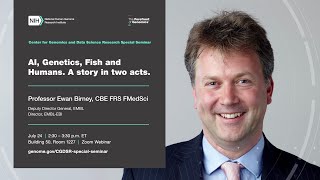
AI, Genetics, Fish and Humans - A Story in Two Acts
Explore AI's role in genomics through fish and human studies, highlighting breakthroughs in understanding genetic code and its implications for data science and molecular biology.