A Systems Biology Approach to Unravel Cell Cycle Dynamics - Lecture 2
Explore systems biology approaches to unravel cell cycle dynamics, focusing on mathematical modeling and computational techniques to understand complex cellular processes.
The Art of Modelling Mammalian Cell Cycle Regulation - Lecture 1
Explore mammalian cell cycle regulation modeling techniques, focusing on theoretical approaches to understand cancer progression and treatment. Gain insights into advanced mathematical and computational methods.
Maps, Networks and Mechanisms: System Modeling and Analysis of Disease Maps
Explore disease map modeling and analysis techniques for understanding complex biological systems and their applications in cancer research and treatment strategies.
Genome-Scale Metabolic Modeling in Cancer
Explore genome-scale metabolic modeling in cancer research, uncovering insights into cellular metabolism and potential therapeutic targets for improved cancer treatment strategies.
Systems-level Analysis of Phenotypic Switching in Melanoma - From Design Principles to Therapeutic Strategies
Explore systems-level analysis of phenotypic switching in melanoma, focusing on design principles and their implications for understanding cancer progression and developing targeted treatments.
Inferring Cell-state Dynamics from High-resolution Lineage Tracking of Single Cells
Explore cell-state dynamics through high-resolution lineage tracking, uncovering insights into cancer progression and potential treatment approaches in this theoretical biology lecture.
To Live or Not to Live - Decision Making in Single Cancer Cells - Lecture 1
Explore decision-making processes in individual cancer cells, examining factors influencing cell survival and death. Gain insights into cellular behavior and its implications for cancer progression and treatment.
Chance and Necessity: Decision Making in Single Cancer Cells - Lecture 2
Explore decision-making processes in individual cancer cells, examining the interplay between randomness and determinism in cellular behavior and its implications for cancer progression.
Phylogenetics: Recovering Evolutionary History - Lecture 1
Explore evolutionary history reconstruction through phylogenetics. Learn techniques for analyzing genetic data to understand species relationships and evolutionary processes over time.
Modulation of Ensemble-level TNFR1 Mediated Apoptosis Response - Lecture 2
Explore ensemble-level TNFR1 mediated apoptosis response modulation, delving into advanced concepts of cancer cell death mechanisms and potential therapeutic implications.
Boolean Modeling of Biological Networks - Lecture 1
Explore Boolean modeling for biological networks, focusing on cancer progression. Learn theoretical approaches to understand complex biological systems and their applications in cancer research.

Selection, Genetic Covariances, and Network Position Predict Gene Expression
Explore how selection, genetic covariances, and network position influence gene expression in polygenic adaptation, integrating theoretical and empirical approaches to understand phenotypic variation.
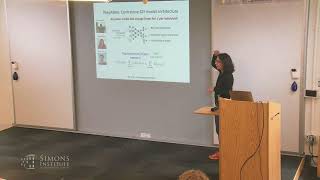
Machine Learning Models of Differential Gene Expression
Explore deep learning models for predicting regulatory functions from genomic DNA, uncovering mechanisms behind genetic variation's impact on cellular function and gene expression.
The State of Protein Structure Prediction and Related Advancements
Explore advancements in protein structure prediction, focusing on OpenFold's optimized implementation of AlphaFold2 and its implications for structural biology research.
Debugging Genomic Profiling Experiments and Predictive Models with Interpretation Tools
Explore deep learning models in genomics, uncovering latent biases and technical artifacts. Learn to design efficient models that correct biases and reveal novel insights into gene regulation.
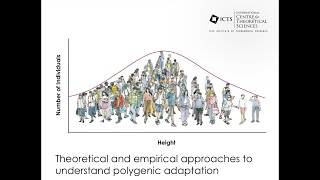
Understanding Polygenic Adaptation with Experimental Evolution
Explore polygenic adaptation through experimental evolution, integrating genetic and phenotypic insights to understand complex trait inheritance and adaptive dynamics in biological systems.
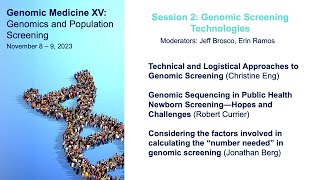
Genomic Screening Technologies: Approaches, Challenges, and Considerations - Session 2
Explore genomic screening technologies, their applications in public health, and challenges in implementation. Experts discuss technical approaches, newborn screening, and factors for calculating screening effectiveness.
Genomic Medicine XV: Laying the Groundwork for Population Genomic Screening - Session 1
Explore genomic medicine's current state, barriers, and future in population screening. Experts discuss technologies, clinical impact, and research directions for expanded genomic screening in the U.S.
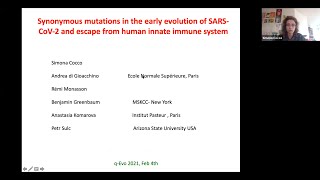
Synonymous Mutations in the Early Evolution of SARS-CoV-2 and Escape from Human Innate Immune System
Explore SARS-CoV-2's early evolution, focusing on synonymous mutations and their role in evading the human innate immune system.
Sequencing Error and Phylogenetics - SARS-CoV-2 Transmission in Hospitals
Explore sequencing errors, phylogenetics, and SARS-CoV-2 transmission in hospitals with insights from a Cambridge researcher.
New Methods for Large-Scale Species Tree Estimation Addressing Gene Duplication and Loss
Explore cutting-edge techniques for estimating large-scale species trees, addressing gene duplication and loss challenges in phylogenetics.