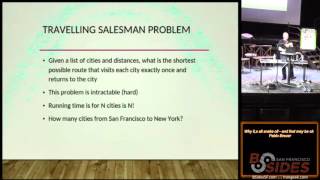
Why It’s All Snake Oil – And That May Be OK
Explore the limitations of security products, understand computer science theorems, and learn to evaluate vendor claims for your organization's needs.
Why It's All Snake Oil - And That May Be Ok
Explore cybersecurity challenges, computational limitations, and the implications of "snake oil" solutions in modern technology and threat detection.
Revenge on the Worms! Towards Deception Against Automated Adversaries
Explore deception strategies against automated adversaries, focusing on finite state machines, multiple plans, and automated planners. Learn test setups, results, and future implications.
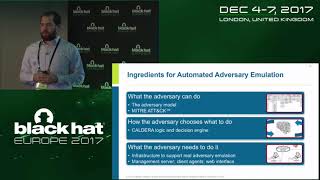
CALDERA - Automating Adversary Emulation
Automate adversary emulation for network security using CALDERA. Replicate realistic post-compromise techniques, leveraging benign system functionality to enhance defensive strategies.
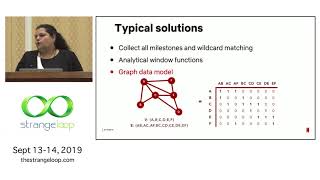
Pattern Matching at Scale Using Finite State Machine
Explore pattern matching at scale using finite state machines for big data analysis. Learn to build a framework for expressing user journey patterns and applying them across billions of events using Spark.
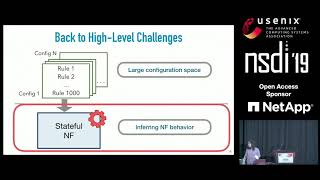
Alembic - Automated Model Inference for Stateful Network Functions
Automated inference of behavioral models for stateful network functions, enabling accurate testing and verification. Introduces Alembic, which synthesizes finite-state machine ensembles for diverse rule types and configurations.
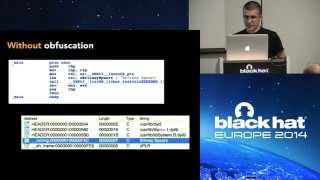
C++11 Metaprogramming Applied to Software Obfuscation
Explore advanced C++11 metaprogramming techniques for software obfuscation, including compile-time code generation, polymorphism, and practical applications like string encryption and call obfuscation.

Mastering UIs with Finite State Machines
Explore finite state machines for UI development, addressing common challenges and creating predictable, pure components. Learn a new paradigm for cleaner, more efficient user interfaces.

Real Time Communication to Simplify Your Life
Explore real-time communication in IoT projects, focusing on connectivity, scalability, and global distribution. Learn about SIM card management, security, and PHP-based use cases in various industries.
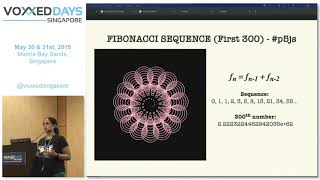
Can Code, Will Generate Art
Explore generative art through coding, from visualizing mathematical concepts to using neural networks for creative design. Learn how programming can be a tool for artistic expression.
Taming the Length Field in Binary Data - Calc-Regular Languages
Explores calc-regular languages as an extension of regular languages to handle length fields in binary data serialization, improving security and parsing efficiency for length-prefix formats.
Automated Attack Synthesis by Extracting Finite State Machines from Protocol Specification Documents
Learn to extract finite state machines from protocol documents for automated attack synthesis, enhancing cybersecurity through innovative techniques in protocol analysis and vulnerability detection.
Effective Replacement of Dynamic Polymorphism with std - variant
Explore replacing dynamic polymorphism with std::variant in C++. Compare implementations of a Finite State Machine, discussing performance benefits and improved interface design.
On the Difficulty of FSM Based Hardware Obfuscation
Explores challenges in finite state machine-based hardware obfuscation, analyzing vulnerabilities and proposing potential countermeasures for enhanced security in digital circuit design.

Crowd Your Way Out of a Paper Bag
Explore cellular automata, swarms, and agents in crowd simulations. Learn about randomness in AI, machine learning basics, and spatial navigation through engaging simulations and practical examples.
Finite State Machines - A Design Pattern for FPGAs and React
Explore finite state machines as a versatile design pattern applicable to both FPGAs and React, bridging hardware and software development with practical implementation insights.
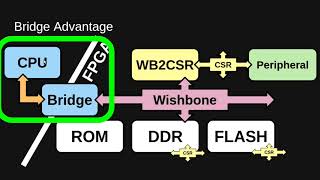
Universal Tools for Acceleration, Timing, Integration & Machine Enhancement
Explore open-source tools and methods for accelerating Open ISA processors, including implementation of specialized compute functions and RISC-V extensions.

Working with State Machines in Angular
Learn to implement finite state machines in Angular applications, enhancing code organization and predictability while reducing complexity in managing application states.
Finite State Machine in Django
Explore Finite State Machines in Django for automating business processes, including workflow creation, audit logging, and visualization generation.
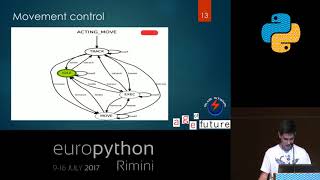
A Robotic Platform for Natural and Effective Human-Robot Interaction
Explore a Python-based humanoid robotic platform for natural human-robot interaction using speech, gestures, and facial expressions. Learn about its architecture, applications, and see a live demo.

Cellular Automata - How to Become an Artist with a Few Lines
Explore the artistic potential of cellular automata through simple code, transforming mathematical concepts into visually stunning patterns and designs.