Digital Circuits
Comprehensive exploration of digital circuits, covering number systems, Boolean algebra, logic gates, arithmetic circuits, sequential circuits, finite state machines, data converters, memory, FPGA, VHDL, and microprocessors.
Effective Theories for Computational Systems - Lecture 2
Explore effective theories for computational systems, covering aggregation, finite state machines, regular languages, and emergence in complex systems modeling.

How to Build Real Time Interactions in Your Django 3 App
Explore real-time interactions in Django 3 with Calvin Hendryx-Parker. Learn new features, async capabilities, and hands-on coding using PyCharm for building interactive web applications.
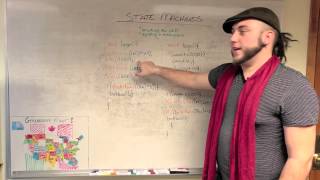
Battle Bracer Project: Combining eTextiles, LED Multiplexing, and Tilt Sensing - Engineering Roundtable
Explore the creation of a "Battle Bracer" combining eTextiles, LED multiplexing, tilt sensing, and finite state machines in this engineering project showcase featuring innovative wearable technology.
Deciding Regular Games - A Playground for Exponential Time Algorithms
Explore exponential time algorithms for deciding regular games, examining their applications and implications in system design and analysis.

Understanding AI State Machines, State Agents, and State Spaces
Explore fundamental AI concepts including state machines, agent states, and state spaces in modern language models, with clear explanations of their interconnections and applications.
Visualizing a Nondeterministic to Deterministic Finite-State Machine Transformation
Explore the visualization of transforming nondeterministic finite-state machines to deterministic ones in this insightful presentation.
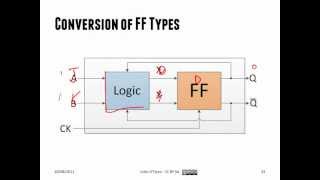
Course Review Lecture Part 3 - Aug 10, 2012
Comprehensive review of digital logic concepts including flip-flops, registers, counters, and finite state machines. Covers design processes and practical applications in digital systems.
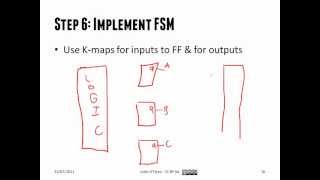
Digital Circuits Lecture - Summary - Finite State Machines
Comprehensive overview of Finite State Machines, covering problem understanding, diagram creation, state assignment, flip-flop selection, and implementation specifics for both Mealy and Moore machines.

Arduino-Controlled Rotary Telephone - DIY Escape Room Prop Tutorial
Transform a vintage rotary phone into a versatile escape room prop using Arduino. Learn to wire components, program custom behaviors, and integrate audio for an immersive gaming experience.
Formal Verification Made Easy and Fast
Learn practical approaches to formal verification in Linux kernel development using Finite-State Machines and tracing events, with insights on low-overhead runtime verification techniques.
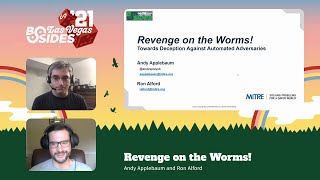
Revenge on the Worms! Towards Deception Against Automated Adversaries
Explore deception strategies against automated adversaries, focusing on finite state machines, multiple plans, and automated planners. Learn test setups, results, and future implications.
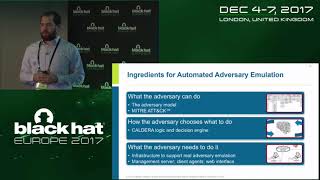
CALDERA - Automating Adversary Emulation
Automate adversary emulation for network security using CALDERA. Replicate realistic post-compromise techniques, leveraging benign system functionality to enhance defensive strategies.
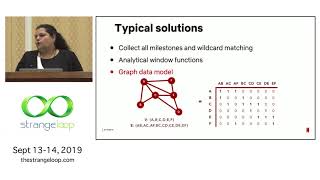
Pattern Matching at Scale Using Finite State Machine
Explore pattern matching at scale using finite state machines for big data analysis. Learn to build a framework for expressing user journey patterns and applying them across billions of events using Spark.
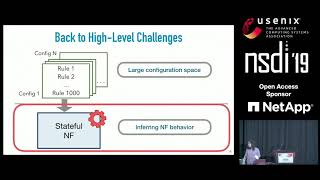
Alembic - Automated Model Inference for Stateful Network Functions
Automated inference of behavioral models for stateful network functions, enabling accurate testing and verification. Introduces Alembic, which synthesizes finite-state machine ensembles for diverse rule types and configurations.
C++11 Metaprogramming Applied to Software Obfuscation
Explore advanced C++11 metaprogramming techniques for software obfuscation, including compile-time code generation, polymorphism, and practical applications like string encryption and call obfuscation.

Mastering UIs with Finite State Machines
Explore finite state machines for UI development, addressing common challenges and creating predictable, pure components. Learn a new paradigm for cleaner, more efficient user interfaces.
Taming the Length Field in Binary Data - Calc-Regular Languages
Explores calc-regular languages as an extension of regular languages to handle length fields in binary data serialization, improving security and parsing efficiency for length-prefix formats.
Automated Attack Synthesis by Extracting Finite State Machines from Protocol Specification Documents
Learn to extract finite state machines from protocol documents for automated attack synthesis, enhancing cybersecurity through innovative techniques in protocol analysis and vulnerability detection.
Effective Replacement of Dynamic Polymorphism with std - variant
Explore replacing dynamic polymorphism with std::variant in C++. Compare implementations of a Finite State Machine, discussing performance benefits and improved interface design.
On the Difficulty of FSM Based Hardware Obfuscation
Explores challenges in finite state machine-based hardware obfuscation, analyzing vulnerabilities and proposing potential countermeasures for enhanced security in digital circuit design.