Solving World Problems with Fusion
Explore Boost.Fusion's power in simplifying interfaces, providing declarative experiences, and efficient type handling. Learn practical usage patterns for integrating this versatile library into your C++ projects.
Boost.Graph for Beginners
Learn to use Boost.Graph library's algorithms for graph operations, with examples of input/output parameters and function calls to simplify implementation in C++ projects.
Distributed Parametric Optimization with the Geneva Library
Explore Geneva, an open-source library for distributed optimization algorithms, leveraging Boost libraries to solve large-scale parametric problems on multi-core systems, clusters, and cloud environments.
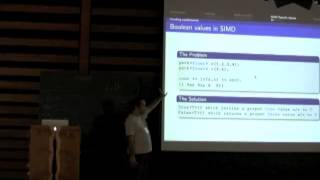
Practical SIMD Acceleration with Boost.SIMD
Explore SIMD acceleration techniques using Boost.SIMD library. Learn to optimize algorithms, abstract hardware, and leverage SIMD registers for efficient parallel computing across various platforms.
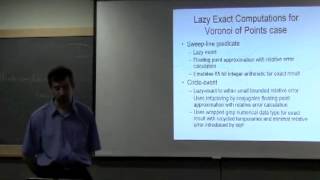
Sweep-Line Algorithm for Voronoi Diagrams
Efficient algorithm for computing Voronoi diagrams of points and segments, with applications in VLSI CAD and manufacturing. Covers numerical robustness, lazy-exact arithmetic, and reliable results for integer inputs.
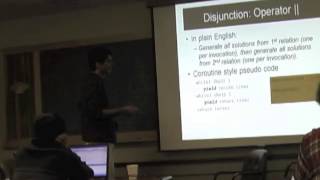
Logic Paradigm for C++
Explore the Logic Paradigm in C++ with Castor library. Learn basics, see examples, and discover how it integrates with Boost for powerful multiparadigm solutions.
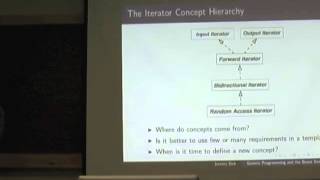
Generic Programming and the Boost Graph Library
Explore generic programming principles and their application in the Boost Graph Library, learning C++ template techniques for efficient and flexible graph problem-solving.
C++ in Space Plasma Model Development
Explore space plasma modeling using C++11, covering numerical methods, advanced algorithms, and concurrency for efficient simulations in astrophysics and space weather.

How to Design C++ Implementations of Complex Combinatorial Algorithms
Learn techniques for implementing complex combinatorial algorithms in C++, focusing on design patterns, data structures, and optimization strategies for efficient and maintainable code.
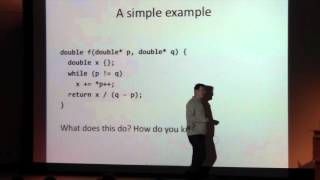
Generic Programming with Concepts
Generic programming principles using Concepts Lite in C++: enhancing template constraints for more robust and efficient library design.
Metaprogramming for the Brave
Explore advanced C++ metaprogramming techniques for library writers, including creative uses of generalized constant expressions and compiler optimization strategies.
Pulling Visitors
Explore Boost.Coroutine to invert visitor-based control flows, combining it with Boost.Graph for improved algorithm stepping and resumption. Learn a more readable and maintainable approach to visitor-based programming.
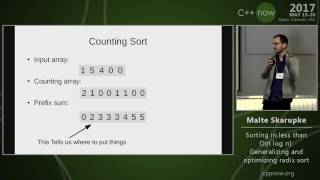
Sorting in Less Than O(n log n) - Generalizing and Optimizing Radix Sort
Explore advanced sorting techniques beyond O(n log n), focusing on generalizing and optimizing radix sort for various data types in C++. Learn to implement faster sorting algorithms for improved performance.
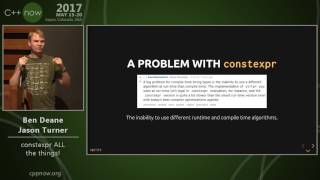
Constexpr ALL the Things!
Explore the power of constexpr in C++17, examining techniques for compile-time computation, data structures, and algorithms. Learn to effectively combine compile-time and runtime computations for optimal performance.
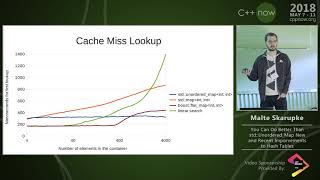
You Can Do Better than std - unordered_map - New Improvements to Hash Table Performance
Explore advanced hash table implementations and optimizations beyond std::unordered_map, including Robin Hood Hashing, SIMD instructions, and node-based container improvements for enhanced performance and memory efficiency.
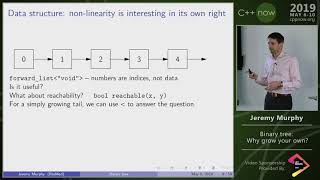
A Generic Binary Tree - Why Grow Your Own?
Explore the design and implementation of a generic binary tree for Boost.Graph, discussing trade-offs, storage options, and performance comparisons while drawing insights from classic computer science texts.
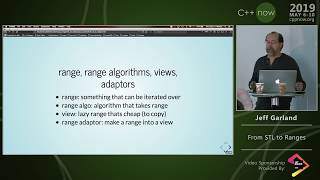
Using C++20 Ranges Effectively
Comprehensive exploration of C++20 ranges, covering concepts, algorithms, views, and practical applications. Includes code examples and exercises for effective implementation in daily programming.

Algorithm Intuition
Explore STL algorithms, their common uses, and how to unlock their potential through intuition and lambdas. Develop algorithm intuition to complement your data structure knowledge and enhance your C++ programming skills.
Adventures in SIMD-Thinking
Explore SIMD capabilities in modern hardware, focusing on SSE, AVX, and AVX-512 instruction sets. Learn to leverage C++ for improved performance in real-world computing problems through vertical thinking.
Algorithms from a Compiler Developer's Toolbox
Explore foundational algorithms in modern optimizing compilers, focusing on chains of recurrences and value numbering. Gain insights into compiler capabilities and implementation techniques with practical examples.

Applying the Lessons of std - ranges to Unicode in the C++ Standard Library
Explore applying std::ranges principles to Unicode in C++, addressing the lack of first-class Unicode support and proposing a standardized API design for future implementation.