
CSEP 501 - Compilers for Computer Languages - Lecture 7
Explore advanced compiler optimization techniques, focusing on data-flow analysis and its applications in program transformation and code improvement.

Queue Implementation Using Linked Lists in Python - Queue Operations - DSA Using Python
Learn to implement queue data structure using linked lists in Python, covering essential queue operations for efficient data management and manipulation.

Circular Linked List - Deletion at Beginning, End & Specific Position Using Python - DSA Using Python
Learn circular linked list deletion operations in Python, covering removal at the beginning, end, and specific positions. Enhance your data structure skills with practical implementation.
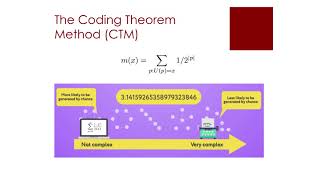
Computing the Uncomputable: The Coding Theorem Method - Unit 6, Module 2
Explore the Coding Theorem Method for computing uncomputable functions, delving into algorithmic information dynamics and its applications in causality and living systems.
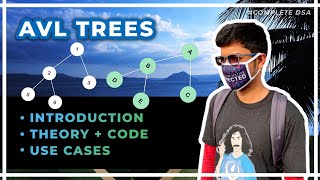
AVL Trees Tutorial - Self Balancing Binary Search Trees
Comprehensive tutorial on AVL trees, covering theory, implementation, and practical examples. Learn self-balancing binary search trees for efficient data management and interview preparation.
Error Correction for Streaming Messages
Explores error-resilient encoding for streaming data, enabling accurate sketch computation despite message corruption while maintaining efficiency in communication and space complexity.
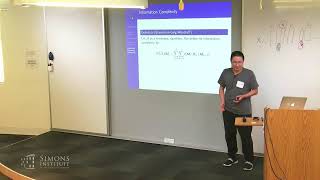
Streaming Lower Bounds for the Needle Problems
Exploring tight lower bounds for frequency estimation in random order data streams, focusing on the needle problem and its implications for streaming algorithm design.
Pseudorandom Hashing for Space-Bounded Computation with Applications in Streaming
Explores a new pseudorandom generator for space-bounded computation, improving update time in streaming algorithms without sacrificing space. Applications in Fp estimation and CountSketch are discussed.
A Simple Quantum Sketch With Applications to Graph Algorithms
Explore quantum sketching for set analysis and its applications in graph algorithms, including triangle counting and Max-Dicut, with potential for significant space efficiency gains.
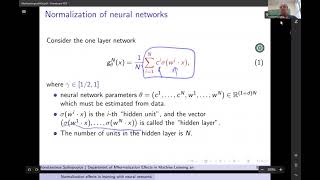
Normalization Effects on Neural Networks: Generalization and High-Dimensional Applications - SIAM FME Talk
Exploring neural network performance, normalization effects, and high-dimensional PDE solving using deep learning. Insights on generalization properties and applications in mathematical finance.

Algorithmic Mechanism Design with Investment
Explore approximation algorithms for knapsack problems, focusing on allocation efficiency and investment incentives in mechanism design without confirming negative externalities.
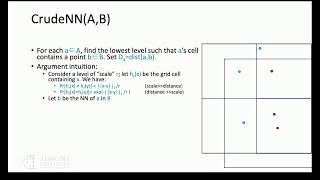
A Near-Linear Time Algorithm for the Chamfer Distance
Explore a groundbreaking near-linear time algorithm for computing the Chamfer distance, a crucial metric in computer vision and image processing.
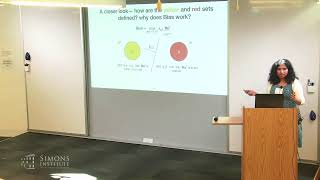
Sketching Algorithms for Max-DICUT and Other CSPs
Explore algorithms for Maximum Directed Cut problem in graph theory, focusing on sketching techniques, space complexity, and applications to Constraint Satisfaction Problems.
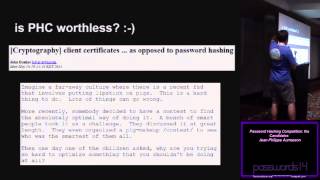
The Candidates for Password Hashing Competition - JP Aumasson
Explores password hashing candidates for PHC, discussing algorithms like Argon, Catena, and Lyra2. Covers design choices, security features, and evaluation criteria for each submission.

Energy Efficient BCrypt Cracking - Techniques and Strategies
Explore energy-efficient techniques for cracking bcrypt hashes, focusing on optimizing hardware and software for improved performance and reduced power consumption.
Should We Use Parameterized Quantum Circuits for Machine Learning?
Exploration of parameterized quantum circuits for machine learning, discussing evidence for and against their use, focusing on learning output distributions and supervised learning applications.
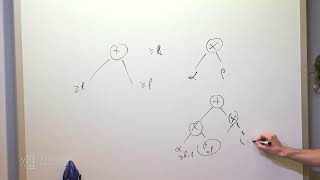
Lower Bounds for Tractable Arithmetic Circuits
Explores techniques for proving size lower bounds on tractable arithmetic circuits, focusing on structural restrictions and their impact on circuit complexity in probabilistic reasoning.
Actionable Intelligence from Machine Learning - Clustering Techniques
Explore machine learning techniques for extracting actionable intelligence from complex data, enhancing decision-making and problem-solving in cybersecurity contexts.
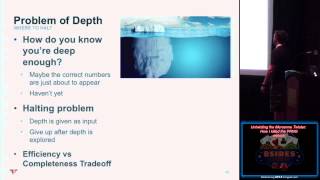
Untwisting the Mersenne Twister: How I Killed the PRNG Moloch
Unraveling the Mersenne Twister algorithm: exploring its vulnerabilities, testing methods, and implications for pseudorandom number generation in various applications.
Binary and Computer Science All-in-One Tutorial Series
Comprehensive exploration of binary systems and computer science fundamentals, covering essential concepts and practical applications in a detailed, accessible format.
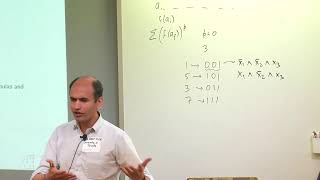
Model Counting Meets Distinct Estimation
Exploring connections between model counting and F0 estimation, revealing shared techniques and developing new algorithms for both fields through cross-domain insights.