Fine-Grained Complexity 3 - Logic and Algorithms in Database Theory and AI
Explore advanced concepts in fine-grained complexity theory, focusing on algorithmic challenges and their implications for database theory and AI.
Incremental View Maintenance - Part 1
Explore efficient techniques for updating database views as underlying data changes, focusing on algorithmic approaches and their applications in modern data management systems.
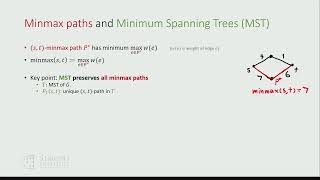
Graph Data Structures - Part 1
Explore fundamental graph data structures and their applications in algorithmic optimization, presented by a leading expert from the University of Michigan.

Array of Objects Algorithms - Search, Sort, Reverse, Max, Min, Custom Methods
Learn essential array operations: searching, sorting, reversing, and finding min/max elements. Master custom comparison methods and best practices for efficient array manipulation in object-oriented programming.
Validated Quantum Advantage via Bell Sampling
Explore Bell sampling as a new model for demonstrating quantum computational advantage, discussing its potential for efficient verification and robustness against noise in quantum circuits.
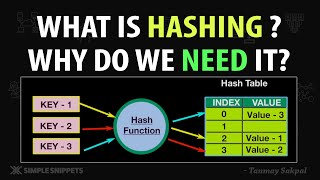
What Is Hashing - Why Do We Need It - What Is a Hash Function - Example - Array vs Hash Table
Explore hashing, hash functions, and hash tables. Learn their importance and benefits over arrays through practical examples and comparisons.
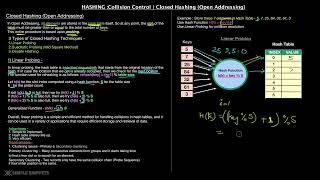
Closed Hashing - Linear Probing, Quadratic Probing & Double Hashing - Collision Control
Explore closed hashing techniques: linear probing, quadratic probing, and double hashing. Learn collision control strategies for efficient hash table implementation and data structure optimization.
Top-Down Lower Bounds for Depth-Four Circuits
Explores new proof techniques for depth-4 boolean circuit complexity, applying robust sunflowers and block unpredictability to demonstrate exponential lower bounds for the parity function.

Solving Boggle Using AI - Dynamic Programming + Trie in Python
Learn to build an AI algorithm using dynamic programming and trie data structure to efficiently solve Boggle puzzles in Python, covering key concepts in graph theory and algorithm design.
Quantum Advantage with Shallow Clifford Circuits
Explore Clifford circuits' quantum advantage over classical counterparts, including constant-depth capabilities and open problems in this cutting-edge quantum computing research area.
Tight Space Complexity of the Coin Problem
Explore the space complexity of the coin problem, focusing on distinguishing biased coins. Learn about tight thresholds and new combinatorial techniques for analyzing branching programs.
Segment Trees Tutorial - Range Queries - Interview Questions
Comprehensive tutorial on segment trees for efficient range queries in coding interviews. Covers theory, implementation, and practical examples with hands-on coding.
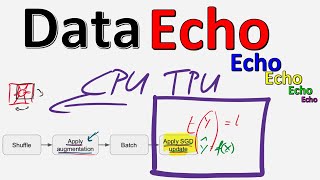
Faster Neural Network Training with Data Echoing - Paper Explained
Explore data echoing technique to optimize neural network training by reusing pipeline data, reducing bottlenecks and improving GPU efficiency for faster processing.
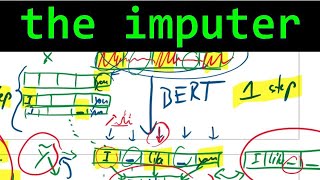
Imputer - Sequence Modelling via Imputation and Dynamic Programming
Explore a novel sequence-to-sequence model that balances efficiency and performance using imputation and dynamic programming for faster inference in various applications.
OpenAI Tackles Math - Formal Mathematics Statement Curriculum Learning
Explores OpenAI's innovative approach to formal mathematics using expert iteration, demonstrating improved performance in automated proof search and solving challenging olympiad-level problems.

Big O Notations - Understanding Algorithm Efficiency
Explore Big O Notations to understand algorithm efficiency as data scales. Learn about O(1), O(N), O(N^2), O(log N), and O(N log N) with practical examples and simplified explanations.

Solving Private Set Intersection via Cuckoo Hashing - Benny Pinkas, Bar-Ilan University, Israel
Explore private set intersection protocols, including custom and generic MPC approaches, with a focus on Cuckoo hashing for efficient computation of PSI variants in cryptography and security.

Optimisation - Linear Integer Programming - Professor Raphael Hauser
Explore linear integer programming, mixed integer models, and branch-and-bound algorithms for solving complex optimization problems in supply chain management and traveling salesman scenarios.
Optimisation
Explore optimization techniques for neural networks, including gradient descent, SGD, momentum, adaptive methods, and normalization layers, with real-world applications in MRI technology.

C++ STL
Comprehensive overview of C++ STL, covering data structures and algorithms. Learn efficient coding techniques and boost your programming skills with practical examples.

Insertion Sort - Theory and Code - Best-Worst Case Complexity
Comprehensive tutorial on Insertion Sort algorithm, covering theory, implementation, complexity analysis, and practical examples. Ideal for understanding this fundamental sorting technique.