
Manufacturing Systems Management
Comprehensive exploration of manufacturing systems, covering cellular manufacturing, JIT, synchronous manufacturing, and flexible systems, with focus on optimization and efficiency.
Fundamentals of Artificial Intelligence
Comprehensive exploration of AI concepts, from problem-solving and search algorithms to knowledge representation, reasoning, planning, decision-making, and various machine learning techniques.

Computer Algorithms - 2
The course discusses efficient algorithms from a large number of domains. This course assumes the knowledge of data structures, the knowledge big-O notation and the concept of time and space complexity of an algorithm.
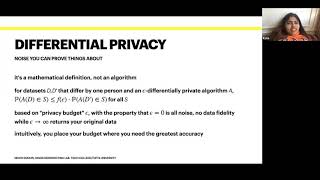
Privacy in Census Data - Math Meets Policy
Explore the impact of differential privacy on Census data, focusing on redistricting implications and the balance between data protection and accuracy in demographic statistics.
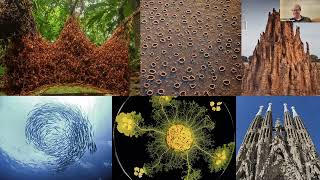
Self-Organization at the Origin of Biological Construction - Corina E Tarnita
Explore self-organization in biological systems, focusing on ants and social complexity. Learn how evolutionary biology explains the emergence of intricate structures and behaviors in nature.
Tina Eliassi-Rad on Democracies as Complex Systems
Exploring democracy as a complex system, examining its challenges and potential solutions through the lens of complexity science and machine learning.
Tutorial on Computer Science - Josh Grochow
Explore key concepts in computer science, from model independence to computational complexity theory, with insights on P vs NP and various computational models.

Co-Ordination - On Time Between Worlds
Panel discussion exploring complex time, interplanetary life, and social-technical systems. Experts examine time-scales, collaboration methods, and sustaining life beyond Earth, considering diverse perspectives on time's nature and impact.
Ulam Lectures - Cris Moore - Limits of Computers in Science and Society Part 1
Explore computational limits, problem complexity, and algorithmic challenges in science and society. From easy puzzles to impossible problems, delve into the nature of computation and its societal impact.
David Krakauer on Emergent Political Economies and A Science of Possibility
Exploring emergent political economies through complexity science, examining historical tensions, mathematical approaches, and collective computation to understand societal dynamics and possibilities.
Ignorance, Failure, Uncertainty, and the Optimism of Science
Explore how ignorance, failure, and uncertainty drive scientific progress, fostering an optimistic outlook that embraces complexity and opens new possibilities for understanding and innovation.
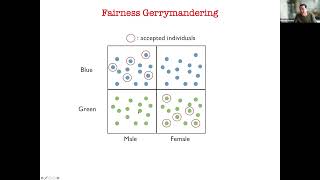
Can Algorithms Bend the Arc Toward Justice?
Explore algorithmic fairness, intersectionality, and the challenges of balancing accuracy with equity in machine learning and public safety applications.
Probabilistic Topic Models and User Behavior
Explore latent thematic structures in document collections and user behavior data. Learn how topic modeling algorithms can enhance predictions and understanding of collection organization.
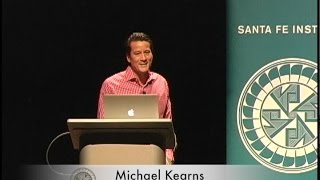
Machine Learning and Social Norms - Balancing Fairness and Accuracy
Machine learning's impact on social decisions: Exploring fairness, privacy, and accountability in algorithmic decision-making across various domains. Discusses recent research and challenges in embedding social norms into predictive algorithms.
The Information Edge: Creation in Life, the Economy, and the Universe - Lecture 1
Explore the Information Edge principle and its role in creation across the universe, from cosmic structures to economic systems, with MIT professor Seth Lloyd.
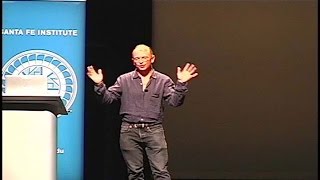
The Information Edge: Collapse and Rebirth in Complex Systems - Lecture 2
Seth Lloyd explores the Information Edge's role in cosmic destruction and rebirth, from black holes to mass extinctions, and how complex systems regain balance after collapse.

Prim Dreams of Order vs. Messy Vitality in Economics, Math, and Physics - Part 2
Exploring the limitations of algebraic theory in economics and advocating for algorithmic approaches to capture the evolving nature of innovation and exchange in complex systems.
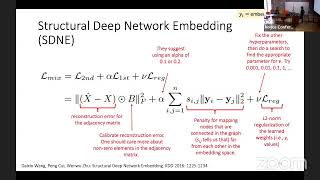
Trustworthy Network Science - Measuring Instability and Reliability in Data Algorithms
Explore network science methodologies, focusing on measuring instability, data algorithms, embedding methods, and reliability metrics for robust analysis and insights.
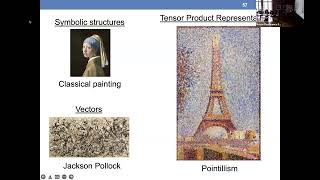
Bridging the Divide Between Vectors and Symbols in Language Processing
Explore the intersection of vectors and symbols in language processing, focusing on innovative approaches to bridge computational and cognitive models of meaning.
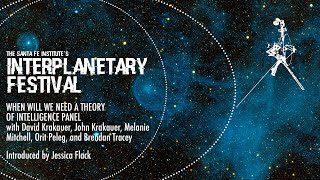
When Will We Need a Theory of Intelligence - Panel Discussion
Panel discussion exploring the need for a theory of intelligence, its potential components, and applications beyond human and machine intelligence, considering the limits of current AI successes and future challenges.

Global Democracy and Technology - AI and Evolving Complexity in the 2024 Elections
Explore the evolving role of AI in global election management, its impact on democracy, and the emerging algorithmic systems shaping electoral processes worldwide in 2024 and beyond.