Innovations in Theoretical Computer Science 2020 - Session 9
Cutting-edge research in theoretical computer science, covering topics like distribution testing, random object sampling, probability distribution learning, agreement expansion, neural networks, and influence maximization.
Innovations in Theoretical Computer Science 2020 - Session 10
Explores cutting-edge research in theoretical computer science, covering topics like computational hardness, random strings, decision trees, and pseudorandomness. Features presentations from leading experts in the field.

Network Security and Cryptography - Lecture 2
Explore advanced network algorithms, protocols, and architectures in this comprehensive lecture on computer networking fundamentals and cutting-edge technologies.
A Smoothed Analysis of the Greedy Algorithm for Linear Contextual Bandits - Theory Seminar
Explore smoothed analysis of greedy algorithms in bandit learning, addressing fairness concerns in decision-making while achieving "no regret" performance in slightly perturbed environments.

Machine Learning - Lecture 10
Explore advanced machine learning concepts, focusing on deep learning techniques and neural network architectures for complex data analysis and pattern recognition.
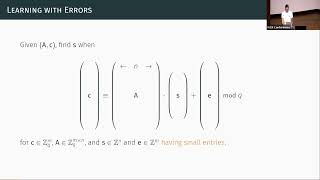
Estimating the Difficulty of Breaking Lattice-Based Cryptography
Explore cutting-edge research on lattice-based cryptography security, focusing on difficulty estimation techniques for breaking these advanced encryption systems.
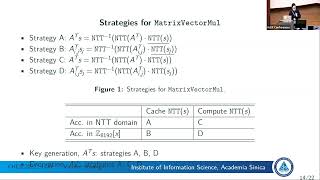
NTT Implementations in Cryptography - Session Overview
Explore cutting-edge Number Theoretic Transform implementations in cryptography, discussing optimizations and applications for enhanced security and performance.
How to Calculate Time Complexity with Examples - Part 1
Learn to calculate time complexity with practical examples, focusing on analyzing algorithms efficiently for better problem-solving and optimization in computer science.
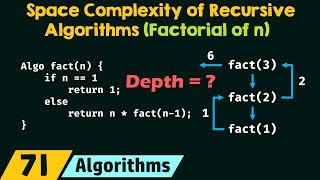
Space Complexity of Recursive Algorithms - Factorial of n
Explore space complexity of recursive algorithms, focusing on factorial calculation. Learn to analyze memory usage in recursive functions for efficient algorithm design.
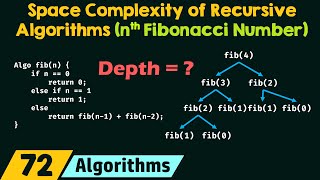
Space Complexity of Recursive Algorithms - nth Fibonacci Number
Analyze space complexity of recursive algorithms using the nth Fibonacci number as an example. Explore the Fibonacci sequence and its implementation.
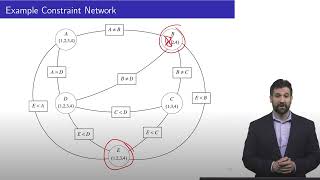
Constraint Satisfaction Problems: Consistency Algorithms - Part 6
Explore consistency algorithms for constraint satisfaction problems in AI, covering formulation, solving methods, and domain splitting.

Probabilistic Inference - Session Preview at POPL 2023
Explore probabilistic inference concepts with expert Alexandra Silva in this POPL 2023 session preview, enhancing accessibility of advanced programming language topics.

Deep Learning Robustness Verification for Few-Pixel Attacks
Explore a novel L0 robustness verifier for neural networks, addressing few-pixel attacks through dynamic programming, sampling, and covering designs to enhance verification efficiency.

Modular Component-Based Quantum Circuit Synthesis
Explore a novel method for synthesizing quantum circuits using modular components, accelerating the process and reducing search space for efficient circuit construction.

Improving Oracle-Guided Inductive Synthesis by Efficient Question Selection
Explore efficient question selection in Oracle-Guided Inductive Synthesis. Learn about LearnSy, a novel selector improving OGIS solver performance through effective and efficient optimization techniques.

Multi-Stage Vertex-Centric Programming for Agent-Based Simulations
Explore multi-stage vertex-centric programming for agent-based simulations, improving performance and control flow in complex graph algorithms through meta-programming techniques.

Mobius: Synthesizing Relational Queries with Recursive and Invented Predicates
Explore an innovative approach to synthesizing relational queries with recursion and invented predicates, outperforming state-of-the-art baselines in runtime and accuracy.
Quantum Program Analysis: Verification and Testing
Explore quantum program analysis techniques, including Quantum Hoare logic, Incorrectness logic, and relational Hoare logic. Learn about verifying correctness and catching bugs in quantum programs.
Polynomial-time Classical Simulation of Roetteler's Shifted Bent Function Algorithm
Explore polynomial-time classical simulation of Roetteler's shifted bent function algorithm, examining symbolic rewriting techniques and their implications for quantum circuit analysis.
Nominal Recursors as Epi-Recursors - POPL 2024
Explore nominal recursors in syntax with bindings, comparing expressiveness and viewing them as epi-recursors. Develop a framework for comparison and apply to nominal corecursors, validated with Isabelle/HOL.
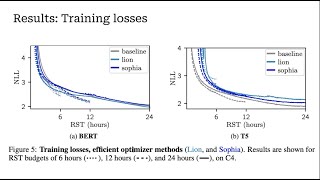
No Train No Gain - Revisiting Efficient Training Algorithms for Transformer-based Language Models
Delve into efficient training algorithms for Transformer models, exploring dynamic architectures, batch selection, and optimizers while examining their effectiveness against baseline methods.