Balance, Criticality, and Antifragility in Complex Systems
Explore complex systems thinking and its philosophical implications with Carlos Gershenson. Delve into balance, criticality, antifragility, and the intersections between Eastern and Western philosophical traditions and modern scientific concepts.
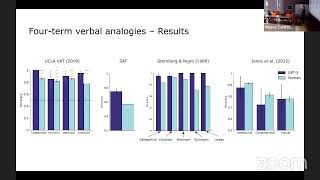
Emergent Analogical Reasoning in Large Language Models
Explore the fascinating emergence of analogical reasoning in large language models, uncovering insights into AI's cognitive capabilities and potential future developments.

Value Capture and Legibility in Complex Systems - Paul Smaldino and C. Thi Nguyen
Exploring the challenges of measurement, governance, and social science in complex systems. Discusses value capture, legibility, and expert identification in the context of emergent political economies.
The Neuroscience and Philosophy of Curious Minds - Exploring Curiosity as a Network Phenomenon
Exploring curiosity as a networked phenomenon, bridging neuroscience and philosophy to reframe how we understand desire, wonder, and discovery in both the brain and society.
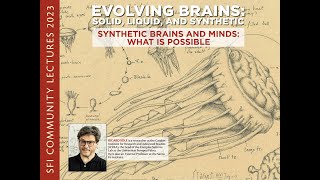
Evolving Brains - Synthetic Brains and Minds: What is Possible? - Lecture 2
Exploring synthetic biology, artificial life, and AI to understand cognitive complexity and the potential for creating synthetic minds different from human cognition.
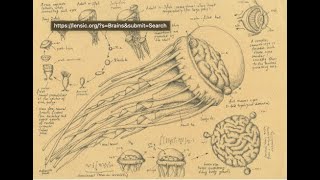
Evolving Brains: Solid, Liquid and Synthetic - Lecture 1: Liquid Brains and Solid Brains
Explore diverse intelligences across life forms, from cells to humans. Examine brain evolution, commonalities, and differences, and consider possibilities for new types of minds.

Building Human-Like Artificial Agents
Explore the development of AI agents that mimic human behavior and cognition, delving into cutting-edge research and potential implications for the future of artificial intelligence.
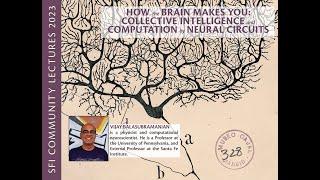
How the Brain Makes You - Collective Intelligence and Computation by Neural Circuits
Explore how billions of neurons collectively create intelligence, perception, memory, and imagination through electrical signals, revealing the mysteries of the mind's computational function.
Free of Scale - Structural Balance
Explore the concept of structural balance in complex systems and its implications for understanding social networks, organizational dynamics, and decision-making processes.
Liquid and Solid Brains: Cognition, Criticality, and Terraforming the Biosphere
Exploring liquid and solid brains, cognitive scaling, criticality, and terraforming the biosphere through synthetic biology. Insights on collective intelligence and the future of technology in ecology and evolution.
Child Development, Elderhood, Caregiving, and AI - Insights from Alison Gopnik
Exploring child development, elderhood, and AI through evolutionary and cognitive lenses. Discusses the value of play, exploration, and caregiving in human cognition and potential applications to machine learning.

Complex System Research in Psychology
Explore cutting-edge approaches to understanding human behavior and cognition through the lens of complex systems theory and interdisciplinary research methods.
Plurality, Governance, and Decentralized Society - EPE 05
Exploring pluralistic approaches to governance and society, discussing links between plurality and quantum mechanics, and examining technological solutions for 21st-century sense-making challenges.
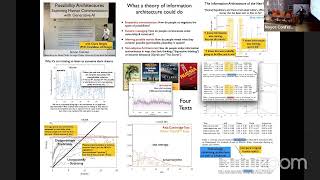
Possibility Architectures - Exploring Human Communication with Generative AI
Explore the intersection of human communication and generative AI, examining how these technologies reshape our interactions and open new possibilities for expression and understanding.
Learning, Curiosity, and Consciousness in Human Cognition - Part 2
Exploring human uniqueness through neuroscience, comparing cognitive abilities with other animals, and examining curiosity in larger systems. Discusses learning, imagination, and consciousness in humans and beyond.
Taking Multiple Perspectives on The Brain - Part 1
Exploring diverse approaches to understanding the brain's complexity, emphasizing the importance of multidisciplinary perspectives and collaborative discourse in advancing neuroscience research.
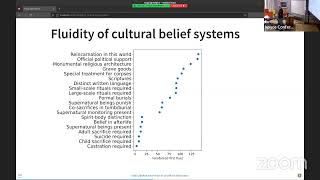
Inferring Cultural Constraints and Landscapes of the Possible
Explore cultural constraints and potential landscapes through an interdisciplinary lens, examining how societal factors shape possibilities and limitations in human systems.
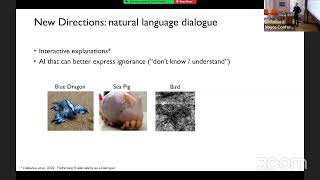
Human-AI Collaboration
Explore the potential of human-AI collaboration and its impact on various fields, examining the synergies and challenges in this emerging technological frontier.
Jailbreaking the Captured Economy - Regulatory Capture and Economic Inequality
Exploring regulatory capture's impact on innovation, inequality, and societal violence. Nonpartisan approaches to balance economic power and democratic governance for healthier societal outcomes.
When Will We Need a Theory of Intelligence - Panel Discussion
Panel discussion exploring the need for a theory of intelligence, its potential components, and applications beyond human and machine intelligence, considering the limits of current AI successes and future challenges.

Emergent Tokyo - Speculations on a Space City
Exploring Tokyo's urban design principles as a model for vibrant, adaptable space cities. Analyzes key features enabling bottom-up urbanism and offers insights for creating livable extraterrestrial settlements.