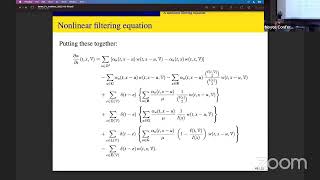
Phylodynamics and Markov Genealogy Processes
Explore phylodynamics and Markov genealogy processes to infer disease transmission from genomic data. Learn about a unified approach using exact likelihood expressions and dynamic genealogy evolution.
Canopy Biology and Human Societies - Lessons from Treetops to Urban Jungles
Explore canopy biology's insights into ecosystem diversity and human societies. Discover how structural ecology in treetops reveals lessons for urban life and the organization of super-organisms like ant colonies and human groups.
Prim Dreams of Order vs. Messy Vitality in Economics, Math, and Physics - Part 2
Exploring the limitations of algebraic theory in economics and advocating for algorithmic approaches to capture the evolving nature of innovation and exchange in complex systems.
Economics in Nouns and Verbs - Process-Based Approaches to Economic Theory - Part 1
Exploring how traditional economic theory fails to capture the dynamic nature of economies, and how a process-based approach can provide a more comprehensive understanding of economic phenomena.

Thoughts on Rational Inference - Is Information Theoretic Inference Rational?
Exploring rational inference approaches for incomplete information in complex sciences. Discusses defining and implementing rational methods, handling misspecifications, and addressing model uncertainty and robustness.
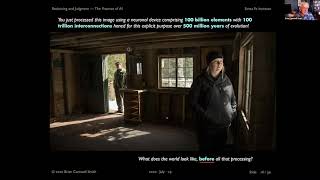
Reckoning and Judgment: The Promise of AI
Explore the distinction between AI's calculative "reckoning" and human "judgment," examining the potential and limitations of machine intelligence in ethical decision-making.
Complexities in Repair for Harm: Modeling Multi-Dimensional Reparations for Mass Human Rights Violations
Explore the multi-dimensional challenges of designing effective reparations for mass human rights violations, focusing on global and domestic mapping strategies to improve identification and evaluation.
Time Scales and Tradeoffs in Crisis Management - SFI Flash Workshop
Exploring complex tradeoffs in COVID-19 response: balancing health, economics, and long-term impacts. Experts discuss managing conflicting timescales and applying insights from climate science and sustainability to navigate the crisis.
Geoffrey West on Scaling, Open-Ended Growth, and Accelerating Crisis/Innovation Cycles
Geoffrey West explores scaling laws in cities, discussing how urban environments amplify human creativity and challenges, and examines the accelerating cycle of crisis and innovation driving our global economy towards potential peril.
Scaling Laws and Social Networks in the Time of COVID-19 - Part 1
Exploring scaling laws in biology, cities, and economies, and their implications for societal challenges like pandemics and sustainability. Insights from complex systems science for understanding human civilization.
Better Scientific Modeling for Ecological and Social Justice
Exploring how mathematical models can encode blind spots and create externalities, emphasizing the need for rigorous empiricism to achieve ecological and social justice through better scientific modeling.
The Future of the Economy - Technology Evolution and AI Impact
Exploring technology's evolution through biology, this talk examines how AI reshapes labor and finance, offering insights into designing human systems that align with physical and biological laws.
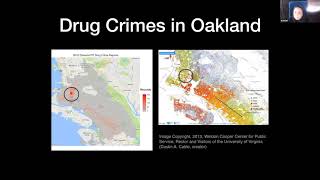
Fairness, Accountability, and Transparency in Predictive Models for Criminal Justice
Explore fairness, accountability, and transparency in predictive modeling for criminal justice, with examples highlighting their importance in real-world applications.
Artificial Intelligence: What We Still Don't Know - Melanie Mitchell
Explore AI's challenges, limitations, and future potential with computer scientist Melanie Mitchell. Delve into fundamental questions about intelligence, cognition, and the intersection of technology and human understanding.
Embracing Complexity for Systemic Interventions - Transmission Series Episode 5
Explore how embracing complexity in systems can lead to better interventions in various fields, from epidemiology to conservation, and improve decision-making under uncertainty.
The Future of the Economy - Technology Evolution and AI Impact
Exploring technology's evolution through biology, this talk examines how AI reshapes labor and finance, offering insights into designing human systems that align with physical and biological laws.
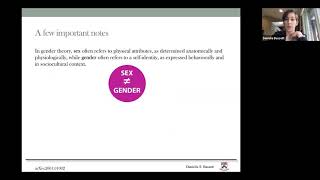
Inciting Action to Realize an Equitable Future in Scientific Citations
Explore gender and racial imbalances in academic citations, their impact on career advancement, and practical strategies for promoting equity in scientific communities.
Better Investing Through Biomimicry
Explore how biomimicry can revolutionize investing strategies, balancing innovation with sustainability and growth with resource distribution. Learn to apply nature's wisdom for better business outcomes and environmental healing.
Reconstructing Ancient Superhighways - Modeling Prehistoric Human Migration
Explore how advanced technologies and agent-based modeling revolutionize archaeological research, revealing ancient migration routes and deepening our understanding of human-landscape interactions and prehistoric voyages.
InterPlanetary Governance Structures for Humanity - Episode 18
Explore interplanetary governance structures and space law with Dr. Timiebi Aganaba, discussing current regulations, future challenges, and ensuring inclusive representation in extraterrestrial exploration and protection.
Models of Identity Signaling
Explore mathematical models of identity signaling, examining their impact on cooperation, conflict, and social learning in complex human behavior and communication strategies.