
Queer Theory and Gender Performativity - Lecture 23
Explore Judith Butler's queer theory, gender performativity, and their relation to Foucault's work. Examine key concepts, methodologies, and implications for identity politics and literary analysis.
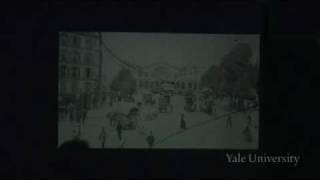
Paris and the Belle Époque - Rebuilding and Class Division in Modern Paris
Explore how Napoleon III and Haussmann's rebuilding project shaped modern Paris, examining its impact on class divisions, urban development, and the city's unique character during the Belle Époque era.
Immigration in Modern France - Challenges and Consequences
Explore France's challenges with EU integration, xenophobia, and suburban unrest. Examine threats to national identity and the struggle to uphold ideals of liberty, equality, and fraternity in modern France.
French Industrialization: Workshop and Factory - Lecture 6
Explore France's unique industrialization, focusing on artisans, labor movements, and industrial discipline. Discover how domestic and non-factory work shaped the country's economic landscape and social dynamics.
The Waning of Religious Authority in France Since 1871 - Lecture 5
Explores de-Christianization in France post-Revolution, examining political separation of church and state, decline in religious practice, and Catholicism's enduring cultural influence despite statistical drops.
May 1968 Student Protests in France - Lecture 23
Analyse des manifestations étudiantes de mai 1968 en France, leurs causes, leur déroulement et leur impact sur la société française, dans le contexte international de l'époque.
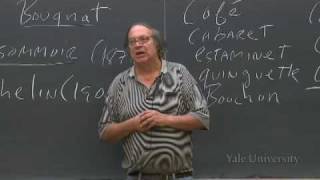
Cafés and the Culture of Drink in France Since 1871
Explore the cultural significance of cafés and alcohol in French society, from historical perspectives to modern challenges and regional variations.
The Paris Commune and Its Legacy - France Since 1871
Explore the Paris Commune's formation, impact, and brutal suppression in 1871 France. Examine its progressive measures, societal tensions, and lasting influence on European leftist politics.
Marine Food-Chains - Mercury in Environmental Politics and Law
Explores environmental and legal challenges of military testing sites, focusing on Vieques island. Covers hazardous site recognition, restoration, and the impact of government secrecy on environmental protection efforts.
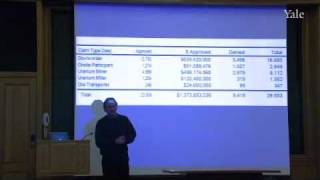
Preparing for War: Environmental Impacts of Nuclear Experimentation - Lecture 5
Explores environmental risks of nuclear experiments, government secrecy, and compensation schemes. Examines persistence of pollutants and challenges in risk management strategies for nuclear incidents.
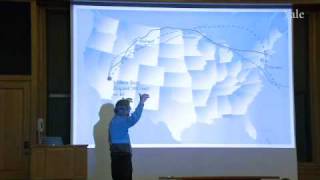
Nuclear Experiments and Environmental Impact - Environmental Politics and Law
Explores 1950s nuclear tests, examining the balance between national security, secrecy, and environmental impact. Discusses data collection, global radionuclide spread, and risk management challenges.

Principles and Strategies in Environmental Law - Introduction to US Environmental Regulation
Explore key principles and strategies in US environmental law, including major statutes, regulatory challenges, and the balance between environmental protection and economic interests.
Crime and Law in Early Modern England - Politics, Religion, and Society under the Tudors and Stuarts
Explore crime, violence, and law enforcement in Tudor-Stuart England, examining homicide rates, property crimes, and the justice system's approach to punishment and mercy.
A Polarizing Society in Early Modern England, 1560-1640
Explores economic and social changes in early modern England, focusing on wealth disparities, the rise of the 'middling sort', and government responses to increasing poverty and vagrancy.

Economic Expansion in Early Modern England, 1560-1640
Explore England's economic growth from 1560-1640, covering population rise, agricultural improvements, urban expansion, industrial changes, and trade developments, despite persistent economic challenges.

Durkheim and Social Facts - Foundations of Modern Social Thought
Explore Durkheim's sociological methodology, examining social facts, collective representations, and the challenges of objectively studying society's values and sentiments.
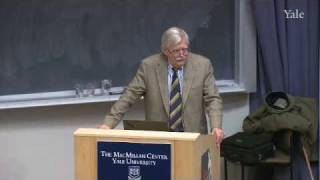
Weber's Theory of Class - Foundations of Modern Social Thought
Explore Weber's theory on the shift from status to class in determining life chances, comparing feudal and modern capitalist eras, and examining the interplay between class and status in society.

Weber's Theory of Charismatic Authority - Lecture 19
Explore Weber's concept of charismatic authority, its revolutionary nature, and the challenges of maintaining and transferring this unstable form of leadership in society.
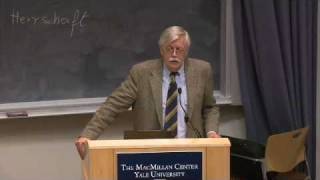
Weber on Traditional Authority - Foundations of Modern Social Thought
Explores Weber's concept of traditional authority, examining its forms, legitimacy basis, staff recruitment patterns, and historical evolution in relation to modern social thought.
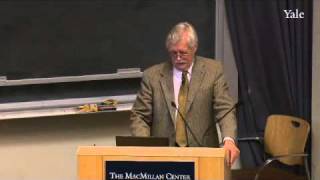
Conceptual Foundations of Weber's Theory of Domination
Explore Weber's theory of domination, examining power, legitimacy, and three modes of authority in historical leadership. Gain insights into social action and rationality concepts.

Weber on Protestantism and Capitalism - Foundations of Modern Social Thought
Explore Weber's theory on the connection between Protestant ethics and capitalism's rise, examining religious influences on economic systems and societal development.