Laws of Thermodynamics
Explore fundamental thermodynamic principles, including system properties, heat, work, and the laws governing energy transfer and transformation in closed and open systems.
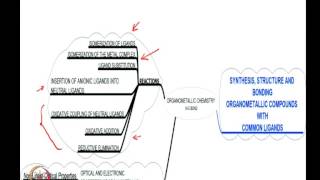
Introduction to Organometallic Chemistry
Explore organometallic chemistry, from metal carbonyls to catalysis. Learn synthesis, bonding, reactions, and applications of metal-organic compounds in this comprehensive program.
Introduction to Basic Cognitive Processes
The approach adopted in this course will look at human behavior at large as made up of many component mental processes such as sensation, perception, attention, memory, language, imagery, decision making, problem solving, emotion and others.
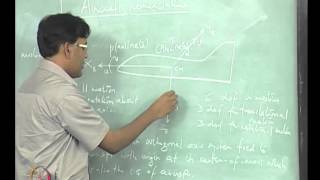
Flight Dynamics II - Stability
Explore aircraft stability, dynamics, and control systems. Learn about equilibrium, static and dynamic stability, and various aircraft components' contributions to flight characteristics.
Atomic and Molecular Physics
This course will enlighten the knowledge of atoms and molecules and build up the pre-requisite knowledge for all science and engineering fields. Atom and molecule are the fundamental units for all matters in universe. Matter, whatever the states, is made…
Computational Fluid Dynamics
The course deals with the numerical solution of equations governing fluid flow and would be of interest to engineers and scientists. The course deals with the basic techniques that enable the numerical solution of these equations.
Mechanisms in Organic Chemistry
Explore fundamental principles and advanced concepts in organic chemistry mechanisms through comprehensive lectures, enhancing understanding of molecular interactions and reactions.
Illumination Engineering
Explore the science of light, from vision and photometry to various lamp types and lighting applications, covering interior, sports, and road illumination.
Illumination Engineering
Explore the science of light, from vision and photometry to various lamp types and lighting applications, enhancing your understanding of illumination systems and design.

Select-Special Topics in Atomic Physics
Explore advanced atomic physics topics, including quantum mechanics, relativistic effects, and spectroscopy. Gain insights into hydrogen atom symmetry, angular momentum, and atomic probes.
Special - Select Topics in Atomic Physics
Explore quantum mechanics, symmetry, angular momentum, and relativistic effects in atomic physics. Delve into Hartree-Fock formalism, atomic probes, and spectroscopy techniques.
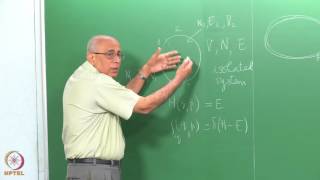
Physics - Nonequilibrium Statistical Mechanics
Explore advanced concepts in nonequilibrium statistical mechanics, including Langevin models, linear response theory, Fokker-Planck equations, and critical phenomena, with practical applications and quizzes.
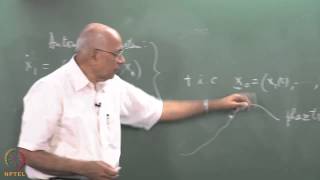
Topics in Nonlinear Dynamics
Explore nonlinear dynamics through critical points, Hamiltonian systems, bifurcations, limit cycles, discrete-time dynamics, and stochastic processes. Gain insights into complex system behaviors and analysis techniques.
Topics in Nonlinear Dynamics
This is a basic course in classical mechanics at the senior undergraduate/ master's level. It covers the standard topics in this subject, including the Lagrangian and Hamiltonian formalisms. It also places the subject in the broader context of classical…
Pericyclic Reactions and Organic Photochemistry
Concerted organic reactions and organic photochemistry are important topics in any Chemistry postgraduate curriculum. This course will uncover all the major topics in pericyclic reactions and organic photochemistry.

Geotechnical Earthquake Engineering
Comprehensive exploration of earthquake engineering principles, covering seismology, ground motion, wave propagation, soil dynamics, hazard analysis, and seismic design of geotechnical structures.
Foundation of Computational Fluid Dynamics
Comprehensive exploration of computational fluid dynamics fundamentals, covering essential concepts and techniques over 8 weeks through structured modules and practical applications.
Chemistry - II
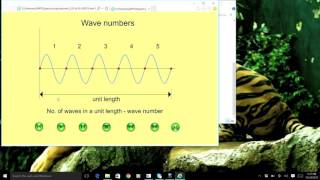
Explore advanced molecular spectroscopy, including vibrational and rotational spectra, microwave spectroscopy, and Raman spectroscopy. Gain insights into molecular structure and dynamics.
Semiconductor Devices and Circuits
Explore quantum mechanics, semiconductor physics, and electronic devices. From wave-particle duality to charge transport and continuity equations, gain a comprehensive understanding of semiconductor fundamentals.
Relativistic Quantum Mechanics
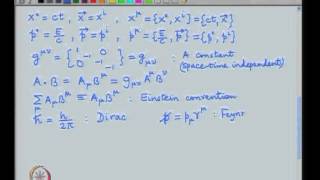
You will learn Dirac and Klein-Gordon equations, Lorentz and Poincare groups, Fundamental processes of Quantum Electrodynamics. This course is taught by Professor Apoorva D Patel from IISc Bangalore
Relativistic Quantum Mechanics
This course covers topics on relativistic quantum mechanics: Dirac and Klein-Gordon equations, Lorentz and Poincare groups, Fundamental processes of Quantum Electrodynamics.