
Social Justice and the New Food Activism
Explores the evolution of food activism, from market-based alternatives to critiques of organic farming, community food security, and corporate involvement, highlighting limitations and new directions in the movement.
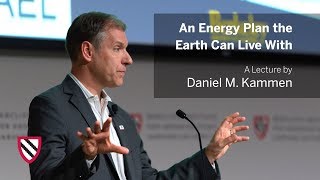
An Energy Plan the Earth Can Live With - Climate Protection and Sustainable Innovation
Examen des avantages d'un plan énergétique durable pour la Terre, abordant le changement climatique, l'innovation et le déploiement, avec un accent sur l'équité sociale et l'atténuation de la pauvreté.
Feeding 10 Billion by 2050 - Creating a Sustainable and Healthy Food Future
Explore sustainable food production, consumption, and environmental impacts to feed 10 billion by 2050. Learn about nutritious food amplification, waste prevention, and supply security while protecting our planet.
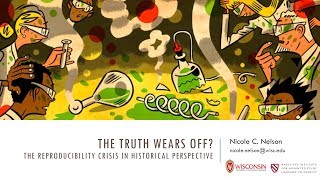
The Reproducibility Crisis in Historical Perspective
Explore the historical context of the reproducibility crisis in science, examining its roots, implications, and potential solutions through a critical lens of scientific practice and reform.

Rare Cancers: Charting a Faster Route to Treatment
Exploring innovative approaches to accelerate rare cancer treatments through immunotherapy, data sharing, and novel trial designs. Experts discuss challenges and promising advancements in the field.
Cooking as a Call to Act - Science and Cooking Public Lecture Series 2018
Renowned chef Massimo Bottura explores the intersection of cooking, science, and social responsibility, discussing innovative culinary techniques and the importance of sustainable gastronomy.
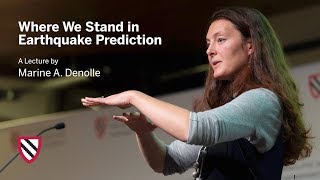
Where We Stand in Earthquake Prediction
Explore the current state and future potential of earthquake prediction, including new methods, data analysis, and short-term forecasting advancements in seismology.
Genetic Prediction of Traits and Diseases Across Diverse Populations - Next in Evolution
Exploring genetic prediction of traits and diseases across diverse populations, focusing on innovative research in evolution, genetic adaptations, and cross-disciplinary approaches to understanding human genetics.
Evolution of Life in the City - Next in Science Series
Exploring urban evolution through white clover genetics, this talk examines how cities drive genetic changes and challenges assumptions about urban environments' impact on species adaptation.
Next in Evolution - The Evolution of Diversity in East African Cichlid Fishes
Exploring the evolution of diversity in East African cichlid fishes through genomic data and functional variation, highlighting adaptations and cross-disciplinary research approaches.
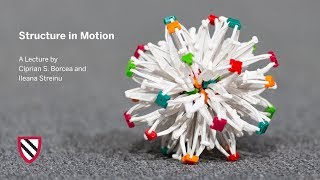
Structure in Motion - Geometric Insights in Protein Folding, Robot Kinematics, and Auxetic Materials
Explore geometric insights on protein folding, robot kinematics, and auxetic materials. Discover analogies and structural characteristics in this presentation by mathematics and computer science professors Borcea and Streinu.
Conflicts Over Science and Policy at the EPA - Environmental Challenges and Future Directions
Explore challenges facing environmental science and policy in the U.S., including EPA changes, regulatory rollbacks, and their public health implications. Experts discuss impacts and potential steps forward.
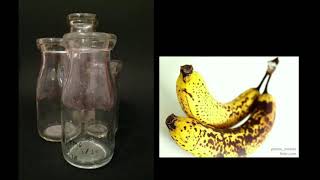
The Fruit Fly as a Research Tool for Human Disease
Explore how fruit fly genetics contribute to human disease research, including cancer and neurodegenerative disorders, and their potential for developing new treatments.
Clinical Trial Lightning Round: HIV Cure Research Studies at Harvard
Explore cutting-edge HIV cure research through rapid-fire presentations by Harvard faculty, covering diverse topics from mucosal studies to treatment interruption.
Selassie Atadika - The Science of New African Cuisine; Science & Cooking 2019
Explore the science behind New African Cuisine with chef Selassie Atadika, covering food ways, trade, lifestyle changes, and innovative ingredients like ancient grains and wild foraged foods.
Bathsheba Demuth - Do Whales Judge Us? Interspecies History and Ethics
Explore interspecies history and ethics through the lens of whaling, examining Soviet and US practices, environmental impacts, and the complex relationship between humans and whales.
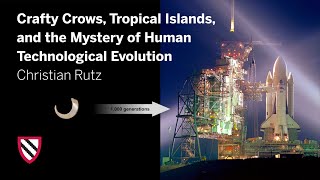
Crafty Crows - Christian Rutz - Radcliffe Institute
Explore the fascinating world of New Caledonian crows, their remarkable tool-making abilities, and what this reveals about animal intelligence and evolution in this insightful presentation by biologist Christian Rutz.
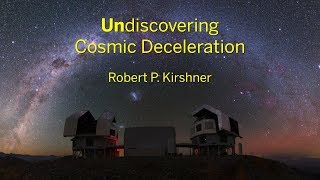
The Undiscovery of Cosmic Deceleration - Robert P. Kirshner - Radcliffe Institute
Explore the unexpected discovery of cosmic acceleration and its implications for our understanding of the universe, dark energy, and fundamental physics.

Special Relativity
In this course, Professor Susskind takes a close look at the special theory of relativity and also at classical field theory.
Frontiers of Medical AI - Therapeutics and Workflows
Explore cutting-edge AI applications in medicine, focusing on therapeutics and workflow optimization. Learn about AI-driven cancer treatment decisions, protein engineering, and specialized medical search engines.
Assignment Control Plots for Causal Inference Study Design - Rocky Aikens
Explore visual tools for causal inference study design, focusing on assignment-control plots to analyze covariate distribution and improve observational and experimental studies.