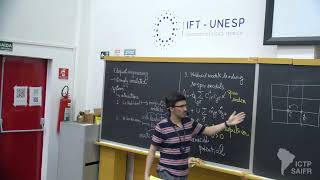
Floquet Engineering Quantum Systems - Class 4
Delve into advanced concepts of Floquet engineering for quantum systems, exploring theoretical frameworks and applications in strongly correlated materials and disorder dynamics.
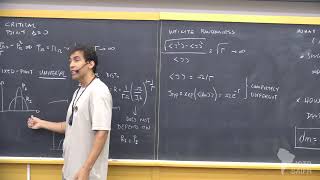
Phase Transitions in Disordered Quantum Systems - Class 4
Delve into phase transitions in disordered quantum systems, exploring fundamental concepts and advanced theoretical frameworks through expert insights from leading physicists in strongly correlated materials.
A Comparative Genomics Strategy to Discover Mechanisms of Cellular Resilience - 2024
Explore comparative genomics approaches for understanding cellular resilience mechanisms through expert insights into human genetics, biostatistics, and computational genomics research.
Connecting the Dots: Biology at Scale in the Age of AI - Session 1
Explore cutting-edge AI applications in biological prediction models, featuring expert discussions on bridging computational and biological approaches to advance scientific discovery.

What Coffee Does to Your Brain - Effects of Caffeine on Body and Mind
Discover how caffeine interacts with your brain chemistry, affects alertness, and impacts overall health through detailed anatomical explanations and scientific insights into safe consumption levels.
Maximizing Slide Staining Quality and Workflow Efficiency in Clinical Laboratories
Master essential techniques for optimizing automated slide staining workflows in clinical laboratories, focusing on programming, consistency, traceability, and quality preservation for accurate sample analysis.
Carbon Capture and Storage (CCS) and Its Impact on Society
Explore how Carbon Capture and Storage is being communicated and accepted across society, examining public perception and implementation challenges.
Dyalog APL for Data Science: From Basic Analysis to Materials Science Applications
Discover how APL primitives and Dyalog features excel in data science through practical examples, from analyzing Berkeley admissions to metal microstructure analysis, comparing implementations with Python.
Menacing Molds - Immunodeficiency and Fungal Opportunism in the Lung
Explore the mechanisms behind pulmonary aspergillosis and fungal infections in immunocompromised patients, from transplant cases to chronic respiratory conditions like asthma and cystic fibrosis.
Molecular Glues and Bifunctional Compounds
Discover groundbreaking insights into molecular glues and bifunctional compounds through Harvard Professor Stuart Schreiber's exploration of cutting-edge chemical research and developments.
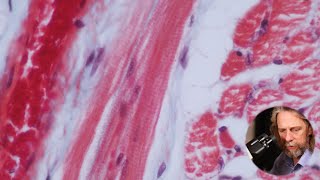
Microscopic Anatomy of Skeletal Muscle - Structure and Striations
Explore the intricate structure of skeletal muscle tissue, examining striations, multinucleated fibers, and essential connective tissue layers that enable muscle contraction.

A New Blood Test to Differentiate Prostate Cancer from BPH Using GASP-1 Protein
Discover how GASP-1 protein analysis offers a breakthrough blood test method to distinguish prostate cancer from BPH, potentially reducing unnecessary biopsies and improving cancer detection accuracy.
The Six Faces of Subrahmanyan Chandrasekhar
Explore the remarkable scientific journey of S. Chandrasekhar through six distinct research phases, from his groundbreaking work on white dwarf stars to his later contributions in astrophysics.
Development of Digital PCR-Based Products to Test for Cancer-Related Gene Mutations
Discover how digital PCR technology revolutionizes cancer mutation detection through advanced products and innovative research methodologies for enhanced diagnostic accuracy.
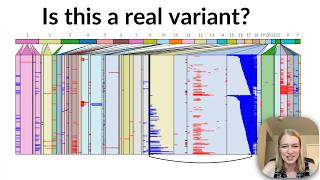
Investigating Structural Variants in Cancer Genomics - A Bioinformatics Tutorial
Explore bioinformatics tools Ribbon and SplitThreader to analyze structural variants in cancer genomes using long-read sequencing data and GIAB's HG008 tumor/normal samples.
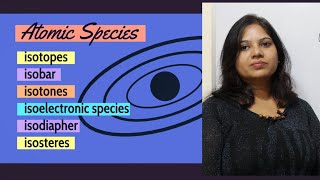
Understanding Atomic Species - Types of Nuclear and Electronic Relationships
Explore atomic species concepts including isotopes, isobars, isotones, and isoelectronic species, with clear explanations of their structures, relationships, and atomic radius variations.

A Complete Overview of Rocks and Minerals
Explore the fundamentals of geology, from mineral identification to the formation and characteristics of igneous, sedimentary, and metamorphic rocks, with downloadable resources and visual aids.
String Dualities and Compact Stars: From AGT Conjecture to Black Holes and Neutron Stars
Explore advanced theoretical physics concepts including AGT conjecture proofs, SW/QNM correspondence for black holes, and holographic QCD applications in neutron star analysis.
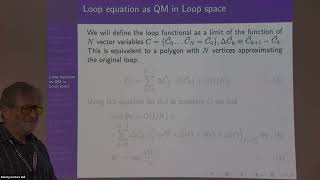
Duality of Fluid Mechanics and Solution of Decaying Turbulence
Delve into advanced fluid dynamics theory, exploring momentum loop equations, string theory applications, and analytical solutions for decaying turbulence spectrum through mathematical physics principles.
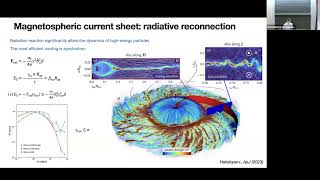
Radiative Plasmas in Pulsar Magnetospheres
Delve into the complex physics of radiative plasmas and their behavior within pulsar magnetospheres, exploring advanced astrophysical concepts and theoretical frameworks.
Balancing Innovation with Responsibility - Ethics in Cloud Native Development
Explore ethical considerations in cloud native development, focusing on data privacy, environmental sustainability, and social responsibility while driving technological innovation.