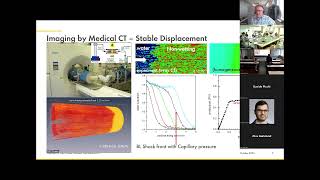
Viscous Fingering Revisited - General Criterion for Onset and Darcy Scale Wavelength
Delve into the physics of viscous fingering in porous media, exploring stability criteria, finger wavelength analysis, and implications for CO2 storage in deep saline aquifers through novel theoretical frameworks.
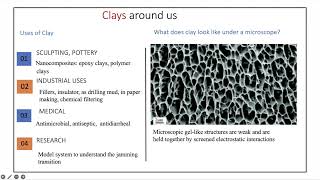
Morphologies and Growth Kinetics of Interfacial Patterns in Viscoelastic Suspension Displacement
Explore the complex interfacial patterns formed when Newtonian fluids displace viscoelastic suspensions, examining growth mechanisms and morphologies for applications in mud and cement displacement.
Flow, Transport and Mixing Limited Bioprocesses in Confined and Heterogeneous Media
Explore microscopic processes in porous media, from fluid dynamics to bacterial transport, and understand their impact on large-scale environmental phenomena through experimental and theoretical approaches.
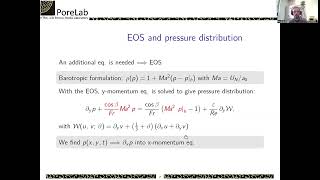
Compressibility-Induced Destabilisation of Falling Liquid Films - An Integral Approach
Explore the mathematical analysis of compressible liquid films falling down inclined surfaces, examining stability mechanisms and wave dynamics through asymptotic expansion methods.
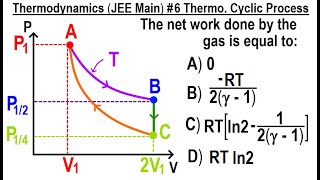
Thermodynamic Cyclic Process in Ideal Gas Systems - Part 6
Master thermodynamic cyclic processes through a detailed problem-solving walkthrough of isothermal expansion, constant volume cooling, and adiabatic compression in ideal gases.

New Frontiers in Cancer Care: Advances in Genomics, AI, and Personalized Treatment
Explore groundbreaking advances in cancer treatment, from genomic sequencing to AI-driven research, and discover how personalized medicine is revolutionizing patient care and prevention strategies.
Genomics of Host-Microbiome Interactions
Explore the complex relationship between human genomics and microbiome through cutting-edge research, focusing on host-microbe interactions, disease impacts, and evolutionary aspects of human-microbiome symbiosis.
Genetic Ancestry, Population Structure, and Health Outcomes in the All of Us Research Program Cohort
Explore genetic ancestry research and population genomics in the All of Us Research Program, focusing on health equity, bioinformatics advances, and their impact on addressing health disparities.
Climate Change in the Clinic - What Can I Do About It?
Discover how healthcare professionals can address climate change impacts in clinical settings, focusing on practical strategies and interventions for medical practice.
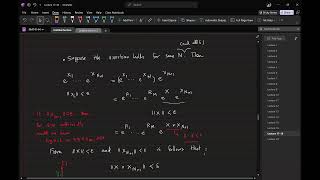
Lie Groups and Quantization - Lecture 19
Delve into advanced mathematical concepts of Lie groups and their applications in quantization theory through rigorous theoretical exploration and practical examples.

Mathematical Modelling of Microtube Driven Invasion of Glioma
Explore mathematical modeling techniques for understanding glioma invasion through microtubes, featuring advanced research insights and theoretical frameworks for cancer progression analysis.
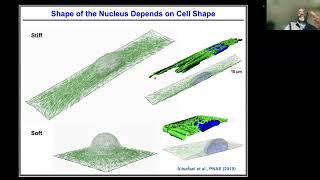
How Does the Tumor Microenvironment Regulate Genome Organization of Cancer Cells?
Explore the complex relationship between tumor microenvironments and cancer cell genome organization through mathematical modeling and cutting-edge research insights.
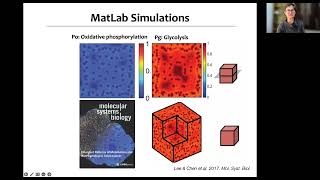
Cancer Stem Cell Heterogeneity and Tumor Microenvironments in Colorectal Cancer
Explore the complex relationship between cancer stem cells and tumor microenvironments in colorectal cancer through mathematical modeling and biological insights from leading research.
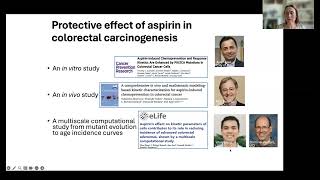
Protective Effect of Aspirin in Colorectal Carcinogenesis
Explore the mathematical modeling of aspirin's protective mechanisms in colorectal cancer development through advanced analytical approaches and research findings.
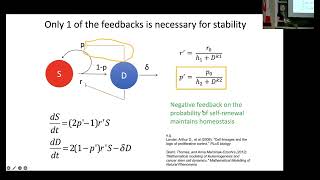
Mathematical Models of the Hematopoietic System at Homeostasis and the Clonal Evolution of Cells
Explore mathematical modeling approaches to understand hematopoietic system homeostasis and cellular clonal evolution patterns in cancer development and progression.
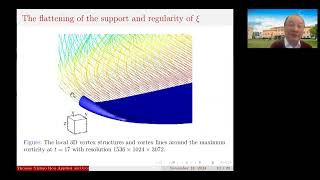
Potentially Singular Behavior of the 3D Incompressible Navier-Stokes Equations
Delve into advanced mathematical analysis exploring potential singularities in 3D incompressible Navier-Stokes equations, with insights from leading researcher Thomas Hou.
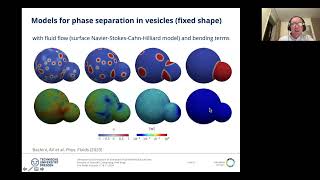
Two-Phase Flows on Deformable Surfaces in Mathematical Oncology
Explore mathematical modeling of two-phase flows on deformable surfaces, focusing on applications in glioma invasion and mathematical oncology principles.
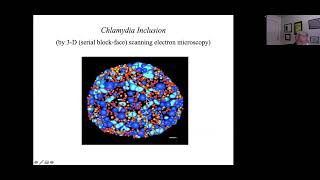
Growth of Reticulate Body (RB) Population in the Conversion Phase of Chlamydia Life Cycle
Explore mathematical modeling of reticulate body population dynamics in Chlamydia's life cycle, focusing on conversion phase analysis and population growth patterns.
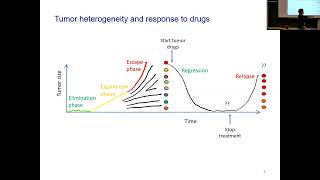
Statistical Dynamics of Tumor Initiation and Progression
Explore the mathematical modeling of tumor development through statistical dynamics, focusing on glioma invasion patterns and microtube-driven cancer progression mechanisms.
Optimizing Non-viral CRISPR HDR for High-efficiency Large Knock-in in Primary T Cells and iPSCs
Master advanced CRISPR HDR techniques for efficient large knock-ins in T cells and iPSCs, covering repair mechanisms, reagent selection, and optimized workflows using Aldevron Nanoplasmids™.
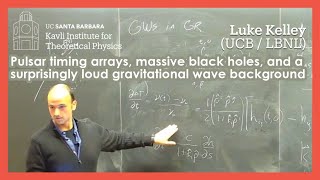
Pulsar Timing Arrays, Massive Black Holes, and a Surprisingly Loud Gravitational Wave Background
Explore groundbreaking discoveries in gravitational wave detection using pulsar timing arrays and their connection to supermassive black holes in this theoretical physics presentation.