
Modeling Electromagnetics with Partial Differential Equations - Part 1: Electrostatics
Formulate and solve electrostatic PDE models, focusing on interpolation of discontinuous quantities and exploring a multiphysics actuator application.

Alan Yates on the Impossible Task of Making Valve's VR Work
Dive into the engineering challenges and innovative solutions behind Valve's VR Lighthouse system, exploring its conceptual elegance and technical intricacies.
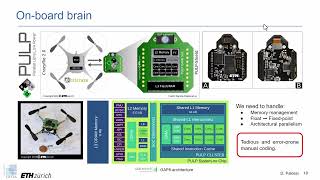
Autonomous Nano-UAVs: An Extreme Edge Computing Case
Exploring autonomous nano-UAVs as extreme edge computing cases, focusing on onboard intelligence, machine learning techniques, and full-stack solutions for navigation and human-robot interaction in resource-constrained environments.

Stepper Motors and Arduino - The Ultimate Guide
Comprehensive guide on controlling stepper motors with Arduino, covering NEMA17 motors, various drivers, programming, and practical applications. Includes code examples and hardware comparisons.
Learning Python - Files & Data Structures for Raspberry Pi Robots
Explore Python file handling and data structures for Raspberry Pi robots. Learn to manipulate files, implement various data structures, and work with YAML, CSV, and JSON formats.
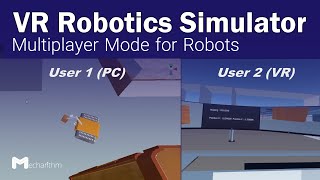
VR Robotics Simulator - Multiplayer Mode for Robots - VR Tutorials for Beginners
Implement multiplayer mode for robots in VR, sharing positions and orientations, and enabling voice chat between users in Unity using Photon network SDK.
Robotic Simulator - How to Save-Load the Values and Show Them as a Table
Learn to save, load, and display data in a robotic simulator, enhancing the main menu and other simulator components. Explore practical applications for managing essential information in Unity-based simulations.
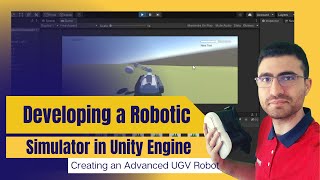
Robotic Simulator - Creating an Advanced UGV Robot in Unity with C#
Simulate complex robot actions like picking up and dropping objects in Unity. Learn to create advanced UGV robot behaviors using C# programming and Unity's physics engine.
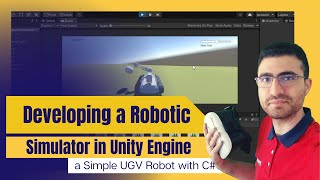
Robotic Simulator - Creating a Simple UGV Robot in Unity with C#
Design and implement a UGV robot in Unity with C#, featuring manual and automatic movement capabilities. Learn to create and control autonomous ground vehicles in a simulated environment.
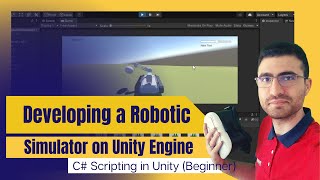
Robotic Simulator- C# Scripting in Unity - Beginner
Learn to create a simple moving car in Unity with multiple camera views, implementing forward, backward, left, and right movements using C# scripting.

Raspberry Pi Pico
Introduction to the Raspberry Pi Pico microcontroller, covering MicroPython installation, LED control, and comparisons with Raspberry Pi Zero. Explores specifications and potential applications.

Raspberry Pi Devastator Robot - Pygame & Speed Control
Enhance Raspberry Pi robot control using Pygame for keyboard input and PWM for motor speed, improving functionality and precision in robotics projects.
Python for Machine Learning in 40 Minutes - Machine Learning for Robotics - Lesson 3
Crash course on Python essentials for machine learning in robotics, covering Spyder IDE, variables, data structures, control flow, and NumPy for matrix operations.
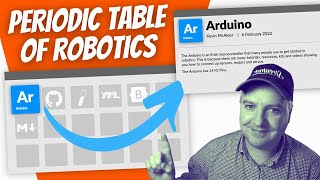
Building the Periodic Table of Robotics - Part 1: Page Creation
Learn to build a Periodic Table of Robotics using GitHub Pages, Markdown, Jekyll, and Bootstrap. Create documentation and static websites while contributing to an open-source robotics resource.
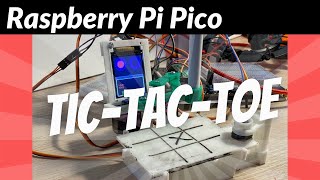
Raspberry Pi Pico - Tic-Tac-Toe Playing Robot: Pico-Tico
Learn to build a Tic-Tac-Toe playing robot using Raspberry Pi Pico and MicroPython. Covers hardware setup, inverse kinematics, coding, and includes a demonstration of the finished project.
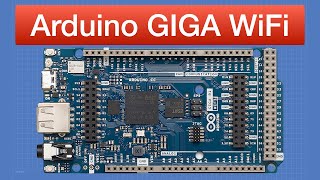
Arduino GIGA WiFi - First Look
Explore the powerful Arduino GIGA R1 WiFi board with its advanced features, including dual-core processing, extensive I/O, and integrated Wi-Fi/Bluetooth capabilities for robotics and IoT projects.
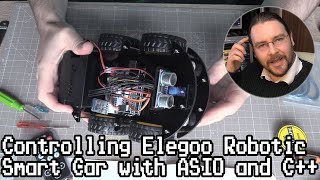
Controlling Elegoo Robot Smart Car with ASIO and C++
Learn to control an Elegoo Smart Robot Car using ASIO and C++. Explore Bluetooth communication, button controls, and troubleshooting techniques in this hands-on programming tutorial.

Using the Arduino Pro Mini and FTDI
Learn to use the Arduino Pro Mini and FTDI adapter, program this powerful miniature board, and build a battery-powered robot arm controller in this hands-on tutorial.
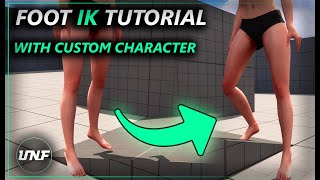
Foot IK Tutorial in Unreal Engine 5 with Custom Character - Realistic Foot Placement
Learn to implement realistic foot placement using Inverse Kinematics in Unreal Engine 5. Master IK rig setup, retargeting animations, and creating custom characters with improved ground interaction.
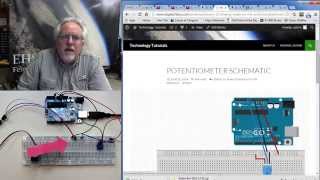
Controlling a Servo with Arduino
Control a servo motor with Arduino through step-by-step examples, covering basics, schematics, libraries, programming, and advanced techniques like sweeping.

Controlling Telescope Hardware with Rust
Explore how Rust can control telescope hardware, including motors and cameras. Learn about astrophotography and see stunning space images captured with the demonstrated techniques.