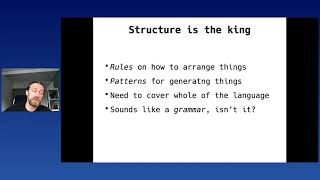
Code From Nothing - Procedural Generation of Python Source Code
Explore novel techniques for testing Python linters and fixers using Hypothesis, focusing on procedural generation of source code to uncover edge cases and improve tool reliability.
Functionalist Programming Language Design
Explore functionalist programming language design principles and their impact on modern software development in this thought-provoking keynote by Tomas Petricek.
JavaScript - What Could Have Been
Explore alternative paths JavaScript could have taken, examining potential features and design choices that weren't implemented in the language's evolution.

The Meaning of Words
Explore the concept of universal meaning in programming languages, focusing on JavaScript, and how it could revolutionize code sharing and understanding without traditional package managers.
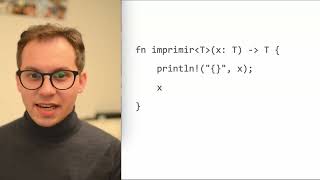
El lenguaje que no es
Explora código no compilable en Rust, analizando las razones de su rechazo, alternativas viables y posibles cambios en el lenguaje para permitir ciertas estructuras.
The Most Average Function There Is
Explore programming language design through implementing an average function, examining language features, and challenging conventional notions of what makes a language "good".
Making a Working Implementation of Async Functions in Python 2.1
Dive into the evolution of Python's async/await syntax through a fascinating reverse-engineering journey, exploring coroutines implementation from modern Python back to version 2.1.
Python.jl - Seamlessly Blend Python and Julia
Explore seamless Python-Julia integration, featuring demos, capabilities, challenges, and insights into extreme DSL embedding in Julia.

How Domain Experts Use an Embedded DSL
Explore how domain experts utilize embedded DSLs, uncovering key themes and user needs to inform future designs. Gain insights into eDSL usability and adoption challenges.

Continuing WebAssembly with Effect Handlers
Explore WasmFX, an extension to WebAssembly enabling direct translation of non-local control features via effect handlers, improving compiler efficiency for various programming languages.
Evolution of Java Platform Features - From Generics to Virtual Threads
Gain insights into Java's evolution through war stories and lessons learned from developing major platform features, as shared by Java Language Architect Brian Goetz.

Setting and Getting Variable Values in Dynamic Programming - Mark II
Discover advanced techniques for dynamic variable handling in APL, focusing on improved methods for setting and getting values with enhanced readability, performance, and safety features.

13 Fun Facts About Python's Return Statement for Savvy Programmers
Discover fascinating insights about Python's return statement, from basic usage to advanced techniques like returning functions and handling edge cases in function execution.

Giving Key a Vocabulary in Dyalog APL - Extending the Key Operator
Explore enhancements to Dyalog APL's key operator, addressing result ordering, missing data, and subset querying for improved data analysis and processing efficiency.
Setting and Getting Variable Values in APL - Proposed System Functions
Explore advanced techniques for dynamic variable handling in APL, focusing on improved readability and performance through proposed system functions ⎕NV, ⎕NG, and ⎕NS.

A Grounded Conceptual Model for Ownership Types in Rust
Explore a systematic approach to teaching Rust's ownership types, featuring a new assessment tool, conceptual model, and visualizations to improve learner understanding of memory safety concepts.
Approximating Type Stability in the Julia JIT
Explore an algorithm for approximating type stability in Julia's JIT compiler, enhancing performance in this dynamic scientific computing language.
Associated Effects: Flexible Abstractions for Effectful Programming
Explore associated effects, a programming language feature enhancing type classes' flexibility in abstracting over function effects, improving expressive power in type and effect systems.
jGuard - Programming Misuse-Resilient APIs
Explore jGuard, a Java extension enabling API designers to encode specifications directly, preventing misuse without additional tooling for users. Enhance API resilience effortlessly.
An Exceptional Actor System in Haskell - Functional Pearl
Explore a hidden actor framework in GHC's runtime system, demonstrating its power through distributed systems examples and discussing implications for feature constraints.

Getting into the Flow: Towards Better Type Error Messages for Constraint-Based Type Inference
Explore innovative approaches to improve type error messages in constraint-based type inference systems, focusing on data flow and subtyping constraints to enhance programmer understanding.