Polonius and Initialization: Move Tracking in Rust's Borrow Checker
Explores Rust's borrow checker, focusing on move tracking and initialization in Polonius. Covers key concepts like dynamic drop, move paths, and data flow analysis for improved memory safety.
Design Meeting: Workflow Checks and Type Aliases in Rust - 2020-07-29
Explore Rust's design decisions on well-formedness checks and type aliases, covering expected behavior, rationale, and future compatibility considerations.
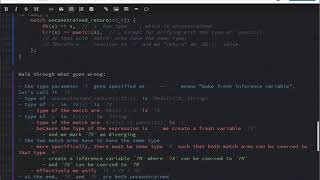
Discussing Never Type Fallback in Rust - Blitzerr Interview
Explore the intricacies of type checking fallback in Rust programming, examining unexpected outcomes, identifying issues, and discussing potential solutions and improvements.

Rust Lang Team Design Meeting: Proposal Procedure - 2020-05-14
Explore proposed changes to Rust's RFC procedure, focusing on introducing a stronger sense of staging in the language design process.
Reaching Const Evaluation Singularity with Miri in Rust
Explore Rust's const evaluation and miri interpreter, enabling compile-time features like for loops in constants and static Config structs with error reporting. Learn about miri's design and future possibilities.
Rust Typeclasses - Trait-Based Programming
Explore Rust's trait system and its similarities to typeclasses in functional programming languages, presented by researcher Lindsey Kuper.
Exploring the New Trait Solver in Rustc - Walkthrough of -Ztrait-solver=next
Explore Rust's new trait solver: its structure, functionality, and areas for improvement. Gain insights into the inner workings of rustc's advanced features.

How Rust Manages Open Source Software Development
Explore Rust's unique approach to open-source development, focusing on community involvement and decision-making processes in language evolution.
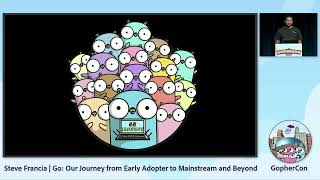
Go: Our Journey from Early Adopter to Mainstream and Beyond
Explore Go's evolution from niche to mainstream, including key strategies, milestones, and decisions that propelled its adoption in enterprise environments. Gain insights into Go's future trajectory.
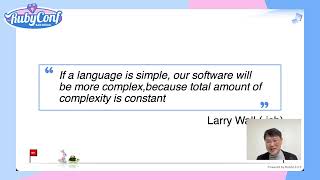
Ruby Insights and Community Q&A - Keynote by Yukihiro Matsumoto
Matz shares insights into Ruby and answers community questions in this pre-recorded presentation, offering valuable perspectives on the language's development and future.
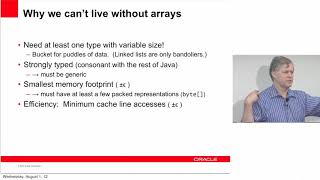
Arrays 2.0 - Opportunities and Challenges
Explore opportunities and challenges in array programming with John Rose, covering user needs, JVM improvements, and potential future developments for Java arrays.
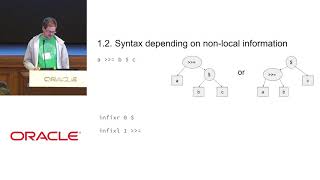
Designing IDE-Friendly Programming Languages
Explore language features that enhance IDE support, focusing on static typing, parsing challenges, and reference resolution for improved development tools and productivity.
New Trait Solver Walkthrough in Rust - 2024.02.26
Comprehensive walkthrough of Rust's new trait solver, exploring its implementation and functionality for improved code analysis and compilation.
Introducing BRAT: A Functional Programming Language for Quantum-Classical Hybrid Programs
Explore BRAT, a functional language for quantum-classical hybrid programming, featuring unique syntax and type-level parameters for enhanced safety and composition.
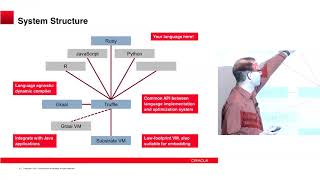
One VM to Rule Them All
Explore GraalVM's capabilities for running multiple programming languages efficiently on a single virtual machine, enhancing performance and interoperability.
When is an ADT Not an ADT? - Modeling Data Types in Programming
Explore data representation in programming, comparing OOP and FP approaches. Learn about tradeoffs and design choices for clear, efficient code in a simple programming language example.
HOL with Dependent Types and Subtyping
Explore advanced type theory concepts combining Higher-Order Logic, dependent types, and subtyping for enhanced formal reasoning and theorem proving capabilities.

What Are Types For, Or Are They Only Against? - Exploring Type Systems in Programming
Explore the purpose and benefits of types in programming, examining their role beyond just preventing errors, with insights into functional programming concepts and type theory.
Concurrent Mutation Must Go
Explore concurrent mutation challenges and solutions in programming languages, focusing on innovative approaches to enhance system reliability and performance.
Effect Handlers for Choice-Based Learning in Machine Learning Programming
Explore a novel choice-based learning paradigm combining algebraic effects, handlers, and loss continuations to enhance modularity in machine learning programming.
BODOL, or How to Accidentally Build Your Own Language
Explore language design principles and prototype development using functional programming, inspired by Clojure and Haskell. Learn about BODOL, a unique toy language combining Lisp and Haskell features.