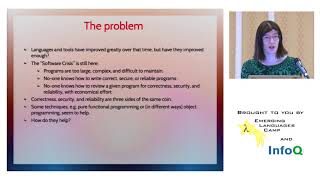
Noether - Symmetry in Programming Language Design
Exploring symmetry in programming language design to enhance security, robustness, and efficiency. Introduces Noether, an experimental language with layered structure and strong symmetries for improved reasoning and analysis.
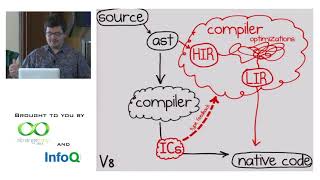
Building Optimising Compiler for Dart
Explore the development of Dart VM's new compilation pipeline, focusing on language features' impact and lessons from V8. Learn about JIT compiler design for object-oriented languages with optional static typing.
Inside a Static Analyser - Type System
Explore C++ static analysis, focusing on type system representation in PVS-Studio. Learn about current implementation, challenges, and upcoming improvements in encoding and handling complex types.

Taking PHP Seriously
Exploring PHP's unique design choices in programmer workflow, concurrency, and shared state, highlighting its strengths and impact on successful projects like Facebook and WordPress.
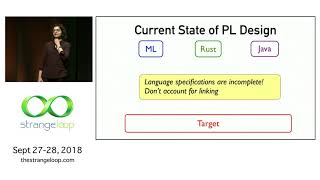
All the Languages Together
Explore the challenges and solutions for building multi-language software systems, focusing on language interoperability, safety, and toolchain improvements for seamless integration.

Tulip - A Language for Humans
Explore Tulip, a new programming language with ML-like syntax and Erlang-inspired runtime, designed for REPL ergonomics and emphasizing minority language designers.
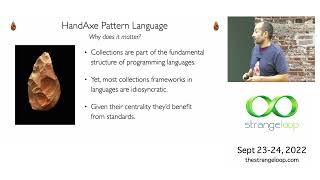
Introducing the HandAxe Collections Pattern Language
Explore a pattern language for designing consistent, composable collection protocols in programming languages, emphasizing clarity and expressive power through rigorous terminology and a unified approach.

What Kind of Language is it?
Explore PHP 7's language design, from imperative and object-oriented programming to typing systems. Gain insights into PHP's versatility and strengths as a modern programming language.
Move Deliberately and Don't Break Anything
Explore Java language evolution strategies balancing innovation with compatibility. Learn about careful design approaches and the challenges of evolving a mature programming language.
The Perfect Language
Explore the quest for the perfect programming language, examining modern language design, tradeoffs, and future tools to make programming less challenging.
Racket - A Programming-Language Programming Language
Explore Racket's unique approach to language creation and its versatile standard libraries. Learn how this innovative tool supports diverse programming paradigms and specialized language development.

The Ideal Programming Language
Explore the ideal programming language with experts discussing frontend vs backend, testability, memory management, concurrency, and emerging languages. Gain insights into future trends in software development.
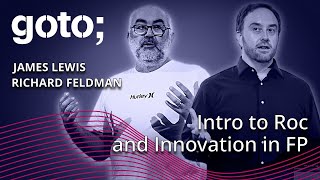
Intro to Roc and Innovation in Functional Programming
Explore Roc, a new functional programming language, with experts discussing its innovative features, design principles, and potential impact on the programming ecosystem.
The Ideal Programming Language
Explore the future of programming languages with industry experts as they discuss ideal features, emerging trends, and the potential evolution of coding paradigms.
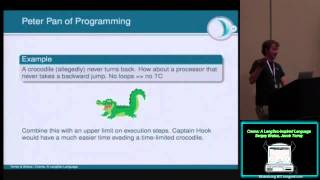
Crema - A LangSec Inspired Language
Explore LangSec principles and the Crema language for secure programming, focusing on least computational privilege and sub-Turing execution to enhance software security.
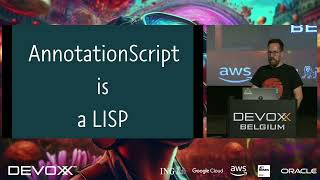
Building a Bullsh*t Language
Explore the process of creating a programming language from scratch, delving into language design, parsing techniques, and implementation challenges.
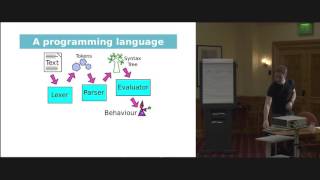
How to Write a Programming Language
Explore the process of creating a simple programming language interpreter, covering lexing, parsing, and evaluation, using Python to implement a basic language called Cell.
Coroutines - C++ vs Rust
Explore the design differences between C++ and Rust coroutines, comparing their implementations, trade-offs, and approaches to asynchronous programming in systems languages.

A Case Study in Incrementing a Language's Major Version - PHP
Exploring PHP 7's major version upgrade: balancing innovation with backward compatibility, encouraging adoption, and comparing approaches with other programming languages.
Let's LISP Like It's 1959
Explore the elegance of the original LISP interpreter from 1959, implemented in C. Discover the foundational concepts of computation through this mind-bending language design.
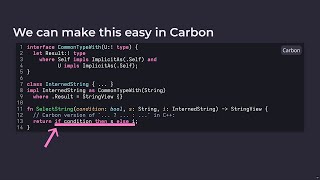
Definition-Checked Generics, Part 1 - The Why and How
Explore definition-checked generics in C++, comparing approaches in C++20, Swift, Rust, and Carbon. Learn advantages and challenges in implementing this programming paradigm.