Programming Languages for AI Programming Agents
Explore the future of programming languages in AI-driven development, examining key features, tools, and workflows needed for effective human-AI collaboration in software creation.

Latte: Lightweight Aliasing Tracking for Java
Explore Latte, a lightweight system for tracking aliasing and uniqueness in Java, minimizing annotations and complexity while supporting destructive reads and practical applications.
Generating Executable Specification from Formal Semantics of WebAssembly
Explore automatic generation of algorithmic artifacts from WebAssembly's formal semantics using a domain-specific language, streamlining the standardization process for new features.
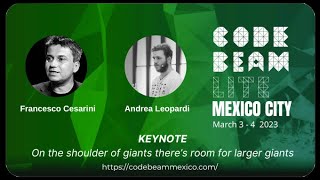
Erlang vs Elixir: On the Shoulder of Giants There's Room for Larger Giants
Explore the symbiotic relationship between Erlang and Elixir, examining their impact on various domains and the reasons behind their growing popularity in software development.
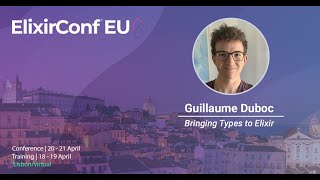
Bringing Types to Elixir - Set-Theoretic Types for Elixir Programs
Explore set-theoretic types and their potential for Elixir programming, including bug detection and code quality feedback. Learn about a type system tailored for Elixir's unique features.
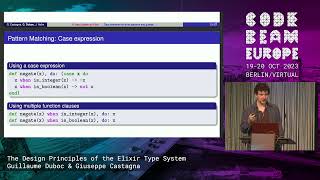
The Design Principles of the Elixir Type System
Explore set-theoretic types for Elixir, their benefits in bug detection and code quality, and the concept of gradual typing. Gain insights into potential new syntax and challenges in introducing a type system.

Coroutines and Go - Understanding Generalized Subroutines
Explore coroutines in Go: history, characteristics, and implementation. Learn about subroutines, cooperative multitasking, and potential runtime changes for efficient concurrent programming.
Don't @ Me! Faster Instance Variables with Object Shapes - Lecture
Explore object shapes to optimize Ruby instance variables, enhancing performance and deepening your understanding of Ruby's internals.
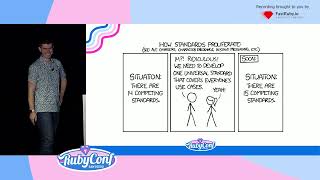
The Future of Understanding Ruby Code - Ruby 3.3 and Beyond
Explore the evolution of Ruby code parsing and the new unified API in Ruby 3.3, revolutionizing how developers understand and work with Ruby code.

Safety in C++: All the Safeties - Lecture
Explore C++ safety concepts, their relation to correctness and security, and learn strategies for writing better code. Gain insights from Sean Parent's expertise in software architecture and development.
Generating Generators in Go - Static Analysis and Code Generation
Explore static analysis and code generation to create custom generators in Go, avoiding goroutine overhead while achieving yield-like functionality.
Combining Rust and Zig in Programming - Benefits and Considerations
Explore the surprising benefits of combining Rust and Zig in programming projects, focusing on memory safety, simplicity, and practical applications in language development.

How to Create a New JVM Language
Explore creating a new JVM language, covering grammar, semantics, interpreters, and interoperability. Learn about parsers, optimizations, and tackle common language design challenges.
Delivering Safe C++ - CppCon 2023
Explore type safety in C++ with Bjarne Stroustrup. Learn strategies for writing verified, resource-safe code without compromising performance or expressiveness.
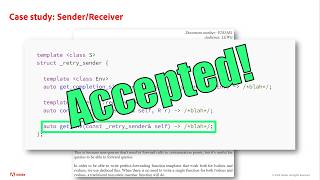
C++ Should Be C++ - Improving Lives Through Language Evolution
Pragmatic evaluation of C++'s challenges and future, emphasizing focus on improving lives through better libraries, talks, features, and understanding C++'s role in technology and society.

Capture Tracking in Scala
Explore capture tracking in Scala with Martin Odersky, delving into advanced concepts and techniques for efficient memory management and resource handling.

How C++23 Changes the Way We Write Code
Explore key C++23 features like std::expected, std::mdspan, deducing 'this', and std::print. Learn how these additions improve error handling, scientific computing, and simplify common idioms.
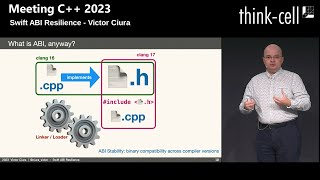
Swift ABI Resilience - Lessons for C++ - Meeting C++ 2023
Explore Swift's ABI resilience journey, from stability to dynamic linking. Learn about resilient type layout, reabstraction, and library evolution. Gain insights for potential C++ ABI solutions.

What Does It Take to Implement the C++ Standard Library? - C++Now Edition
Explore the complexities of implementing the C++ Standard Library, including design opportunities, constraints, and user considerations. Gain insights into the unique challenges faced by library developers.
Deciphering C++ Coroutines - A Diagrammatic Coroutine Cheat Sheet - Lecture 2022
Explore C++20 coroutines through visual diagrams, learning to read and reason about their complex syntax. Gain a solid foundation for understanding advanced coroutine concepts in future presentations.

Can C++ be 10x Simpler and Safer? - Exploring C++ Evolution
Explore potential improvements to simplify, safeguard, and enhance C++. Examine current limitations and innovative ideas for significant advancements in the language's evolution.