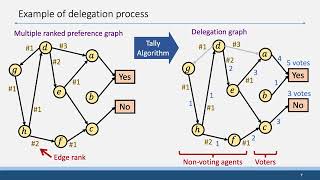
Characterizing Properties and Trade-offs of Centralized Delegation Mechanisms in Liquid Democracy
Explore centralized delegation mechanisms in liquid democracy, analyzing their properties and trade-offs for improved democratic decision-making processes.
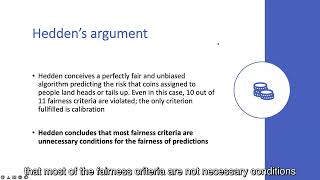
People Are Not Coins - Morally Distinct Types of Predictions Necessitate Different Fairness Constraints
Explore ethical implications of AI predictions and fairness constraints in different contexts, examining moral distinctions and their impact on algorithmic decision-making.
Law, Metaphor and the Encrypted Machine
Explore legal metaphors for encryption technology and their implications on civil liberties, commercial interests, and policy decisions in the digital age.
Delivering Peace Through Global Health Policy
Exploring how global health initiatives can foster peace and stability, drawing from experiences in Sudan's civil war and the successful implementation of PEPFAR.

Is Democracy Doomed? The Global Fight for Our Future
Historian Timothy Snyder explores democracy's fragility, offering historical insights on political systems and tyranny. He proposes a new approach to safeguard freedom and democracy's future.

The Fight for Freedom in Iran and Ukraine
Christiane Amanpour offers insights on women-led protests in Iran and the war against totalitarianism in Ukraine, revealing crucial realities missing from global reporting and emphasizing the importance of non-neutrality.
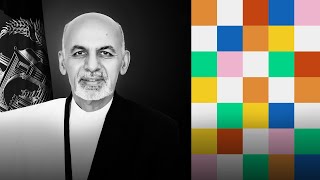
A Vision for the Future of Afghanistan
President Ashraf Ghani shares his vision for Afghanistan's future, discussing peacemaking, war costs, COVID-19 response, and ongoing reforms to achieve a sovereign, democratic, and united nation at peace with itself and the world.

The Alliances Needed to Rebuild the Developing World
Achim Steiner discusses the importance of public-private partnerships in rebuilding developing economies post-COVID-19, highlighting UNDP initiatives in virus tracking, clean energy, and healthcare expansion.

My Descent into America's Neo-Nazi Movement - And How I Got Out
A former neo-Nazi leader shares his journey into and out of white supremacy, offering insights on radicalization and a counterintuitive solution to combat hate in all its forms.

The Revolutionary Power of Diverse Thought
Novelist Elif Shafak explores the importance of diversity, democracy, and cosmopolitanism in response to authoritarianism, emphasizing the power of plurality and the need to embrace complexity in our identities and politics.

Nationalism vs. Globalism - The New Political Divide
Historian Yuval Harari explores the current political divisions in the context of technological, climate, and media disruptions, offering insights on the evolving nature of humanity and society.

How Megacities Are Changing the Map of the World
Explore how global connectivity through megacities is reshaping our world, potentially reducing pollution and inequality while transforming geopolitics. Discover the concept of "connectography" and its implications for our future.

Are China and the US Doomed to Conflict
Former Australian PM Kevin Rudd examines China's rising power and its potential impact on global relations, offering insights on avoiding conflict and fostering cooperation between major nations.

The Side of Terrorism That Doesn't Make Headlines
Powerful stories of individuals combating fundamentalism within their communities, highlighting an overlooked human rights struggle and the fight to reclaim faith from extremism.
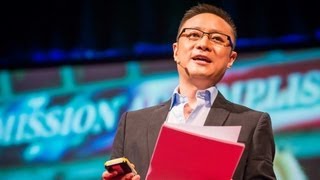
A Tale of Two Political Systems
Provocative talk challenging Western assumptions about political systems, exploring alternative models for successful modern nations and questioning the universality of capitalist democracy.
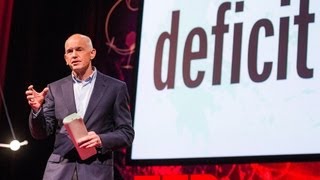
Imagine a European Democracy Without Borders
Former Greek PM explores the European economic crisis, highlighting the need for citizen re-engagement and a new democratic model to address challenges in oversized, uncontrollable systems.

Time to End the War in Afghanistan
British MP Rory Stewart shares insights from his experiences in Afghanistan, questioning the ongoing Western intervention and advocating for humility and local expertise in successful military operations.

The Path to Ending Ethnic Conflicts
Discover how leadership, diplomacy, and institutional design can effectively reduce civil wars and ethnic conflicts, drawing insights from successful peace-building efforts in various countries.

Global Power Shifts
Explore global power dynamics between China and the US with historian Joseph Nye, examining economic, political, and soft power shifts and their worldwide implications.

An Independent Diplomat
Carne Ross advocates for a new diplomacy model that empowers small nations, adapts to changing borders, and embraces innovation, drawing from his experience as a "freelance diplomat" after leaving the British diplomatic corps.
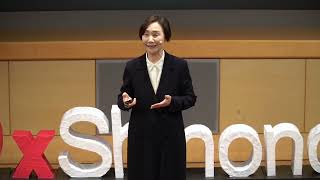
ヒロシマの蟻 仲間とともに平和を創る
広島の復興経験から、平和構築への個人の貢献の重要性を説く。苦しむ人々に寄り添い、小さな行動を積み重ねることで、自身の"平和"を実現する方法を提案する。