Political Geometry - The Mathematics of Redistricting
Explore mathematical approaches to redistricting, examining how models can improve the process and address challenges in voting rights, representation, and fair electoral boundaries.
Unpacking the 2020 US Election: Trump vs Biden - Episode 4
Analyzing the 2020 US election aftermath, experts discuss vote counting, potential outcomes, and implications for American democracy and global politics.
Extra Politics
Explore US politics through game design concepts, analyzing elections, rules, and systemic issues while considering potential solutions for a more effective democracy.

La kriptonita democrática - Mitigando los peligros a la democracia en tiempos de incertidumbre
Análisis de los peligros actuales para la democracia y propuesta de soluciones ante la incertidumbre global, por el experto en gobernabilidad Kevin Casas Zamora.
Herramientas para Arreglar la Democracia
Exploración de mecanismos innovadores para fortalecer la democracia y restaurar la confianza en las instituciones, presentados por una experta en participación política.

Mathématiques Électorales et Systèmes de Vote - Journée des Lycées 2022
Découvrez les mathématiques électorales, les scrutins et la cryptographie visuelle. Explorez les concepts clés des systèmes de vote et apprenez à analyser les fraudes électorales.
Our New Supreme Court: Landmark Cases and Constitutional Vision
Explore landmark Supreme Court cases on gerrymandering, census, abortion, and voting rights. Gain insights into the Court's evolving dynamics and potential impacts on American life.

It All Comes Down to the Voters - Factors Influencing Voter Turnout and Election Integrity
Explore factors influencing voter turnout, from advertising and gerrymandering to voter suppression and fraud. Examine the complexities of predicting electoral participation and the integrity of elections.
The Supreme Court Now - Recent Decisions, Deciders, and Future Expectations
Explore recent Supreme Court decisions, their impact, and future implications with legal experts. Gain insights on voting rights, gerrymandering, and other key issues shaping the Court's direction.
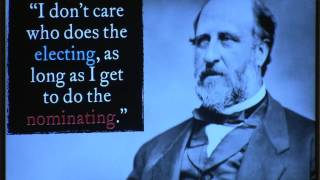
Recovering a Sensible Democracy - Challenges and Solutions
Explore the fundamental issues plaguing democracy and potential non-partisan solutions for a more representative system, addressing gerrymandering, corruption, and leadership failures.
Election Simulation - Why Are Voters Unhappy? - Part 1
Explore voter dissatisfaction through probability simulations, analyzing how voting decisions impact election outcomes and overall satisfaction levels.

A Crash Course in Making Political Change
Activist Katie Fahey shares her inspiring journey of leading a successful grassroots movement to end gerrymandering in Michigan, demonstrating how ordinary citizens can drive significant political change through social media and community engagement.

How Gerrymandering Hinders Voters' Power
Explore how mathematics intersects with politics in gerrymandering, and learn about its impact on democratic fairness and voter representation.

Can Math Help Repair Democracy?
Explore how computer simulations and mathematical models can fix flaws in US democracy, from detecting gerrymandering to predicting alternative voting methods' impact.
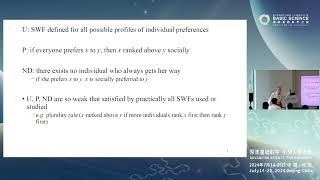
A Resolution of the Arrow Impossibility Theorem
Explore Arrow's impossibility theorem and its resolution through a modified independence of irrelevant alternatives condition, leading to the Borda count as an optimal voting rule.
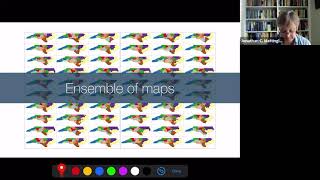
Can You Hear the Will of the People in the Vote? Assessing Fairness in Redistricting - 2021 I. E. Block Community Lecture
Exploring gerrymandering, fairness in redistricting, and the impact of geopolitical geometry on electoral representation through Monte Carlo sampling and mathematical analysis.
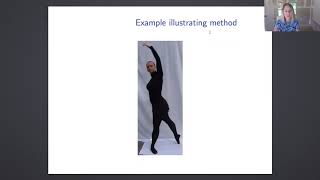
The Medial Axis - Image Analysis, Homological Simplification, Gerrymandering
Explore applications of the medial axis in image segmentation, shape simplification, and detecting gerrymandered districts. Learn about innovative approaches in computational geometry and topology.
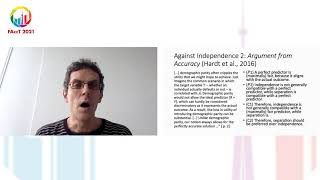
Group Fairness - Independence Revisited
Explore the concept of group fairness and independence in algorithmic decision-making, examining its implications, limitations, and potential improvements for ethical AI systems.

Reasons To Be Cheerful with David Byrne
David Byrne explores positive global changes in various fields, sharing successful examples to inspire local action and foster hope for a better future.
The Future of Conservatism and the Republican Party in the Age of Trump
Exploring the future of conservatism and the Republican Party in the Trump era, with insights from political experts on ideological shifts, policy priorities, and potential paths forward.
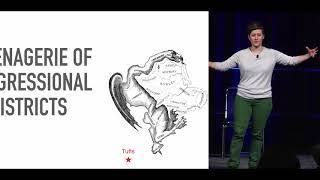
Political Geometry - Voting Districts, Compactness, and Ideas About Fairness
Explore political geometry, voting districts, and fairness concepts in redistricting through mathematical analysis and real-world examples from various U.S. states.