Policies and Politics of the US Health Care System - Part 1
Explore the complex interplay between healthcare policies and political systems in the US, examining state-level dynamics, federalism, and international perspectives to understand impacts on citizens and patients.

The Division of Powers - Montesquieu's Theory of Separation of Powers
Explore Montesquieu's influential ideas on separation of powers, government classification, and the impact of environment on society in this Yale lecture on modern social thought foundations.

The Mixed Regime and the Rule of Law: Aristotle's Politics IV - Lecture 8
Explore Aristotle's concept of regime in Politics, examining its impact on community identity, rights, customs, and moral dispositions in comparative political systems.
Daily Answer Writing for PSIR Optional - UPSC- HPAS- HPSC- UPPSC
Comprehensive guide to answer writing for Political Science and International Relations Optional, covering key topics, strategies, and question analysis for UPSC and other competitive exams.
Y, ¿Por Qué No? - El Futuro de Costa Rica
Reflexión sobre el futuro de Costa Rica: cómo un país pequeño sin recursos naturales puede prosperar mediante innovación, educación y aprovechamiento de sus fortalezas únicas.
Liberal Democracy at Risk - Global Trends and Revival Strategies
Explore global democratic decline, its causes, and potential solutions. Experts discuss threats to liberal democracy and strategies for its revival in this thought-provoking analysis.
Putin Versus Xi - Comparing Modern Authoritarians
Explore the contrasting trajectories of Xi Jinping and Vladimir Putin as modern authoritarians, examining their leadership styles, power consolidation, and the divergent futures of China and Russia.
The People vs. Democracy - Saving Democracy from Authoritarian Populism
Political scientist Yascha Mounk examines the rise of authoritarian populism worldwide, its threat to democracy, and potential solutions to preserve individual rights and popular will in this urgent analysis.
Will the Rise of Populism Destroy Liberal Democracy?
Experts discuss the global trend away from liberal democracy, exploring its causes, shifting Western values, and potential future implications for democratic systems.
Science Policy Around the World
Global panel discusses timely science policy issues and opportunities for scientist involvement across different nations and regions.
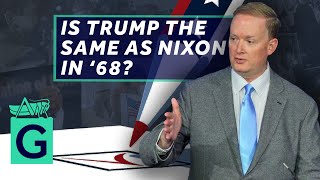
Comparing Presidential Elections: Trump and Nixon 1968-2024
Explore the striking parallels between the 1968 and 2024 presidential elections through expert analysis of historical archives, revealing how past campaign dynamics shape today's political landscape.

The Attack on Iran — Why Now? | TED Explains the World with Ian Bremmer
Geopolitical expert Ian Bremmer analyzes the US-Israel bombing of Iran on February 28, 2026, including the strike on Supreme Leader Ali Khamenei's Tehran compound. He explains President Trump's decision-making, implications for regime change, and key details about this dangerous global moment.

What’s Behind the Rise of Far Right Politics in Europe | Daphne Halikiopoulou | TED
Political researcher Daphne Halikiopoulou explains how far-right parties worldwide are gaining popularity by tapping into people's economic insecurities and distrust of institutions to cleverly rebrand their right-wing policies.

Two US Governors — a Democrat and a Republican — on Why There’s Hope for Democracy | On the Spot
Delaware Governor Matt Meyer (Democrat) and Oklahoma Governor J. Kevin Stitt (Republican) discuss rebuilding trust across political divides, leading in polarized times, and governing collaboratively. They share insights on moving from outrage to outcomes and treating each other as neighbors rather than enemies.

Trump’s 2024 Election Win — and What’s Next | TED Explains the World with Ian Bremmer
Geopolitical expert Ian Bremmer discusses the implications of Donald Trump's re-election as US president, analyzing key issues that shaped the result and coming shifts in US foreign policy regarding Russia-Ukraine, US-China relations, and the Middle East.

Can Math Help Repair Democracy? | Sam Wang | TED
Neuroscientist Sam Wang explains how computer simulations and mathematical models can help fix issues in American democracy, from detecting gerrymandered districts to predicting the impact of alternative election methods like ranked-choice voting.

Polarizarea: meciul pe care îl pierdem cu toții | Nicu Ștefănuță | TEDxIasi
Nicu Ștefănuță a adus în prim-plan nevoia de a depăși polarizarea politică și de a reconstrui dialogul între oameni. El a vorbit despre tendința tot mai accentuată de a ne închide în propriile sfere, în care ajungem să ne expunem doar la opinii care seamănă cu ale noastre. Nicu Ștefănuță este europa

Demokratischer Optimismus | Dirk von Gehlen | TEDxMünchen
Warum die Zeit vielleicht gar nicht aus den Fugen ist, wie wir uns für Optimismus entscheiden und was wir vom Ausdauersport für Demokratie lernen können: Weiter machen! Dirk von Gehlen ist Autor und Journalist. Er ist seit Anfang 2022 Director des Think Tanks beim SZ Institut der Süddeutsche Zeitung

Story of Pakistan lost Why this, why now, why me, why not | Shehzad Ghias | TEDxSukkurIBA
In his TEDxSukkurIBA talk, Shehzad Ghias Shaikh uses the framework of "Why this? Why now? Why me? Why not?" to explore the collective grief and identity of a nation in flux. He moves beyond political headlines to examine the personal "Story of Pakistan," reflecting on how citizens navigate loss, cen