
Women Studies
Learn about the Nature of State & Women Empowerment in India, Violence against Women and Harassment of Women at Work place and other Women Issues in India in this course on Women Studies

The Civilizational Roots of Indian Democracy
Explore the historical concept of "Indian civilization" and its impact on India's adoption of democracy, examining European influences and nationalist perspectives on universal citizenship rights.
U.S. Government and Politics by CrashCourse
In 50 videos, Craig Benzine (aka WeezyWaiter) teaches you U.S. government and politics! The course is based on the 2014 AP U.S. Government and Politics curriculum.
Introduction to Political Theory
Explore key political concepts like liberty, equality, justice, power, and democracy. Analyze various theories and ideologies, examining their implications for citizenship, governance, and contemporary issues.

Open vs. Closed: Media, Government and Social Organization in the Information Age
Exploring the divide between open and closed systems in government, media, and society, emphasizing accountability, transparency, and the impact of digital technologies on information flow and power structures.

A Public Address on Democratic Activism and Rule of Law - Daw Aung San Suu Kyi
Burmese leader Aung San Suu Kyi discusses democratic activism, rule of law, and civic responsibility in Myanmar, emphasizing political participation and overcoming obstacles to build a free society.
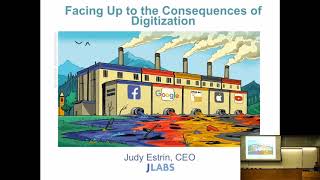
Facing Up to the Byproducts of Digitization - With Power Comes Responsibility
Explore the unintended consequences of digitization and the responsibility of technologists to consider potential harm in measuring progress, balancing innovation with ethical considerations.
Harnessing Data for Social Impact - Empowering Communities through Visualization and Social Computing
Explore innovative tools combining visualization, HCI, and AI to empower communities in addressing complex societal issues like urban planning and climate change, fostering inclusive decision-making.
Online Communities as Model Systems for Commons Governance
Exploring how online communities serve as laboratories for self-governance, offering insights into institutional design and functioning through computational social science approaches.

AI's Global Impact on Democracy and Governance
Explore AI's influence on global democracy, disinformation, and governance. Learn about challenges and strategies to ensure democratic values prevail in the digital age.

Freeman's Top Five Tips for Studying the American Revolution
Discover five essential tips for studying the American Revolution, challenging common misconceptions and offering a fresh perspective on this pivotal historical period.

Democracy and Majority Rule - Moral Foundations of Politics Lecture 2
Explores majority rule's legitimacy, utilitarian justifications, and democratic models. Examines crosscutting cleavages, public choice theory, and Schumpeter's marketplace model to understand democratic competition and its limitations.

The Mixed Regime and the Rule of Law: Aristotle's Politics IV - Lecture 8
Explore Aristotle's concept of regime in Politics, examining its impact on community identity, rights, customs, and moral dispositions in comparative political systems.

The Mixed Regime and the Rule of Law - Aristotle's Politics VII - Lecture 9
Explore Aristotle's concept of polity as a balanced regime, its role in controlling factions, and the foundations of political science in this insightful lecture on ancient political philosophy.

Socratic Citizenship: Plato's Crito - Lecture 3
Explore Socratic citizenship through Plato's Crito, examining civil obedience, philosophical reasoning, and the citizen's duty to uphold community laws in ancient Athens and modern contexts.

Is the American Republic on the Eve of Destruction or Renewal? - Class 3
Exploring slavery's impact on American institutions and examining the future of democracy, pluralism, and constitutional rule in the face of historical and contemporary challenges.
How the Digital Revolution Upended Journalism - Charles Whitaker, Hayek Lecture Series
Explore the digital revolution's impact on journalism, democracy, and society. Whitaker examines the democratization of content, echo chambers, local news decline, and potential solutions for the future.
The Burden of Democracy - India After 65 Years
Explore India's democratic journey, challenges, and progress since independence, examining key issues like identity, education, healthcare, and the role of institutions.

Renewing Democracy to Tackle the Climate Crisis - Panel Discussion
Explore how democratic renewal can address climate change, featuring insights from experts on vested interests, political reform, and public engagement strategies.
Ties That Bind- The Goodness of Social Networks
Explore how social networks shape behavior, revealing our motivation by social incentives over economic self-interest. Learn to predict network effectiveness through information exchange patterns.
Cris Moore on Algorithmic Justice and The Physics of Inference
Exploring algorithmic justice and inference physics, this talk delves into the limits of AI decision-making, emphasizing transparency, model suitability, and the importance of understanding technology's boundaries in complex problem-solving.