
Oxygen Content and Oxygen Saturation
Explore the relationship between oxygen content and saturation in blood, understanding key factors affecting oxygen transport and delivery to tissues.
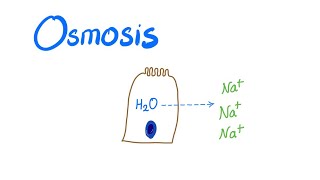
Osmosis, Osmotic Pressure and Osmolality
Explore osmosis, osmotic pressure, and osmolality in this animated lecture. Learn key concepts and their applications in physiology and medicine through clear explanations and visual aids.
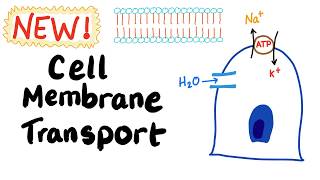
Introduction to Fluids and Hemodynamics
Learn key concepts of fluid dynamics and hemodynamics in medicine, covering fundamental principles and their applications in understanding blood flow and circulation.

The Endocrine Pancreas - Insulin, Glucagon & Somatostatin
Explore pancreatic hormones: insulin, glucagon, and somatostatin. Learn about islet cells, their functions, and roles in regulating blood glucose levels. Ideal for medical exam preparation.

Starling Forces Made Easy - Hydrostatic Pressure and Colloidal Osmotic Pressure
Comprehensive explanation of Starling forces, hydrostatic pressure, and oncotic pressure in fluid dynamics across capillary membranes for medical professionals and students.

Gas Exchange and The Oxygen-Dissociation Curve
Comprehensive exploration of gas exchange and oxygen-dissociation curve in respiratory physiology. Covers key concepts, shifts, and applications for medical exams and clinical understanding.

Hypersensitivity Reactions - Type I, II, III, IV HSN - Most Comprehensive Explanation
Comprehensive explanation of hypersensitivity reactions, covering Types I, II, III, and IV. Explores differences between allergy and hypersensitivity, providing valuable insights for medical students and professionals.
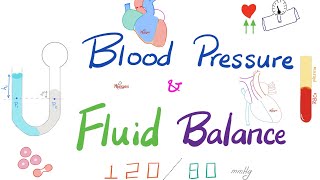
Arterial Blood Pressure and Fluid Balance
Explore the intricate relationship between arterial blood pressure and fluid balance in the body, covering key physiological mechanisms and their impact on cardiovascular health.

Blood Vessels - Arteries, Arterioles, Capillaries, Venules & Veins - Biology
Comprehensive overview of blood vessel types and functions in the circulatory system. Explores structure and roles of arteries, arterioles, capillaries, venules, and veins in blood transport and distribution.
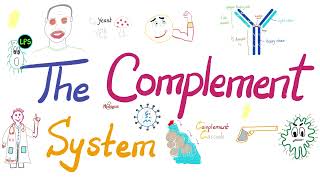
The Complement System - The Most Comprehensive Explanation
Comprehensive explanation of the complement system, covering three pathways, complement proteins, and the membrane attack complex. Ideal for medical students and professionals.

How Your Lungs Regulate Your Arterial Blood pH - ABG - Respiratory System - Biology Series
Explore the intricate relationship between lung function and blood pH regulation, covering arterial blood gases, acidosis, alkalosis, and respiratory system's role in maintaining pH balance.

The Mechanics of Breathing - Normal Inhalation and Exhalation - Respiratory Physiology
Explore the physiological processes of inhalation and exhalation, including lung volume changes, pressure dynamics, and Boyle's Law in respiratory function.
Neonatal Immune-Mediated Thrombocytopenia
Explore maternal antibody-induced fetal platelet destruction, its causes, diagnosis, and management strategies for neonatal thrombocytopenia.
Cardiovascular Physiological Changes During Pregnancy
Explore the significant cardiovascular adaptations that occur during pregnancy, including changes in blood volume, cardiac output, and systemic vascular resistance.

Clinically-Oriented Physiology - Nerves and Muscles
Explore nerve and muscle physiology with a clinical focus on Myasthenia Gravis and Lambert-Eaton Myasthenic Syndrome, enhancing understanding of these conditions.

Troponin, Tropomyosin, T-Tubules, Sarcoplasmic Reticulum, and the Neuromuscular Junction - NMJ
Explore key muscle structures and mechanisms, including troponin, tropomyosin, T-tubules, sarcoplasmic reticulum, and the neuromuscular junction. Gain insights into muscle physiology and function.
Nerve Physiology Quick Review
Comprehensive nerve physiology review for medical exams, covering key concepts and mechanisms for efficient exam preparation.
The Ionic Basis of the Action Potential - Absolute Refractory Period, Relative Refractory Period
Explore the ionic mechanisms behind action potentials, including sodium and potassium channel dynamics, gating processes, and refractory periods in nerve physiology.

Nernst Potential and Goldman's Equation - Nerve Physiology
Explore Nernst potential, Goldman's equation, and their roles in nerve physiology. Understand ion movement, action potentials, and resting membrane potential in excitable tissues.

Resting Membrane Potential - Nerve Physiology
Comprehensive exploration of resting membrane potential in nerve physiology, covering polarized states, ion movements, and related concepts for a deep understanding of neural electrical activity.
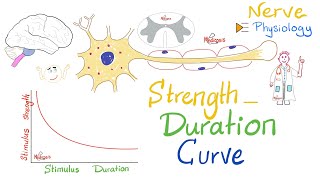
The Strength-Duration Curve - Nerve Physiology
Explore nerve excitability, action potentials, and the strength-duration curve. Learn about rheobase, chronaxie, and nerve structure for a comprehensive understanding of nerve physiology.