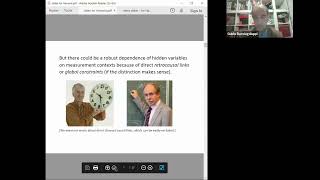
Measurement Dependence and Nonlocality in Quantum Mechanics
Explore measurement dependence and nonlocality in quantum mechanics, examining experimental violations of Bell inequalities and their implications for our understanding of reality and causality.
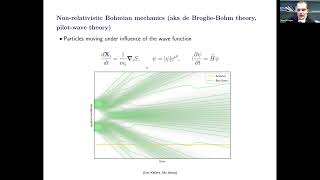
Cosmic Acceleration as a Quantum Effect in Bohmian Quantum Gravity
Explore Bohmian quantum gravity's impact on cosmic acceleration, examining modified Friedmann equations and wave functions that explain universal expansion without a cosmological constant.
Spacetimes with Torsion
Explore spacetime torsion in gravitational theories, comparing General Relativity and Teleparallel Gravity. Examine classical spacetimes, non-relativistic limits, and implications for understanding gravitational forces.
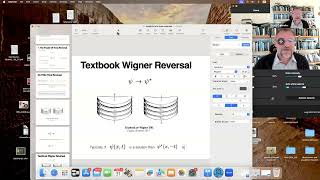
Insights into Quantum Time Reversal from the Classical Schrödinger Equation
Explore quantum time reversal through classical Schrödinger equation, unraveling the mystery of complex conjugation in temporal reflection and its implications for quantum theory interpretation.
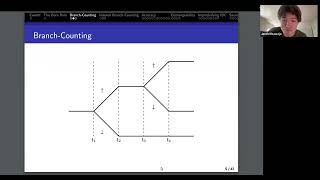
Conquering Mount Everett: Branch-Counting Versus the Born Rule
Explore quantum branching scenarios and self-locating credences through Indexed Branch-Counting, challenging Everettian approaches and the Born Rule in quantum mechanics.
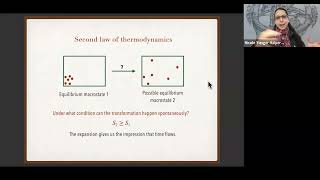
Updates to the Second Law from Quantum Thermodynamics
Explore quantum thermodynamics' impact on the second law of thermodynamics, examining its evolution and implications for small systems and quantum phenomena.
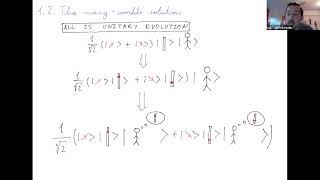
On Playing Gods: The Fallacy of the Many-Worlds Interpretation
Explore the methodological argument refuting the many-worlds interpretation of quantum theory, examining its problematic aspects and incompatibility with fundamental scientific principles.
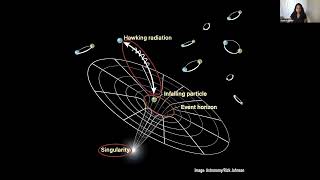
Not the Measurement Problem's Problem: Black Hole Information and Schrödinger's Cat
Explore the relationship between black hole information loss and quantum measurement, challenging unitarity's dominance and proposing interpretation-neutral solutions to these fundamental physics puzzles.
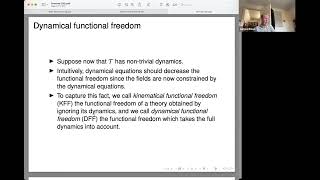
On Functional Freedom and Penrose's Critiques of String Theory
Explore Penrose's conceptual and technical objections to string theory, focusing on the notion of 'functional freedom' in this in-depth analysis by James Read from Oxford University.
Basics of Quantum Computing - Lecture 21
Explore quantum computing fundamentals, including qubits, superposition, and entanglement. Gain insights into quantum algorithms and their potential impact on machine learning.
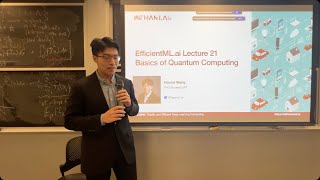
Basics of Quantum Computing - Lecture 21
Explore quantum computing fundamentals, including qubits, superposition, entanglement, and quantum algorithms, to understand its potential impact on machine learning and computation.
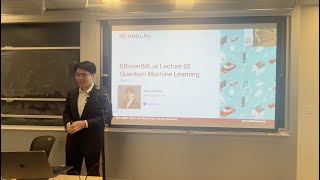
Quantum Machine Learning - Lecture 22
Explore quantum machine learning concepts and applications in this advanced MIT lecture, covering cutting-edge developments in the field.
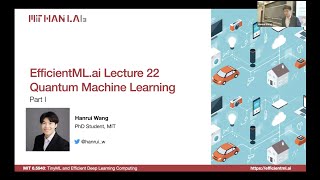
Quantum Machine Learning - Lecture 22
Explore quantum machine learning concepts and applications in this advanced lecture from MIT's EfficientML.ai series, covering cutting-edge developments in the field.
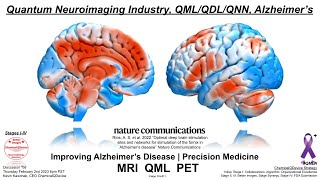
Quantum Neuroimaging for Alzheimer's: Applications of QML, QDL, and QNN
Explore quantum neuroimaging advancements for Alzheimer's, focusing on QML, QDL, and QNN applications in neuroscience and radiology. Gain insights into future innovations and industry pain points.
Cellular Cooperation in Cochlear Mechanics
Explore contrasting views of cochlear mechanics, including Hopf bifurcations and 3-D simulations, to understand nonlinear cochlear responses and their implications.

Diversity and Inclusion in Molecular Physiology Research - 2024 Distinguished Lecture
Explore groundbreaking research on insulin-mediated molecular mechanisms and mitochondrial dynamics with Dr. Antentor Hinton, Jr., a leading expert in molecular physiology and biophysics.
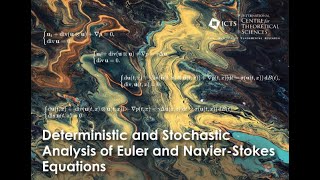
Wavelet-inspired Nash's Iteration - Lecture 4
Explore wavelet-inspired Nash's iteration in fluid dynamics, focusing on advanced mathematical techniques for analyzing Euler and Navier-Stokes equations.
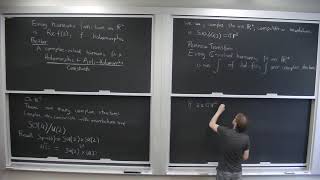
Twistor Theory and Vertex Algebras
Explore the intersection of twistor theory and vertex algebras, delving into advanced mathematical concepts and their applications in geometry and physics.
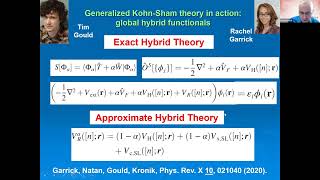
Electronic and Optical Spectra from Optimally-Tuned Functionals - QE Tutorial 2022
Explore optimally-tuned functionals for accurate electronic and optical spectra calculations in advanced quantum systems.
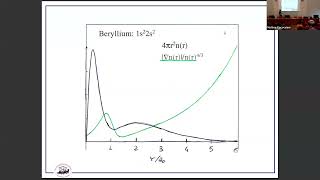
Exchange-Correlation Functionals of Density Functional Theory - QE School 2023 Lecture 1.3
Explore advanced exchange-correlation functionals in DFT, focusing on Hubbard and Koopmans functionals from linear response for enhanced quantum calculations.
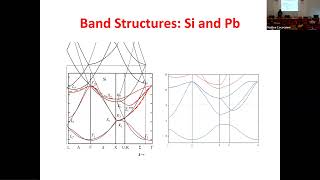
Maximally Localized Wannier Functions: Theory and Recent Developments - Lecture 1.4
Explore maximally localized Wannier functions, their theoretical foundations, and latest advancements in quantum materials research.