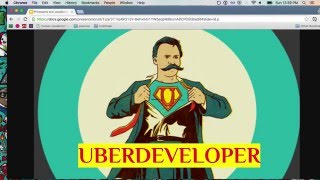
Philosophy and JavaScript
Explore the intriguing intersection of philosophy and JavaScript, uncovering parallels between ancient wisdom and modern programming concepts.
Essential JavaScript Debugging Tools for the Modern Detective
Explore advanced JavaScript debugging techniques beyond console.log, including breakpoints, snippets, and source-map configurations, to enhance your problem-solving skills and code efficiency.
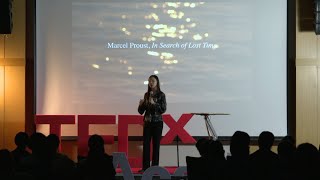
The Art of Nostalgia
Explore the art of nostalgia through literary texts and its hidden philosophy, delving into the power of memories and their impact on our lives and perspectives.
Who Am I, and Where Do I Come From?
Explore how technology is unraveling ancient questions about identity and origins, featuring insights from experts in genealogy and genetic research.
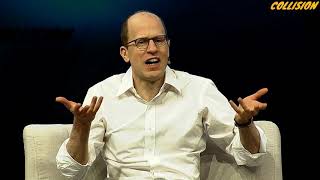
Why We Love Doomsday Scenarios
Explore the fascination with doomsday scenarios in an in-depth discussion with AI philosopher Nick Bostrom, blending mythbusting and metaphysics to uncover our collective obsession with apocalyptic narratives.
An ESR Model of Consciousness
Exploring epistemic structural realism as a framework for studying consciousness and its neurophysiological bases, emphasizing relations and structural continuity in theoretical models.
Integrated Information Theory - A Perspective on Weak and Strong Versions
Explores 'weak' and 'strong' versions of Integrated Information Theory, discussing its potential to explain consciousness and highlighting key empirical evidence and theoretical challenges.
Consciousness, Metacausation and Metadynamism
Exploring consciousness through pre-reflective auto-sensitivity, metacausation, and metadynamism. Proposes a radical view of consciousness as a property of physical processes involving direct causal sensitivity to inner causation.
A Theoretical Computer Science Perspective on Consciousness
Explore the Conscious Turing Machine model and its insights into consciousness phenomena, including blindsight, inattentional blindness, and free will.

Abductive Inferences and Expectations - Lecture 1.2
Explore abductive inferences and expectations in artificial intelligence, focusing on knowledge representation and reasoning techniques.
Logical Reasoning: Syllogistic Logic - Part 1
Explore probabilistic and defeasible deductive reasoning, delving into the fundamentals of syllogistic logic for enhanced logical analysis skills.
Subjective Thinking Versus Objective Thinking - Lecture 3
Explore materialism, idealism, and the contrast between subjective and objective thinking approaches in philosophical discourse.
Logical Reasoning: Deductive Logic - Part 1
Explore inductive reasoning, propositional logic, and probabilistic inductive reasoning methods to enhance logical thinking and problem-solving skills.
What is Science? The Method and Nature of Scientific Truth - Part 2
Explore the scientific method and nature of truth, delving into fundamental concepts that shape our understanding of scientific inquiry and knowledge.

Logical Reasoning: Syllogism Logic, Truth and Validity - Lecture 12
Explore syllogistic logic, distinguishing between valid and invalid reasoning to enhance critical thinking and argument analysis skills.
The Foundations of Western Philosophy - Introduction, Challenge to Poetry, Plato and Aristotle
Explore the origins of Western philosophical thought, examining key thinkers like Plato and Aristotle and their impact on poetry and intellectual discourse.

Experience Grounds Language: Improving Language Models Beyond the World of Text
Explore five "World Scopes" for advancing language models beyond text, including multimodality and embodiment, to enhance AI's understanding and generation of language.

Why There's No Such Thing as Objective Reality
Historian Greg Anderson challenges Western notions of objective reality, exploring ancient and Indigenous worldviews to encourage reimagining diverse ways of being human and understanding the world.
We Need a "Moral Operating System"
Exploring the ethical implications of technological advancements and the need for a philosophical framework to guide our decisions in the digital age.

The Quest to Understand Consciousness
Explore the fascinating process of regaining consciousness and how our brains construct our sense of self with neuroscientist Antonio Damasio's insightful perspective.

After Billions of Years of Monotony, the Universe Is Waking Up
Explore how humanity's ability to create explanatory knowledge could disrupt the universe's "great monotony" and harness cosmic forces, as theorized by physicist David Deutsch.