
The Logic of Science - Principles of Evolution, Ecology and Behavior
Explore the evolution of scientific thought, including falsifiability, revolutions, and creativity. Learn how philosophy influences modern scientific approaches and the boundaries of scientific knowledge.

Plato's Arguments for the Immortality of the Soul - Part II
Explore Plato's arguments for the soul's immortality, including the nature of forms, recycling, and recollection. Delve into philosophical reasoning on non-physical entities and their implications.

Arguments for the Existence of the Soul - Part I
Explore philosophical arguments for the soul's existence through inferences to best explanation, examining physicalist and dualist perspectives on the mind and potential evidence for the soul.
Rigorous Uncertainty: Science During COVID-19 with David Krakauer
Exploring COVID-19's impact through complexity science, discussing citizen-based medicine, data challenges, group size recommendations, and out-of-equilibrium thinking to reveal hidden interconnections in modern life.
Good Explanations & Diseases of Epistemology
Exploring the nature of explanations, epistemology, and societal knowledge processing. Balancing understanding and prediction in science, and adapting to rapid changes in a complex world.
Could a Purely Self-Supervised Foundation Model Achieve Grounded Language Understanding?
Exploring the potential of self-supervised foundation models for grounded language understanding, discussing semantics, multi-modal streams, and causal abstraction in large networks.
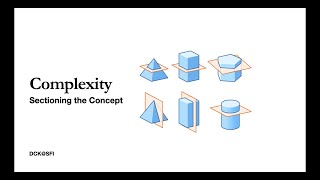
David Krakauer - What Is Complexity?
Explore complexity, its epistemology, and emergence with SFI President David Krakauer in this insightful lecture celebrating Complexity Explorer's 10th anniversary.
Learning About Possibilities Through Scientific Models
Exploring how scientists use models to study possibilities, examining epistemic and alethic possibilities, and discussing implications for model construction, assessment, and interpretation in scientific research.
Appealing to Intuitions - The Necessity and Limitations in Mathematics and Ethics
Explore the role of intuitions in reasoning and decision-making, from mathematics to ethics. Discover why we can't eliminate intuitions despite their limitations and paradoxes.

Beauty and Truth in Mathematics and Science - Lecture 1
Explore the role of beauty in guiding humanity's quest for understanding the world, examining interactions between beliefs, values, and scientific truth.
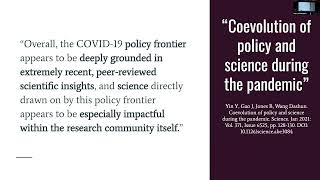
The Underappreciated Value of an Absence of Reliable Evidence
Explore the significance of lacking reliable evidence in research and decision-making, challenging assumptions and enhancing critical thinking in scientific inquiry.
Art and Science as Parallel and Divergent Ways of Knowing
Explore the historical convergence and modern divergence of art and science as methods of understanding the world, with insights from artists, scientists, and cultural figures.
Explosive Proofs of Mathematical Truths
Explore how mathematical proofs achieve certainty through network structure, enabling explosive emergence of belief even under skepticism. Data science analysis reveals insights into proof validity and mathematical reasoning.
Cultural Epistemologies, Human-Nature Relationships and Biological Cognition
Explore Native American perspectives on nature, comparing epistemologies and cognitive processes between Native and Non-Native groups through cultural artifacts and developmental studies.
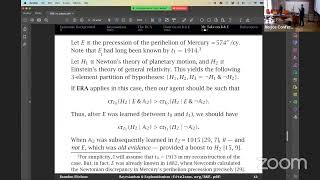
Bayesianism and Explanationism in Scientific Reasoning
Explore the philosophical approaches of Bayesianism and Explanationism, examining their principles, applications, and implications for scientific reasoning and knowledge acquisition.
How to Know: Understanding the Complexity of Knowledge
Explore the complexity of knowledge and learning processes with cognitive scientist Celeste Kidd in this thought-provoking symposium talk from the Santa Fe Institute.
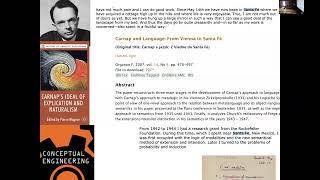
Understanding Understanding Through Conceptual Engineering
Explore philosophical insights on understanding and conceptual engineering with David Chalmers, delving into the nature of comprehension and its implications for knowledge and cognition.
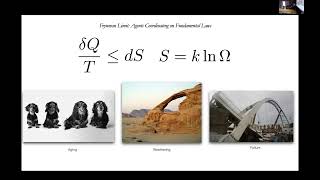
Feynman, Shannon, and Darwin Worry About Understanding
Explore how Feynman, Shannon, and Darwin's ideas intersect in the pursuit of understanding complex systems and scientific knowledge.
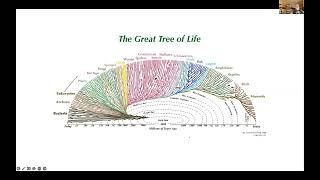
The Evolution of Understanding on Several Levels
Explore the evolution of understanding across multiple levels with philosopher Dan Dennett, delving into complex concepts and their implications for human knowledge and cognition.

Value Capture and Legibility in Complex Systems - Paul Smaldino and C. Thi Nguyen
Exploring the challenges of measurement, governance, and social science in complex systems. Discusses value capture, legibility, and expert identification in the context of emergent political economies.
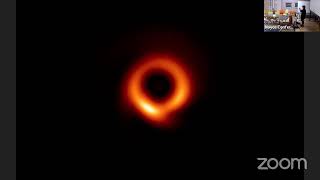
Generative Epistemics and Aesthetics
Explore the intersection of knowledge creation and artistic expression, examining how generative processes shape our understanding and appreciation of the world.