Contemporary Sociology
Explore postmodern sociological thinking through key thinkers and concepts, from structuralism to post-structuralism, examining philosophical roots and contemporary developments in Western thought.
Personal Identity and What Matters in Survival - Lecture 13
Explores personal identity theories, focusing on personality and no-branching requirements. Examines metaphysical implications and shifts perspective to what truly matters in survival and identity.
Arguments for the Existence of the Soul - Free Will and Near-Death Experiences
Explore philosophical arguments for the soul's existence, focusing on free will, near-death experiences, and Cartesian dualism. Examine the compatibility of determinism and free will in this thought-provoking lecture.
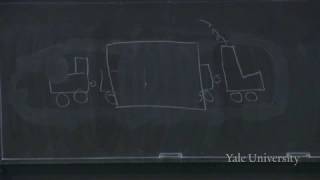
Personal Identity Across Space and Time - The Soul Theory - Lecture 10
Explore the philosophical concept of personal identity across time and space, examining the soul theory and its challenges in understanding what makes us the same person over time.

Arguments for the Existence of the Soul - Part I
Explore philosophical arguments for the soul's existence through inferences to best explanation, examining physicalist and dualist perspectives on the mind and potential evidence for the soul.

Introduction to Plato's Phaedo - Arguments for the Existence of the Soul, Part II
Explore arguments for the soul's existence, focusing on free will as a key defense. Delve into dualism vs. physicalism and examine consciousness, emotions, and creativity in machines.
Plato's Arguments for the Immortality of the Soul - Part 4
Explore Plato's arguments for soul immortality, including simplicity, essential properties, and responses to counterarguments. Gain insights into philosophical perspectives on the nature of the soul and its potential indestructibility.
Personal Identity: Body Theory and Personality Theory - Part II
Explores philosophical theories of personal identity: body view and personality view. Examines implications of equating identity with physical body or unique set of beliefs, memories, and goals.
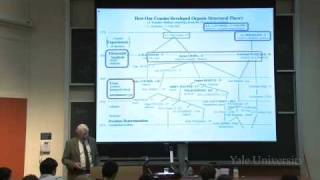
Berzelius, Gay-Lussac, and Davy - Advances in Chemistry from 1805-1832 - Lecture 21
Explore key developments in early 19th-century chemistry, including electrolysis, dualism, and the radical theory, through the work of Berzelius, Gay-Lussac, Davy, Wöhler, and Liebig.

Foundations of Psychology - This Is Your Brain
Explore the relationship between mind and body, examining dualism vs. materialism, and delve into basic neurophysiology and brain structure in this engaging psychology lecture.
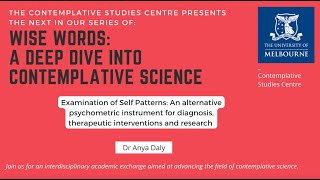
Examination of Self Patterns: An Alternative Phenomenological Interview for Mental Health
Explore pattern theory of self to enhance understanding of mental disorders and self-awareness. Dr Daly discusses innovative approaches to psychiatry and contemplative practices.
Why Intelligent Reasoning Must Be Embodied
Explore the philosophical perspective on embodied intelligence and its implications for AI, presented by Lisa Miracchi from the University of Pennsylvania's GRASP Lab and MindCORE.
Turing Test for Free Will - Determinism and Unpredictability in Decision-Making
Explore the interplay of determinism, randomness, and free will in decision-making processes. Discover a proposed 'Turing test' for free will and its implications for human and artificial intelligence.
The Most Human Human - What Artificial Intelligence Teaches Us About Being Alive
Explore the intriguing intersection of AI and human nature, examining what our interactions with machines reveal about our own humanity and consciousness.
Is Free Will an Illusion? What Can Cognitive Science Tell Us?
Explore the philosophical debate on free will, determinism, and moral responsibility with Daniel Dennett. Examine cognitive science insights and their implications for our understanding of human agency and ethics.
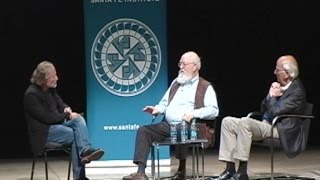
Caught in the Pulpit: From Religion to Reason - A Play and Discussion
Exploring clergy's journey from belief to atheism through a play based on interviews, followed by a discussion on brain-mind mechanisms in religious belief and societal implications.
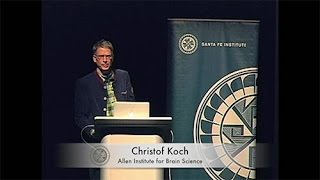
Consciousness in Biological and Artificial Brains
Exploration of consciousness in biological and artificial brains, discussing Integrated Information Theory and why digital systems may never truly experience consciousness like humans do.
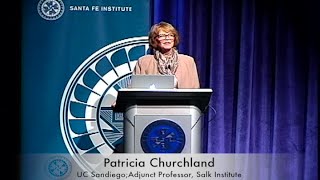
Touching a Nerve: The Self as Brain
Explore the biological basis of consciousness, identity, and decision-making with neurophilosopher Patricia Churchland as she examines how brain activity shapes our thoughts, feelings, and experiences.
Artificial Intelligence: What We Still Don't Know - Melanie Mitchell
Explore AI's challenges, limitations, and future potential with computer scientist Melanie Mitchell. Delve into fundamental questions about intelligence, cognition, and the intersection of technology and human understanding.
Understanding Understanding Through Conceptual Engineering
Explore philosophical insights on understanding and conceptual engineering with David Chalmers, delving into the nature of comprehension and its implications for knowledge and cognition.

Dimensions of Meaning and Understanding - Raphaël Millière
Explore dimensions of meaning and understanding, from lexical semantics to complex reasoning, with insights on knowledge acquisition and cognitive pitfalls.