The Miltonic Smile - Exploring Similes in Paradise Lost
Explore Milton's use of similes in Paradise Lost, examining their role in depicting Satan and addressing themes of free will and divine providence. Gain insights from critical perspectives on Milton's poetic techniques.

Paradise Lost: Books XI-XII - Justification, Providence, and Free Will
Explore Milton's Paradise Lost finale, examining the expulsion from Eden, Milton's theology, and the interplay of providence and free will in this insightful literary analysis.

Dante's Paradise - Cantos IV, VI, and X Analysis
Explore Dante's Paradise cantos IV, VI, and X, examining the interplay of intellect and will, political history, and celestial wisdom through allegorical representations and theological discourse.
Arguments for the Existence of the Soul - Free Will and Near-Death Experiences
Explore philosophical arguments for the soul's existence, focusing on free will, near-death experiences, and Cartesian dualism. Examine the compatibility of determinism and free will in this thought-provoking lecture.

Introduction to Plato's Phaedo - Arguments for the Existence of the Soul, Part II
Explore arguments for the soul's existence, focusing on free will as a key defense. Delve into dualism vs. physicalism and examine consciousness, emotions, and creativity in machines.

Dante's Divine Comedy: Purgatory Cantos X-XII and XVI-XVII - Lecture 12
Explore Dante's Divine Comedy through theological and artistic lenses, examining pride, wrath, and human imagination in Purgatory cantos X-XII and XVI-XVII.
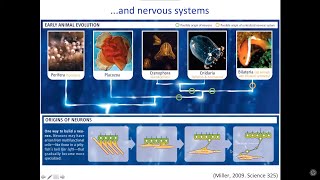
The Evolution of Agency
Explore the emergence of agency in living organisms, challenging reductionist views and proposing a framework for understanding purposeful behavior, free will, and mental causation in biological systems.
Turing Test for Free Will - Determinism and Unpredictability in Decision-Making
Explore the interplay of determinism, randomness, and free will in decision-making processes. Discover a proposed 'Turing test' for free will and its implications for human and artificial intelligence.
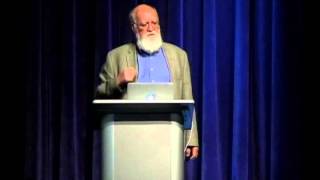
Is Free Will an Illusion? What Can Cognitive Science Tell Us?
Explore the philosophical debate on free will, determinism, and moral responsibility with Daniel Dennett. Examine cognitive science insights and their implications for our understanding of human agency and ethics.
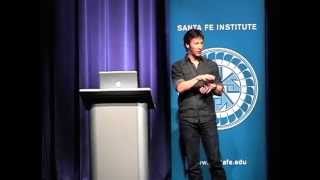
The Brain and the Law - How Neuroscience Will Shift Blameworthiness
Explore how neuroscience challenges criminal justice assumptions, examining brain equality, incarceration effectiveness, and rehabilitation technologies. Insights into unconscious behavior drivers and future-focused legal approaches.
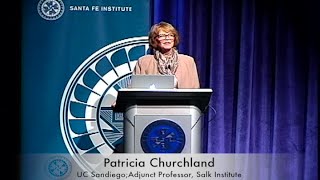
Touching a Nerve: The Self as Brain
Explore the biological basis of consciousness, identity, and decision-making with neurophilosopher Patricia Churchland as she examines how brain activity shapes our thoughts, feelings, and experiences.
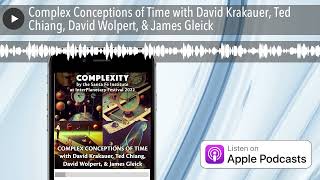
Complex Conceptions of Time - Exploring Scientific and Literary Perspectives
Exploring time through physics, philosophy, and science fiction. Experts discuss metaphors, mathematical concepts, and narrative approaches to understanding time, challenging conventional perceptions and exploring its complexities.
Philosophy
Explore diverse philosophical topics from ethics and logic to neuroscience and religion with expert lectures on key concepts, debates, and thinkers throughout history.

Is Reality a Controlled Hallucination? - Exploring Consciousness and Perception
Explore consciousness as a controlled hallucination through innovative theories and experiments. Delve into perception, self-awareness, and the nature of reality with neuroscientist Anil Seth.
Toward a Formal Model of Free Will
Explores a formal model of perceived free will using statistical emergence, offering concrete measures for analyzing choice ensembles and free will.
Free Will and Neuroscience - Philosophical Analysis of Experimental Data
Philosopher Alfred Mele critically examines neuroscientific data, arguing that free will remains a viable concept despite challenges from experimental findings.
Curt Jaimungal Interview and Theories of Everything - Sociology and Pure Maths
Exploring diverse topics from physics and mathematics to consciousness and UFOs, this wide-ranging interview delves into theories of everything, sociological aspects of science, and the intersection of academic disciplines.
Newcomb's Paradox - Famous Math Problems
Explore Newcomb's paradox, a mathematical-philosophical puzzle involving free will, determinism, and rationality. Learn about expected value and strategies for decision-making in uncertain scenarios.
Chaos Theory and Geometry - Can They Predict Our World? With Tim Palmer
Explore chaos theory's geometry to predict uncertain phenomena like weather, pandemics, and quantum physics. Discover insights into the universe and ourselves through fractal patterns and probabilistic approaches.

Can Physics Explain Consciousness - Professor Steven Gimbel Discusses Quantum Consciousness
Explore the intersection of physics and consciousness, examining theories like reductionism, dualism, and quantum mechanics to understand the mind-body connection and its implications for reality.
Our Quest to Understand the Cosmos - Brian Greene in Conversation with Jo Marchant
Explore the cosmos from its beginning to its end with physicist Brian Greene, discussing life, consciousness, free will, and the scientific method in this thought-provoking conversation.