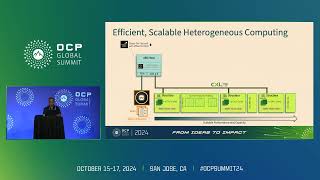
Memory Wall Mitigation and Acceleration of AI Workloads Using CXL Near Memory Computing
Explore CXL-based Near Memory Compute architectures for hyperscale environments, focusing on acceleration solutions for data-intensive workloads and memory optimization techniques.
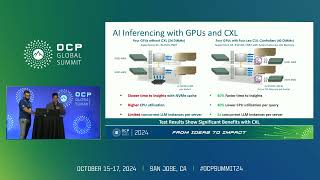
Optimizing AI Inferencing with CXL Memory - Memory Tiering Strategies for Enhanced Performance
Explore how CXL-attached memory revolutionizes AI inference systems, enhancing performance and scalability for Large Language Models while optimizing memory bandwidth and reducing latency.
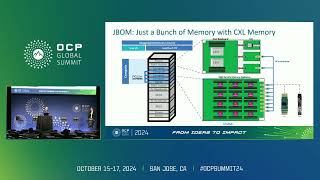
PCIe Active Electrical Cables (AECs) for Large Language Model (LLM) Computing Clusters
Explore the evolution and implementation of PCIe Active Electrical Cables (AECs) for GPU clustering in Large Language Models, focusing on retimer technology advantages and form factor considerations.
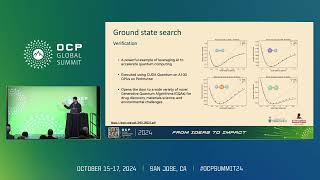
AI for Quantum Computing and NVIDIA's Quantum Computing Strategy
Discover NVIDIA's strategic approach to quantum computing and how AI technologies are being integrated into quantum computational systems.
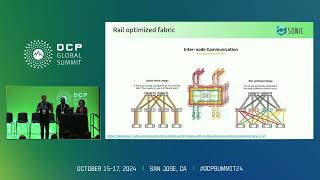
Advancing SONiC for AI - Network Architecture and Performance Optimization
Discover the latest advancements in SONiC AI Working Group's developments, focusing on network fabrics, routing design, and congestion control for AI clusters and GPU-accelerated workloads.
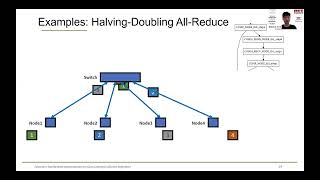
Towards a Standardized Representation for Deep Learning Collective Algorithms
Explore standardized approaches for representing collective algorithms in deep learning, focusing on optimization techniques and implementation strategies for enhanced performance.
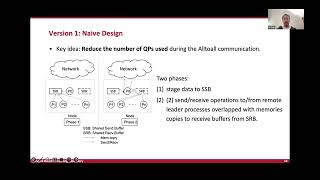
OHIO: Improving RDMA Network Scalability in MPI_Alltoall Through Optimized Communication Design
Discover optimized RDMA network communication techniques for MPI_Alltoall operations through hierarchical design and improved overlap strategies for enhanced scalability and performance.
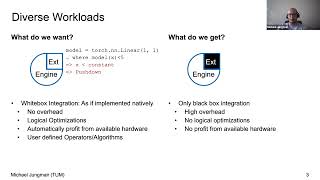
LingoDB: An Open Compilation and Optimization Framework for Sustainable Data Processing
Discover how LingoDB's open-source framework enables efficient data processing through flexible architecture, cross-domain optimizations, and seamless adaptation to modern hardware capabilities.
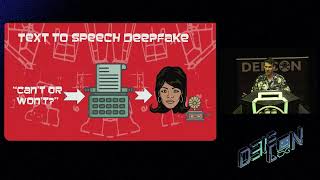
Real-Time Video and Audio Deep Fake Impersonation - A Security Demonstration
Explore real-time deepfake technology and its potential security risks through practical demonstrations of CEO impersonation using open-source tools and accessible hardware.
Parallel Window Decoding for Scalable Fault-Tolerant Quantum Computation
Discover how parallel window decoding solves scalability challenges in quantum error correction, enabling faster and more efficient fault-tolerant quantum computations.

Squash - 딥러닝 서비스 추론 속도 개선기
Discover how Squash technology optimizes deep learning inference speed and reduces hardware costs through innovative model compression techniques for efficient AI service deployment.

Parallel Processing for Stable Diffusion Using TPU - Speed Optimization Guide
Master parallel processing in Stable Diffusion using TPUs and JAX/FLAX libraries to generate AI art 8x faster, achieving remarkable speeds of 8 images in just 4 seconds.
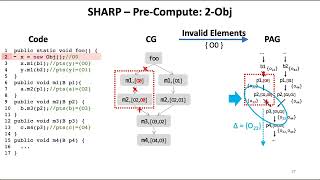
SHARP: Fast Incremental Context-Sensitive Pointer Analysis for Java
Explore SHARP, a groundbreaking incremental context-sensitive pointer analysis algorithm for Java, offering improved performance and scalability for large-scale programs.
SpEQ: Translation of Sparse Codes Using Equivalences
Discover SpEQ, a strategy for detecting semantics in sparse codes and translating to high-performance libraries. Learn about its implementation, evaluation, and performance gains across various backends.
Descend: A Safe GPU Systems Programming Language
Explore Descend, a safe GPU programming language enforcing memory management through type systems. Learn about its holistic model, extended Borrow checking, and competitive performance against CUDA.
On the Need for Available, Functional, and Reusable Memory Models
Explore challenges in memory model research through personal failure stories, highlighting shortcomings and future expectations for the field.

Stream Types - A Foundational Theory of Typed Data Streams and Stream Transformers
Explore a foundational theory of typed data streams and transformers, covering complex sequential patterns, parallel structure, and programming idioms like punctuation and windowing.
Zero-Overhead Parallel Scans for Multi-Core CPUs - ARRAY 2024
Explore efficient parallel scans for multi-core CPUs, achieving zero overhead and improved single-threaded performance in array languages.
Work Assisting - Linking Task-Parallel Work Stealing with Data-Parallel Self Scheduling
Explore a novel scheduling strategy for mixing data and task parallelism, preserving data parallelism structure while enabling flexible thread distribution and self-scheduling for improved performance.
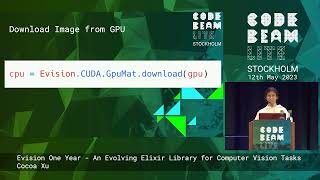
Evision: An Evolving Elixir Library for Computer Vision Tasks
Explore Evision, an evolving Elixir library for computer vision. Learn about Kino widgets, Nx integration, and performance comparisons across CPU, OpenCL, and CUDA for image processing tasks.
Migration from WebGL to WebGPU - Concepts and Implementation
Explore WebGPU migration from WebGL, covering core concepts, differences, and implementation tips. Learn about adapters, devices, shaders, and more for efficient graphics programming.