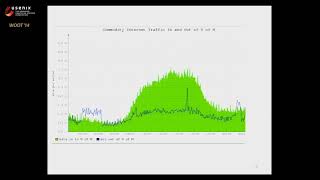
Zippier ZMap - Internet-Wide Scanning at 10 Gbps
Optimizations to ZMap network scanner achieving 10-fold increase in scan rate, enabling comprehensive TCP port scanning across IPv4 address space in 4.5 minutes. Discusses implications and potential applications.
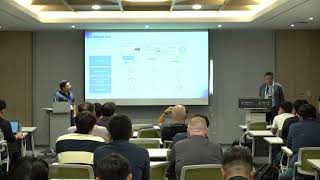
Cost-Effective GPU Solutions for AI Workloads with OpenStack - Optimization Strategies
Discover how to optimize AI workload costs using affordable GPUs and desktop workstations for cloud instances, with practical insights from ArcFusion AI and NIPA Cloud's successful implementation.

Processing 100+ GB of Data in Seconds Using Polars GPU Engine
Master high-speed data processing with Polars GPU engine, leveraging NVIDIA GPUs to handle massive datasets up to 10x faster while using familiar Polars syntax and commands.

Stable Diffusion 3.5 Medium - A Review of the New Text-to-Image AI Model
Explore Stable Diffusion 3.5 Medium's capabilities, comparing its performance against SDXL and other models while learning about its advantages for users with lower-end GPUs.
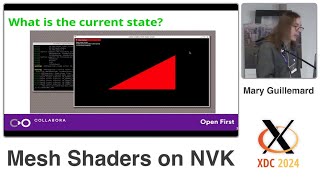
Mesh Shaders on NVIDIA Hardware - Implementation and Future Development in NVK
Dive into the technical implementation of mesh shaders on NVIDIA hardware and explore upcoming NVK developments for enhanced shader support.
Perfect PC for AI, Object Detection and LLMs - Complete Guide
Learn how to build the optimal PC setup for AI development, focusing on computer vision, object detection, and large language model implementation.
Getting GPUDirect to Work with Broadcom NICs
Discover how to integrate Broadcom NICs with NVIDIA GPUs for enhanced packet processing using GPUDirect RDMA, exploring necessary DPDK ecosystem modifications and implementation steps.

Combining Rust and DPDK: Security, Stability, and Performance Optimization
Explore how Rust APIs can enhance DPDK functionality through improved security, user experience, and performance optimization while processing network packets efficiently.

1.2 Tb/s Packet Processing of Radio Telescope Data on GPU
Discover how to process massive radio telescope data streams at 1.2 Tb/s using NVIDIA Grace Hopper GPUs, optimizing packet handling and reducing energy consumption through innovative system architecture.

Enabling Cloud Workloads with the WEKA Data Platform
Discover how the WEKA Data Platform transforms data silos into dynamic pipelines, optimizing GPU performance and streamlining AI, ML, and HPC workloads in modern cloud environments.
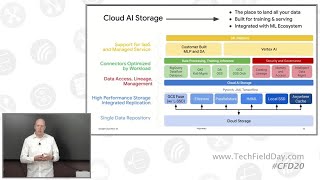
Optimizing Storage Solutions for AI and ML Workloads in Google Cloud
Discover advanced storage solutions optimized for AI/ML workloads, featuring Anywhere Cache, HyperDisk ML, and Cloud Storage FUSE innovations that enhance data accessibility and training efficiency.
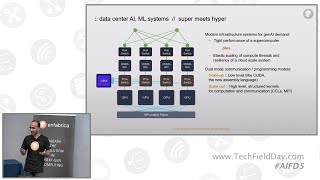
Accelerated Computing for AI Systems - A Network Architecture Perspective
Discover groundbreaking networking technology for AI computing with Enfabrica's ACFS system, offering 8Tb/s bandwidth and innovative solutions for modern data center challenges in distributed AI workloads.
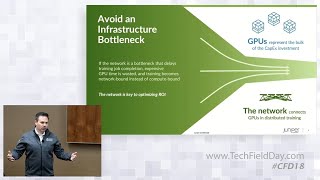
Automating AI Cluster Design with Juniper Apstra
Discover how to automate AI cluster designs using Terraform with Apstra, including GPU compute fabrics, storage fabrics, and NVIDIA-optimized rack configurations for efficient model training.

OpenFabrics Interfaces Support and GPU Integration in MPICH
Discover the latest updates on OFI integration in MPICH, focusing on GPU support implementation, network API enhancements, and Libfabric development for high-performance computing systems.
Status of OpenFabrics Interfaces (OFI) Support in MPICH
Discover the latest developments in OpenFabrics Interfaces (OFI) support within MPICH, exploring implementation status and advancements in high-performance computing infrastructure.
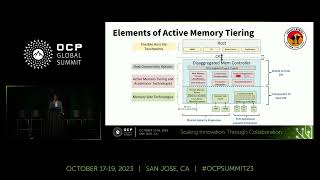
CXL-Enabled Heterogeneous Active Memory Tiering: Architecture and Implementation
Explore CXL Type2-based disaggregated memory architecture and how it extends far memory to remote heterogeneous memory using ethernet, featuring intelligent fabric control and memory tiering.
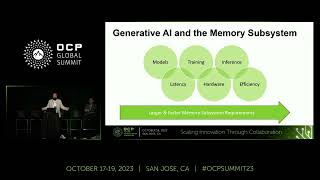
Scalability of Memory Subsystem in AI Storage Systems - IO Profiling and Performance Analysis
Explore IO profiling in AI systems, examining pipeline stages, metadata costs, and filesystem latency impacts on GPU performance, with solutions for optimizing storage systems.
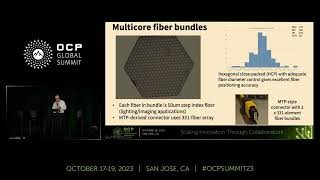
Ultra Low-Power, High-Density Parallel MicroLED Optical Links
Explore groundbreaking microLED optical link technology offering unprecedented power efficiency, bandwidth density, and low latency for next-generation network communications.
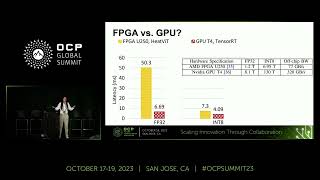
Architectural Challenges and Innovation for Compute Infrastructure Co-Design in Generative AI
Explore architectural solutions for generative AI computing challenges, focusing on heterogeneous computing infrastructure and chiplet-based systems for improved energy efficiency.
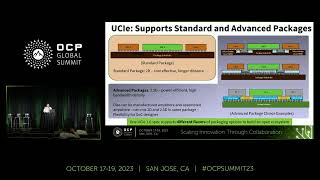
UCIe - Universal Chiplet Interconnect Express for Die-to-Die Integration
Discover how UCIe 1.0 standardizes die-to-die interconnects for high-performance computing, enabling efficient integration of heterogeneous processing units and on-package memory for AI, ML, and cloud computing.
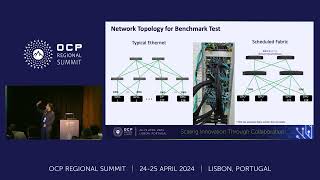
Scheduled Ethernet Fabric for Large-Scale AI Training Clusters
Discover how Scheduled Ethernet Fabric optimizes large-scale AI training clusters, enabling efficient GPU connectivity, workload management, and resilient networking for enhanced computational performance.