Genomics Research to Elucidate the Genetics of Rare Disease (GREGoR) Renewal
Explore genomics research on rare diseases through the GREGoR renewal initiative, focusing on genetic elucidation and potential breakthroughs in understanding and treatment.

Reading Genetic Tea Leaves: Predicting Traits and Adaptations from Genetic Data
Explore genetic diversity's role in predicting traits and adaptations. Understand the challenges of separating genetic and environmental factors in population genetics and climate change research.
Reading Your DNA: What Can It Tell Us?
Explore DNA sequencing advancements and their impact on life sciences, medicine, and society. Gain insights into rapid, low-cost techniques and future possibilities in genomic research.

The Role of Genetic Diagnosis in Inherited Cardiac Conditions - Part 2
Explore genetic diagnosis in inherited cardiac conditions, focusing on testing methods, variant assessment, and clinical implications for improved patient care.
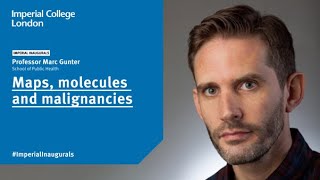
Maps, Molecules and Malignancies
Explore the intersection of geography, molecular biology, and cancer research to uncover innovative approaches in understanding and treating malignancies.
Nuclear Envelope Proteins Regulate Chromosome Territory and Gene Loci Dynamics
Explore nuclear envelope proteins' role in regulating chromosome territories and gene loci dynamics through an in-depth lecture by Kundan Sengupta.
Excavating the Architecture of Chromatin: From Nucleosomes to Chromosomes
Explore chromatin architecture from nucleosomes to chromosomes, unraveling its complex organization and role in gene regulation through interdisciplinary perspectives and cutting-edge research.
Sequencing Genomes - Journeys in Human Genetics and Genomics Colloquium
Explore cutting-edge genome sequencing techniques and their impact on human genetics research with NHGRI's Adam Phillippy in this comprehensive presentation.
Genotyping and DNA Sequencing Methods - Journeys in Human Genetics and Genomics Colloquium
Explore genotyping and DNA sequencing methods with Dr. Kim Doheny, delving into cutting-edge techniques and their applications in genomic medicine and research.
Cancer's Faustian Bargain: Exploiting Whole Genome Doubling in Solid Tumors
Explore whole genome doubling in solid tumors and its implications for cancer treatment. Gain insights from oncology experts on this crucial aspect of cancer biology.
Leveraging Advancements in Genomics to Prevent Gastric Cancer
Explore genomic advancements in gastric cancer prevention, focusing on integrative cellular genomics, spatial transcriptomics, and gene mapping techniques for metaplasia and dysplasia.

Gastric Organoids as a Model System to Study H. pylori
Explore gastric organoids as a model for H. pylori infection, covering infection methods, microscopy, metabolites, and applications in studying virulence factors.
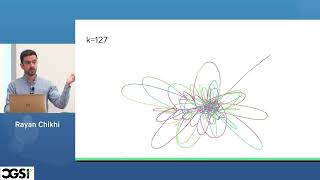
Hands-on Introduction to Pangenome Graphs
Explore pangenome graphs hands-on: learn data structures, applications, and tools for analyzing genomic variations across populations in this practical introduction.
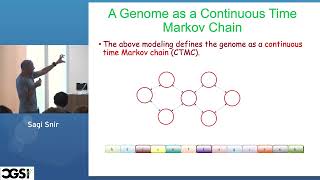
Horizontal Gene Transfer Phylogenetics: A Random Walk Approach
Explore horizontal gene transfer phylogenetics using a random walk approach. Discover innovative methods for analyzing evolutionary relationships in the presence of lateral genetic transfer.
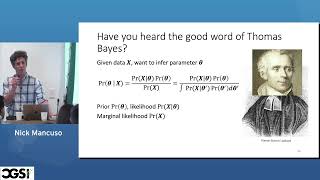
Variational Inference for Large-Scale Genomic Data - CGSI 2022
Explore variational inference techniques for large-scale genomic data analysis, integrating molecular and phenome information to uncover disease mechanisms and enhance genetic association studies.
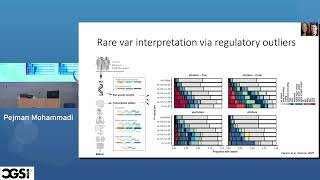
Quantitative Models of Genetic Variation in Cis-Regulation - 2022
Explore quantitative models of genetic variation in cis-regulation, focusing on haplotype-aware modeling and regulatory effect size quantification in eQTL data.

Understanding GWAS Mechanisms with Transcriptome-Wide Association Studies
Explore GWAS mechanisms through Transcriptome-Wide Association Studies. Learn to identify genetic determinants of chromatin and quantify genetic effects on disease mediated by gene expression levels.
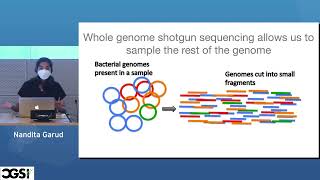
How to Detect Evolution from Microbiome Data
Explore methods for detecting microbial evolution in the gut, examining strain diversity, biogeography, and rapid adaptation. Gain insights into population genetics and its impact on microbiome ecology.
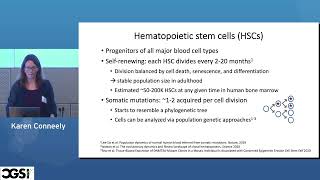
Clonal Hematopoiesis of Indeterminate Potential and DNA Methylation in Aging and Disease
Explore clonal hematopoiesis, DNA methylation's role in aging and disease. Analyze CHIP mutations, epigenome-wide association studies, and their impact on cell fate and disease risk.
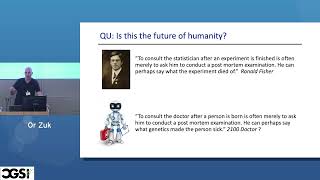
Evaluating the Potential Benefits of Embryo Screening Using Polygenic Scores for Multiple Traits
Explore the potential and limitations of embryo screening using polygenic scores for multiple traits. Analyze ethical considerations and scientific challenges in this emerging field of reproductive genetics.
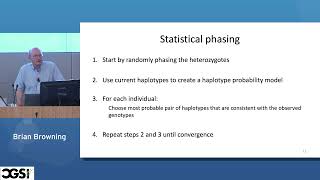
Haplotype Phasing: Methods and Accuracy
Explore haplotype phasing methods and accuracy with Professor Brian Browning. Learn about fast two-stage phasing, integrative estimation, and genotype error impacts on trio-based accuracy.