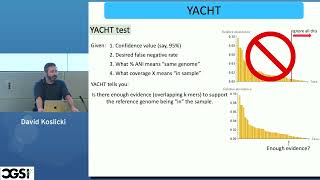
YACHT: An ANI-Based Statistical Test to Detect Microbial Presence or Absence in Metagenomes
Explore YACHT, an ANI-based statistical test for detecting microbial presence in metagenomes. Learn about its applications and implications for microbiome research.
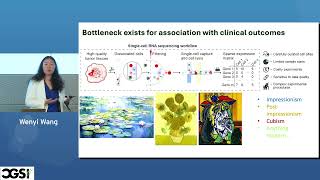
A Guide to Perform Transcriptomic Deconvolution in Cancer
Explore transcriptomic deconvolution techniques for cancer research, focusing on tumor cell mRNA expression estimation and improved analysis of cell-type ratios in complex tissue samples.
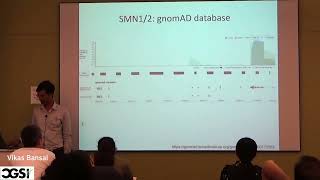
Detection of Genetic Variation in Highly Homologous Genes Using Short Read Sequencing
Explore techniques for detecting genetic variations in highly homologous genes using short read sequencing, focusing on challenges and innovative approaches in computational genomics.
Acceleration of Bioinformatics Workloads Through Hardware-Algorithm Co-Design and Processing-in-Memory Technologies
Explore hardware-algorithm co-design and processing-in-memory technologies for accelerating bioinformatics workloads, focusing on genomic sequence analysis and mapping techniques.
The Bioinformatics of Neoantigen Discovery and Vaccine Design
Explore neoantigen identification and vaccine design through bioinformatics. Learn about REAL-neo analytic framework and novel modules for tumor sequencing data analysis in immunotherapy research.
Why Networks Matter: Embracing Biological Complexity
Explore how genetic regulatory networks provide insights into health, disease, and potential therapies through examples from large-scale genomic datasets.

From Causal Inference to Autoencoders, Memorization & Gene Regulation - Caroline Uhler, MIT
Exploring causal inference, autoencoders, and gene regulation through genomics and 3D genome organization. Integrates data modalities, analyzes overparameterized autoencoders, and links memorization to real-valued data retrieval.
Survival Analysis with TCGA Data in R - Create Kaplan-Meier Curves
Learn survival analysis using TCGA data in R, including Kaplan-Meier curves. Covers key concepts, data preparation, and practical implementation using survival and survminer packages.
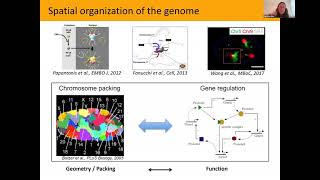
Mathematics of Genome Packing and Regulation
Explore the mathematics of genome organization and its impact on gene expression through geometric packing models and deep learning, with insights on 3D genome reconstruction and autoencoder applications in genomics.
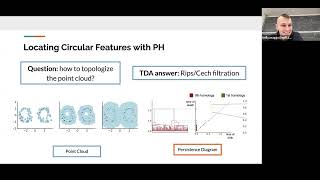
Cohomology Classes in the RNA Transcriptome
Explore how cohomology classes in single-cell sequencing data can model transient biological processes, using persistent cohomology and differential forms to infer gene expression dynamics.
Genomics Education Projects: GENEtest-101, Pharmacogenomics, and Education Analysis - 2020-2022 ISCC-PEG Scholars
Discover groundbreaking genomics education projects presented by ISCC-PEG Scholars, covering GENEtest-101, pharmacogenomics in chemotherapy, and educational landscape analysis within partner organizations.
Polygenic Risk Scoring for Coronary Artery Disease
Dive into advanced genetic analysis methods for assessing coronary artery disease risk factors, focusing on polygenic scoring techniques and their clinical applications.
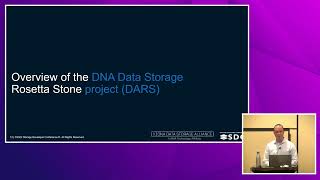
DNA Data Storage Rosetta Stone Initiative - Understanding Self-Describing DNA Archives
Explore groundbreaking DNA data storage technology and its potential to revolutionize long-term data archival through the innovative Rosetta Stone initiative for future-proof data preservation and retrieval.
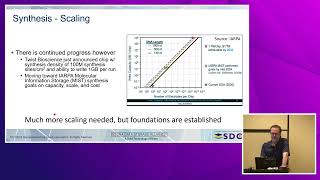
Building a DNA Data Storage Ecosystem - Introduction to DNA-Based Digital Storage
Discover how DNA data storage technology offers groundbreaking solutions for archival data challenges, exploring synthesis, sequencing, and ecosystem development for next-generation storage systems.
Big Data in Personalized Medicine - Using Pharmacogenomics for Tailored Treatment
Explore how high-throughput DNA sequencing and pharmacogenomics drive personalized medicine, focusing on the development of ePGA-WB for optimized drug therapy in Western Balkan populations.
Quantifying the Physical Genome - Understanding Regulatory Elements and Transcription Factor Dynamics
Delve into groundbreaking research on genome regulation, exploring how transcription factors and regulatory elements control gene expression and cellular diversity in human development through advanced sequencing methods.

Solving a 500 Year Old Cold Case - With Turi King
Geneticist Turi King unravels the mystery of Richard III's remains, detailing the excavation, identification process, and DNA analysis that led to the confirmation of the 500-year-old royal skeleton.
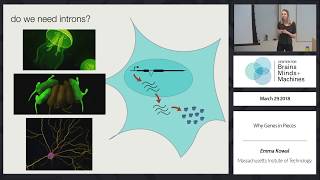
Why Genes in Pieces?
Explore the surprising discovery of introns in eukaryotic genomes, their prevalence, size, and functions. Learn about ongoing research into these gene pieces and their impact on molecular biology.
Genomic Selection - Introduction to Genomics Theory
Explore genomic selection theory, from traditional breeding values to modern techniques, enhancing genetic gain in populations. Learn methodologies for standard and single-step genomic selection.
Genomic Inbreeding - Introduction to Genomics Theory
Explore genomic inbreeding, runs of homozygosity, and their applications in detecting selection signatures and recessive disorders. Learn key concepts like identity-by-descent and inbreeding coefficients.
Selection Signatures - Introduction to Genomics Theory - Genomics 101
Learn about selection signatures in genomics, including genetic hitchhiking, types, detection methods, and analysis across populations. Ideal for beginners interested in SNP data and genomic concepts.